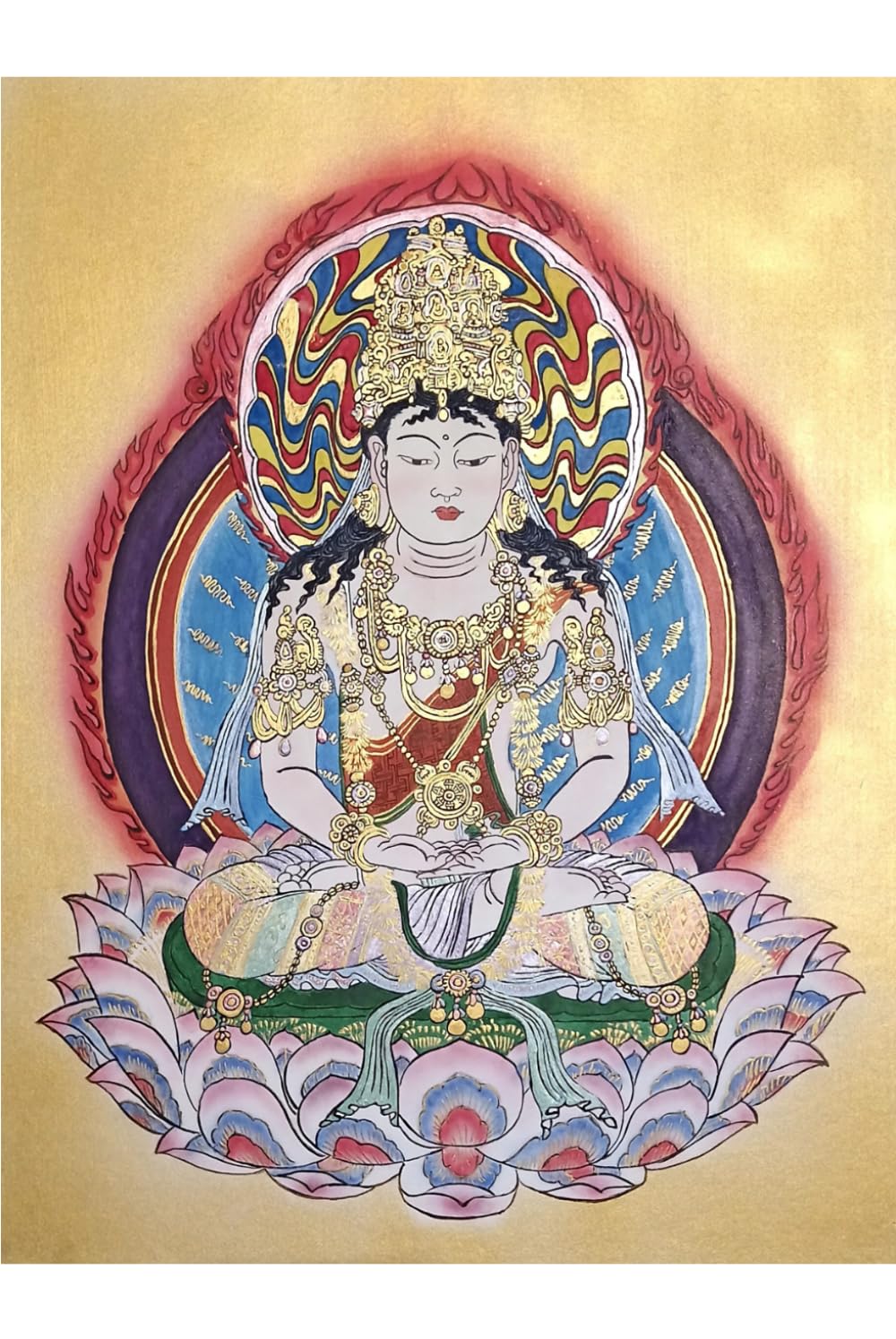
The Great Treatise on the Stages of Yogic Practice Volume4: A Complete Modern Translation of the Yogacarabhumi-sastra
$69.00
by Yasunari Kato



This book is a guide to the vast universe of the mind. Our compass is the Yogācārabhūmi-śāstra, a Mahāyāna Buddhist treatise from India compiled over 1,500 years ago. Meaning “The Treatise on the Stages of the Practitioners of Yoga,” it is not just philosophy but a meticulous practical manual—a detailed "map of the mind" designed for those who seek to understand consciousness and find liberation from suffering. This monumental work, an encyclopedia of Buddhist thought, is the foundational text of the Vijñānavāda (Consciousness-Only) school. Its origin is steeped in legend: the teachings were expounded by Maitreya Bodhisattva, the future Buddha, in the Tuṣita heaven. The great 4th-century philosopher Asaṅga is said to have ascended there in meditation, receiving these teachings directly. Upon returning, he transcribed them for the world, becoming the vessel through which celestial wisdom reached earth. Historically, the Yogācārabhūmi-śāstra is seen as a grand compilation by the Yogācāra school, a community of meditation practitioners in Northern India. During the Gupta dynasty's cultural golden age, these practitioners sought to describe their inner experiences with the logical precision of Abhidharma analysis. This massive treatise is the brilliant culmination of their efforts. The transmission of this text to East Asia is credited to the 7th-century Chinese master Xuanzang. An indomitable scholar-monk, he journeyed to India to seek authentic teachings to resolve inconsistencies in Chinese scriptures. After a seventeen-year odyssey, he studied at Nālandā University, the epicenter of Buddhist learning. There, he mastered the Yogācārabhūmi-śāstra under the master Śīlabhadra, convinced it held the answers he sought. Upon returning to China, Xuanzang, with imperial patronage, established a national translation bureau. The centerpiece of this endeavor was the Yogācārabhūmi-śāstra, to which he dedicated the rest of his life. His masterpiece of a translation allowed Vijñānavāda thought to blossom in East Asia, leading to the establishment of the Faxiang school. Why is this ancient text relevant today? Because its "map of the mind" is more necessary than ever in our world of information and stress. The fundamental questions of modern psychology, neuroscience, and mindfulness—"What is the mind?", "How does consciousness function?", "How can we alleviate suffering?"—are the very questions the Yogācārabhūmi-śāstra addressed with systematic rigor 1,500 years ago. This treatise deconstructs how our minds perceive the world, how emotions arise, and how karma is formed. Beyond analysis, it lays out a step-by-step path (the Seventeen Stages) for training the mind through meditative techniques (śamatha-vipaśyanā), enabling one to sever the chain of suffering and attain serene, wisdom-filled awakening. This modern translation is not just for specialists. It is for anyone curious about the mind and seeking a more meaningful life. It aims to use clear, accessible language without sacrificing accuracy. My hope is that this ancient wisdom will deepen readers' self-understanding and cultivate compassion. Welcome to this vast ocean of wisdom. With this map in hand, I invite you to begin the most exciting journey of all: the exploration of your own inner universe.