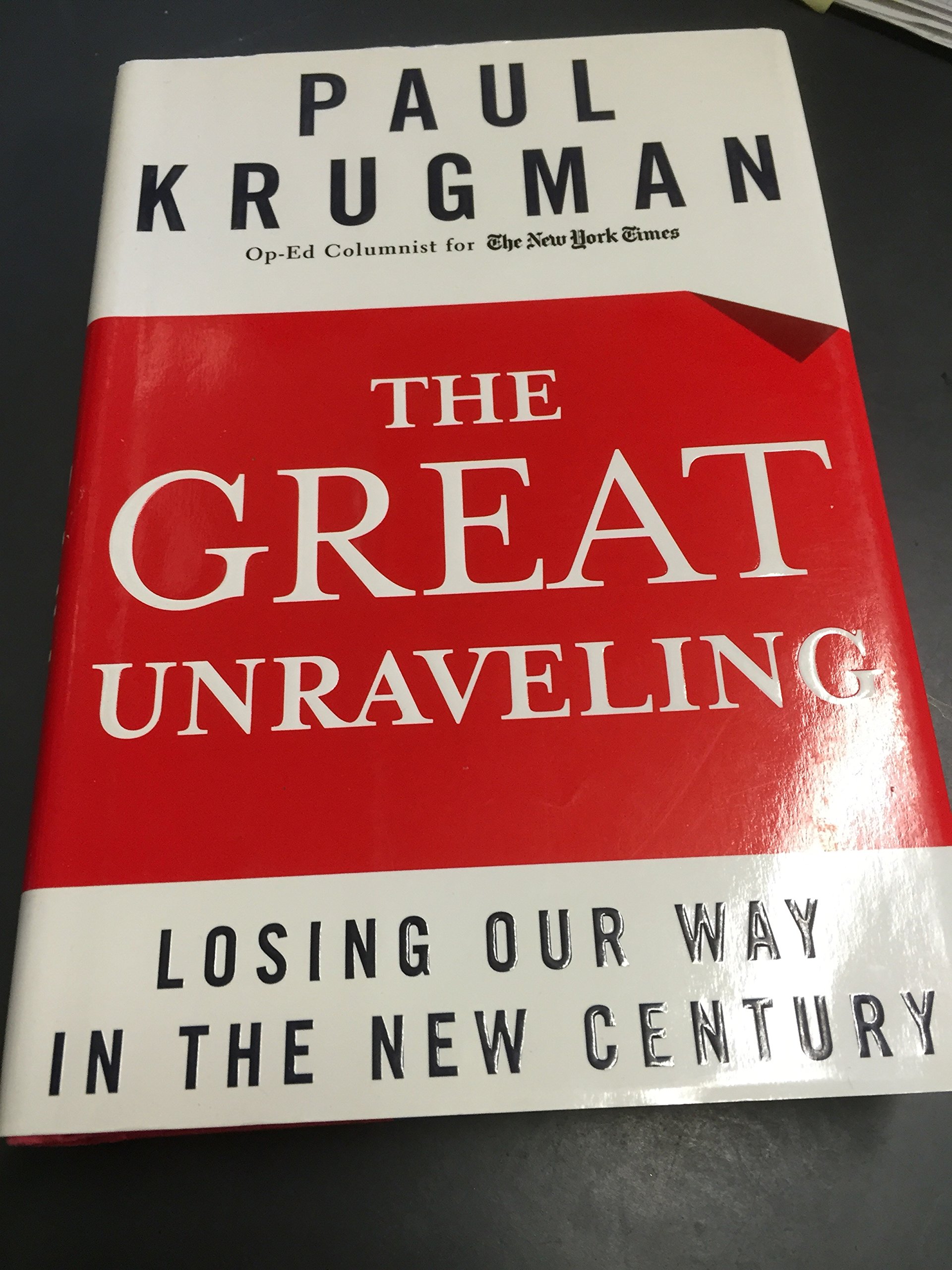



The national bestseller: A galvanizing work from America's leading economic critic―a book that will set the terms of the political debate for years to come. No one has more authority to call the shots the way they really are than Paul Krugman, whose provocative New York Times columns are keenly followed by millions. One of the world's most respected economists, Krugman has been named America's most important columnist by the Washington Monthly and columnist of the year by Editor and Publisher magazine. In this long-awaited work containing Krugman's most influential columns along with new commentary, he chronicles how the boom economy unraveled: how exuberance gave way to pessimism, how the age of corporate heroes gave way to corporate scandals, how fiscal responsibility collapsed. From his account of the secret history of the California energy crisis to his devastating dissections of dishonesty in the Bush administration, Krugman tells the uncomfortable truth about how the United States lost its way. And he gives us the road map we will need to follow if we are to get the country back on track. The Great Unraveling is a chronicle of how "the heady optimism of the late 1990s gave way to renewed gloom as a result of "incredibly bad leadership, in the private sector and in the corridors of power." Offering his own take on the trickle-down theory, economist and columnist Paul Krugman lays much of the blame for a slew of problems on the Bush administration, which he views as a "revolutionary power...a movement whose leaders do not accept the legitimacy of our current political system." Declaring them radicals masquerading as moderates, he questions their motives on a range of issues, particularly their tax and Social Security plans, which he argues are "obviously, blatantly based on bogus arithmetic." Though a fine writer, Krugman relies more heavily on numbers than words to examine the current rash of corporate malfeasance, the rise and fall of the stock market bubble, the federal budget and the future of Social Security, and how a huge surplus quickly became a record deficit. He also rails against the news media for displaying a disturbing lack of skepticism and for failing to do even the most basic homework when reporting on business and economic issues. The book is mainly a collection of op-ed pieces Krugman wrote for The New York Times between 2000 and 2003. Overall, this format works well. Krugman writes clearly about complicated issues and offers plenty of evidence and hard facts to support his theories regarding the intersection of business, economics, and politics, making this a detailed, informative, and thought-provoking book. -- Shawn Carkonen His most provocative and compelling effort yet. -- BusinessWeek , Gene Koretz, 29 September 2003 If I had a tenth of Paul Krugman's brain and a twentieth his courage, I'd be the happiest person alive. -- James Carville Krugman twice a week and in this coherent sum-up on relevant 2003-2010 economics. Buy. Read. Ponder. Benefit. -- Paul A. Samuelson, Institute Professor Emeritus, Massachusetts Institute of Technology Lively, lucid, witty, superbly informed, his commentary on the state of the union is required reading. -- Arthur M. Schlesinger, Jr. One of the few commentators able to sound both appalled and reasonable at the same time....very persuasive. -- Publishers Weekly , 18 August 2003 Paul Krugman is the indispensable American columnist, a voice of truth in a political world of lies and calculated injustice. -- Anthony Lewis Paul Krugman's coruscant book calls for a "great revulsion" across the land before it is too late. -- David Levering Lewis, author of W.E.B. DuBois: Biography of a Race Thought-provoking...at times enraging or depressing, sometimes even funny (depending on one's political leanings). Highly recommended. -- Library Journal , Susan Hurst, 1 October 2003 You need to read this book, and when you do, you'll have only one response: it's time to get mad. -- Molly Ivins Paul Krugman , recipient of the 2008 Nobel Prize in Economics and best-selling author, has been a columnist at The New York Times for twenty years. A Distinguished Professor at City University of New York, he lives in New York City.