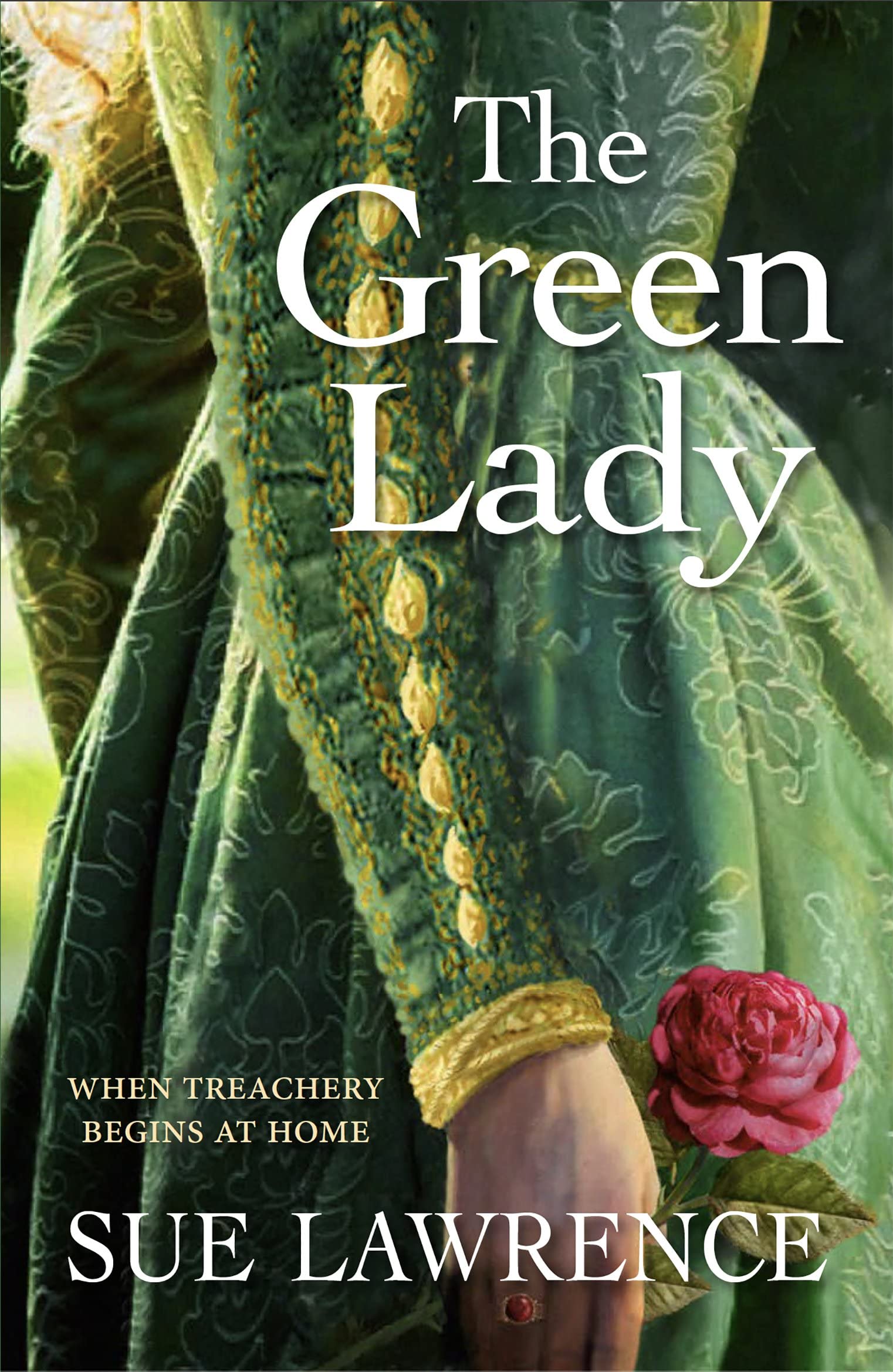



From the leading lady of Scottish historical mysteries comes her US debut novel: a shocking tale of betrayal and murder in the court of Mary, Queen of Scots. 1567, Scotland: no place for a woman. Mary, Queen of Scots, is forced to abdicate in favor of her infant son. She can rely only on the loyalty of her ladies-in-waiting, chiefly Marie Seton. Meanwhile the political turmoil in the country is mirrored behind the walls of beautiful Fyvie Castle. Lilias’s marriage to Marie’s nephew, the ruthlessly ambitious Alexander Seton, goes awry after the birth of yet another daughter. He blames her—and contemplates drastic action. To what lengths will a man go to secure a son and heir? The Green Lady is a shocking tale of intrigue, secrets, treachery, and murder, based on true events, but seen from a different perspective than is found in most history books. Casting a fascinating light on the ruthless nature of power, the story highlights the precarious position of sixteenth-century women, even those in the most privileged of circumstances. “Brilliantly evokes the lives of the women around Mary Queen of Scots in this fascinating mystery of a missing jewel and a ghost that haunts a beautiful Scottish castle to this day. Beautifully written. I loved it.” Elisabeth Gifford, author “A rich atmospheric novel, giving voice to the women of Scotland's past. With a beautiful castle setting, this tragic ghost story brings the often overlooked history of Scotland's women to life.” Ailish Sinclair, author “All the ingredients of a thrilling read – royal jewels, a secret compartment, family intrigue, ghostly superstition and a treacherous husband …” Sara Sheridan, author of the Mirabelle Bevan series “The wronged lady finally has her say … One of the strangest and most disturbing stories to have emerged from Scotland’s Jacobite past.” The Times (on her previous novel) Sue Lawrence is the award-winning author of absorbing historical page-turners casting fascinating light on the perils and injustice that characterized women’s lives in Scotland through centuries past . She is also one of the UK’s leading cookery writers and broadcasters and a former section editor of the Sunday Times. She lives in Edinburgh, Scotland. Marie Seton, 1615 As I lie on my bed, not far from death, I have asked Sister Agnes to bring me over my journals and my letters, which I have not looked at for so many years. I feel ready to reflect on my long life before I begin my journey into the next. I had just received news that Alexander Seton, now Lord Chancellor of Scotland, is to begin preparations for the royal visit from London to Scotland next year. The plan is for King James and Queen Anne to tour the country, from Dunbar to Aberdeen, presumably at great expense. The King never travels without hundreds of servants and horses and probably the entire Court and its attendant trappings. But my nephew Alexander has never been one to let the mere matter of money get in the way of his great schemes. I believe he was generously rewarded for his guardianship of Prince Charles who, in his first few years while his parents were in London, was brought up by Alexander at his properties in Scotland, including Fyvie Castle. As well as receiving an annual income, my nephew was also made Earl of Dunfermline. And now that the young prince’s elder brother Henry is dead, Charles will be the next king of England and Scotland. How Alexander will be rubbing his hands in glee that he brought up the future King Charles I of Great Britain. But, as I lie here thinking about my life and my relationship with Alexander Seton and also with his first wife, Lilias, I wonder what would happen if his royal patrons knew what he actually was. Then perhaps he would not be lauded as one of the greatest men in Scotland, one of the finest legal minds and among the most gifted patrons of the arts. If only I had the King’s ear, as I had his mother’s ear during all my many years in her service. His mother is now more often spoken of as Mary, Queen of Scots, even though she was not only Queen of Scotland but also Queen of France, and her name, like mine, was Marie, not Mary. I sigh as I think back to those times, when I was one of her four Maries, at first her childhood companions and friends in France, then later, at Court in Scotland, her ladies-in-waiting. But whereas the other three abandoned her when their men came courting, I was the one to remain loyal and true, though I too had to leave her shortly before her death. That I regret even to this day. I force my ancient, arthritic bones upwards in the bed so that my head can rest against the cold stone wall. I pick up my diary and flick back through the pages to those happy times when, instead of wearing this simple habit of coarse grey wool, I would dress in fine Court attire, in gowns of silk and velvet, with gold and jewels woven into the fabric and pearls plaited through my hair, and all of this even more sumptuous and lavish at sp