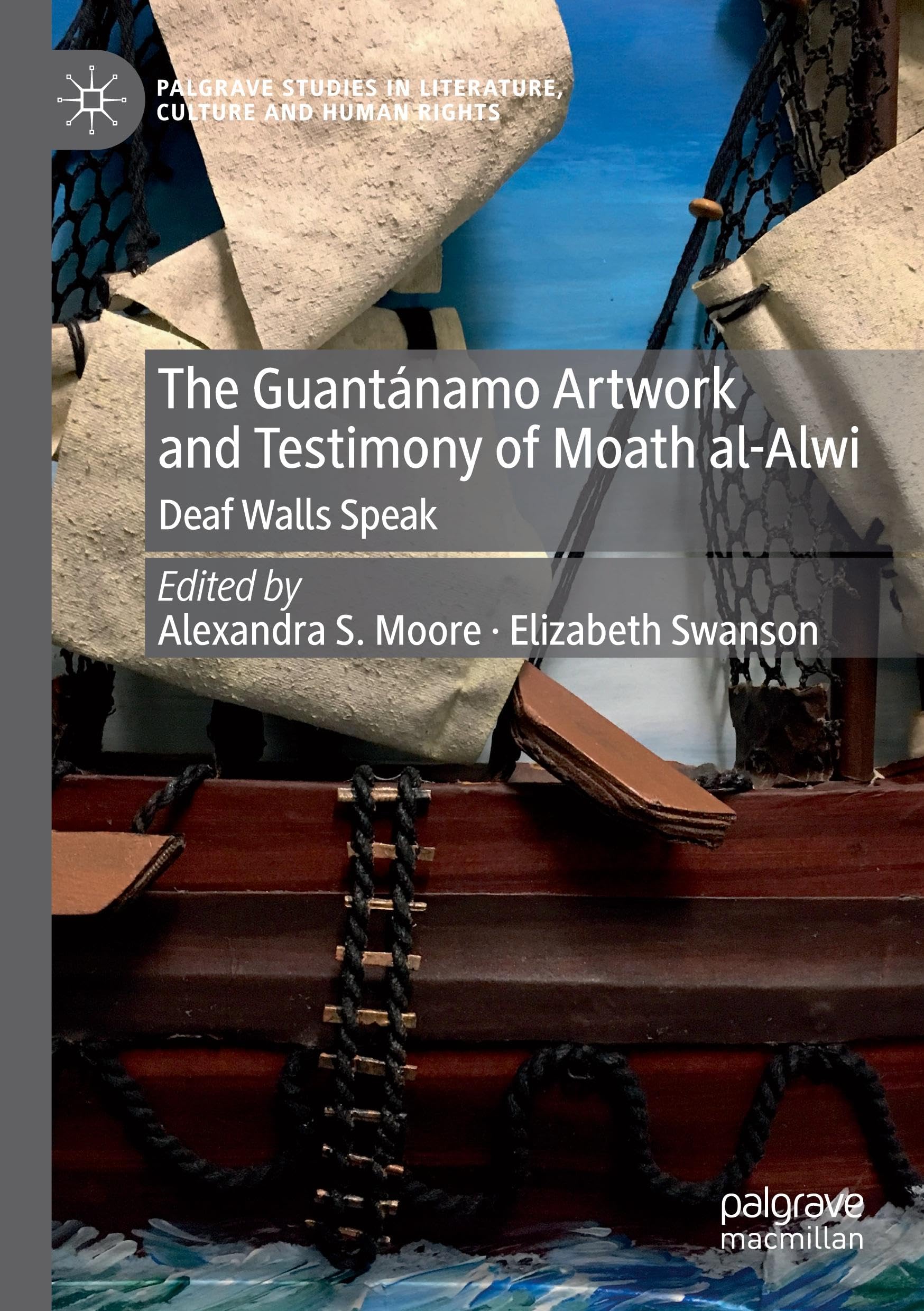
The Guantánamo Artwork and Testimony of Moath Al-Alwi: Deaf Walls Speak (Palgrave Studies in Literature, Culture and Human Rights)
$27.99
by Alexandra S. Moore



Deaf Walls Speak presents an insider’s view of artmaking in Guantánamo, the world’s most notorious prison, as self-expression and protest, and to stage a fundamental human rights claim that has been denied by law and politics: the right to be recognized as human. The book juxtaposes detainee artist Moath al-Alwi’s testimony and artwork with essays that situate his work within legal, political, aesthetic, and material contexts to demonstrate that artwork at Guantánamo constitutes important forms of material witnessing to human rights abuses perpetrated and denied by the U.S. government. Deaf Walls Speak” makes available Moath Al-Alwi’s urgent testimony about his ongoing experience as a Guantanamo detainee of the war on terror. It centers on Moath’s artistic practice, specifically his boat sculptures that have been exhibited in the United States to acclaim. These are revelatory and speak eloquently of a universal yearning for freedom. The volume’s editors have assembled an interdisciplinary group of essays that look beyond the law to make Moath Al-Alwi’s humanity present and decry his ongoing incarceration without charge. The book shows that Moath’s first level audience were the guards he interacted with and his fellow prisoners. Art formed community in a setting explicitly designed to make human bonds impossible. The model ships’ voyage to exhibition spaces beyond the detention facilities of Guantanamo underscores their symbolism of free movement and the devastating ironies of Moath’s continued detention. Lucid and vital, this book is a crucial tool for teaching the war on terror and carceral aesthetics. –Eleni Coundouriotis,Professor,Department of English,University of Connecticut, USA. Moath al-Alwi's artworks from Guantánamo, created under the harshest conditions of abduction, confinement, and torture, appear nothing short of miraculous. This pioneering volume, blending firsthand testimonies with meticulous, careful and multidisciplinary scholarship, tells the story of its creation, censorship, and eventual exhibition. It demonstrates the profound significance artmaking holds for Moath al-Alwi in testifying to his torture as well as his humanity, while compelling us to reflect its potential meaning for us as a public. Dr. Sebastian Köthe, Zurich University of the Arts. Gracing every page of Deaf Wall Speaks are compelling insights about artwork by detainees at Guantanamo despite strictures intent on denying them self-expression. This authoritative collection of testimonies and essays about Moath al-Alwi’s ships and assemblages introduces evidentiary aesthetics to show the inseparable relations between materiality, subjectivity, witnessing, and evidence. Creativity, this riveting book reminds us, is a wellspring of survival in a place where the acceptance of one’s humanness cannot be taken for granted. -- Wendy Kozol, Professor of Comparative American Studies, Oberlin College Moath al-Alwi chooses to sit and "bleed," to use Hemingway's word, into his artworks―as the editors of this volume chose to sit and "bleed" on paper to shine a blaze of light on this dark place. Their writings mercilessly take me back to that darkness even as they illuminate it; their refusal to “know hopelessness” but rather to accept and "become friends" with it shows us all the way into the light. -- Mohamedou Ould Slahi, author of Guantánamo Diary Deaf Walls Speak presents an insider’s view of artmaking in Guantánamo, the world’s most notorious prison, as self-expression and protest, and to stage a fundamental human rights claim that has been denied by law and politics: the right to be recognized as human. The book juxtaposes detainee artist Moath al-Alwi’s testimony and artwork with essays that situate his work within legal, political, aesthetic, and material contexts to demonstrate that artwork at Guantánamo constitutes important forms of material witnessing to human rights abuses perpetrated and denied by the U.S. government. Alexandra S. Moore is Professor of English and Co-Director of the Human Rights Institute at Binghamton University. Elizabeth Swanson is Professor of Literature and Human Rights at Babson College. Alexandra S. Moore is Professor of English and Co-Director of the Human Rights Institute at Binghamton University. Elizabeth Swanson is Professor of Literature and Human Rights at Babson College.