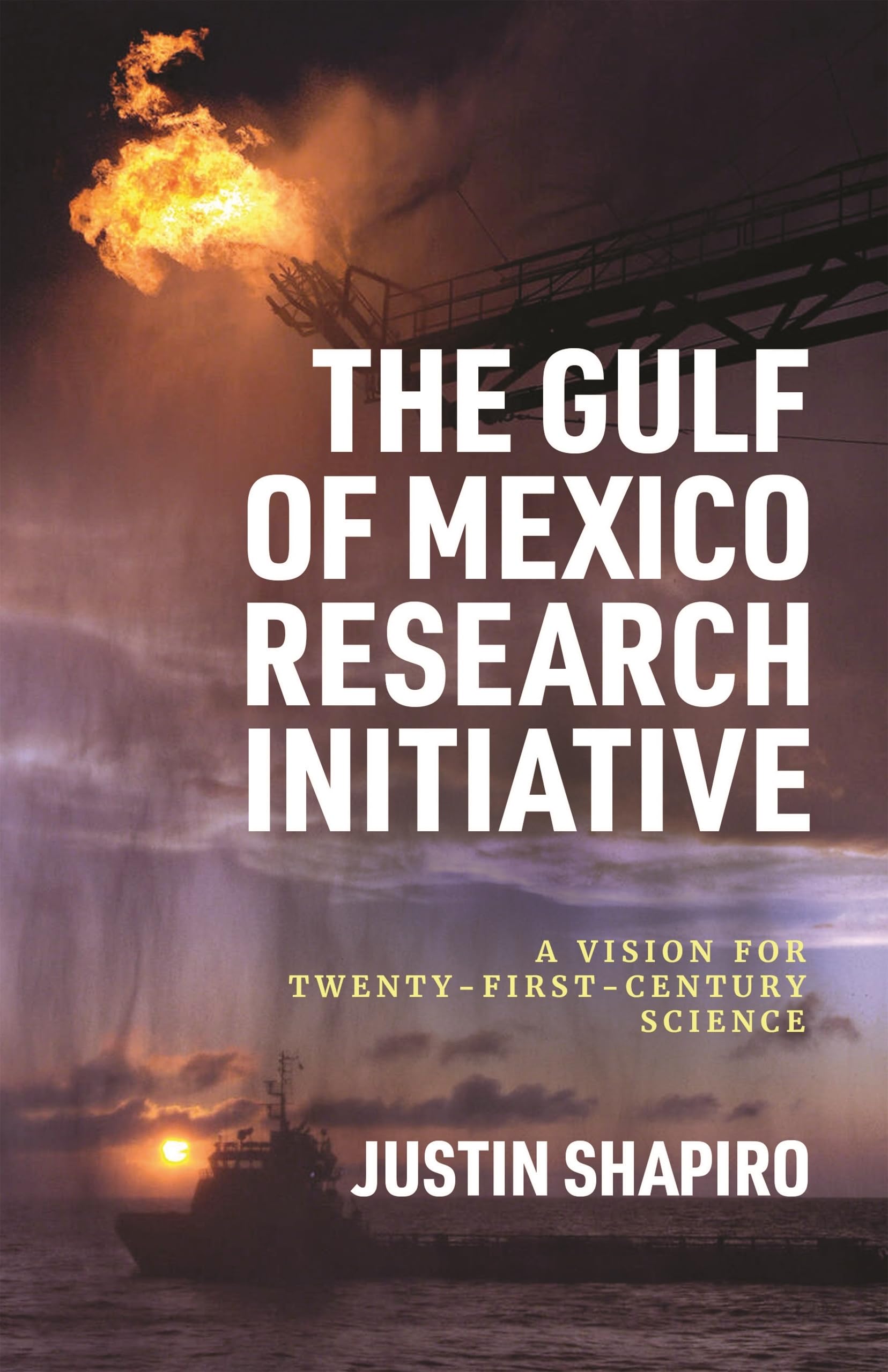
The Gulf of Mexico Research Initiative: A Vision for Twenty-First-Century Science: A Vision for Twenty-First-Century Science (America's Third Coast
$25.00
by Justin Shapiro



The Gulf of Mexico Research Initiative (GoMRI) was a ten-year, $500 million research program to investigate the impacts of oil, dispersed oil, and dispersants on the ecosystems of the Gulf of Mexico following the 2010 Deepwater Horizon disaster. Research institutions in the Gulf region and the National Oceanic and Atmospheric Agency (NOAA) worked together to conduct applied and comprehensive scientific research on the Gulf of Mexico. GoMRI left behind a substantial body of scientific knowledge about oil spills and strengthened scientific capacity to respond to such calamities. In The Gulf of Mexico Research Initiative: A Vision for Twenty-First-Century Science , Justin Shapiro writes the history of GoMRI and its role in organizing and facilitating a large-scale scientific response to the Deepwater Horizon oil spill. Chapters in the book highlight the significance of the Gulf of Mexico Research Initiative in the history of maritime oil spills and outlines its mission. Subsequent chapters discuss GoMRI’s adaptive management structure, transparent data policies, and extensive outreach efforts in the Gulf region. Finally, Shapiro emphasizes GoMRI’s comprehensive synthesis of oil spill science and its impact on future scientific responses to major disasters. For this in-depth investigation, Shapiro spent years corresponding with the GoMRI Research Board, scientists who received funding from the Initiative, and other actors who played important roles in its history. Shapiro also provides insights into how a similar scientific initiative might be organized to improve society’s ability to understand and act in the aftermath of ecological catastrophes. The Gulf of Mexico Research Initiative serves as both a work of history and an instruction manual that can guide responses to future disasters. A remarkable story of energetic scientific response to a huge and tragic oil spill. How $500 million in support from a generous corporation and leadership of a wise woman quickly built and linked new teams to assess the fate of the oil―from giant undersea plumes, surface wind and waves, microbes and sunshine, and the impacts on marine life and human health. A successful model for all. -- Peter G. Brewer, ocean chemist and senior scientist at Monterey Bay Aquarium Research Institute Justin Shapiro is postdoctoral associate in climate pedagogy at Duke University. He is a historian of the environment, technology, and climate. Shapiro received his PhD from the University of Maryland-College Park in 2020.