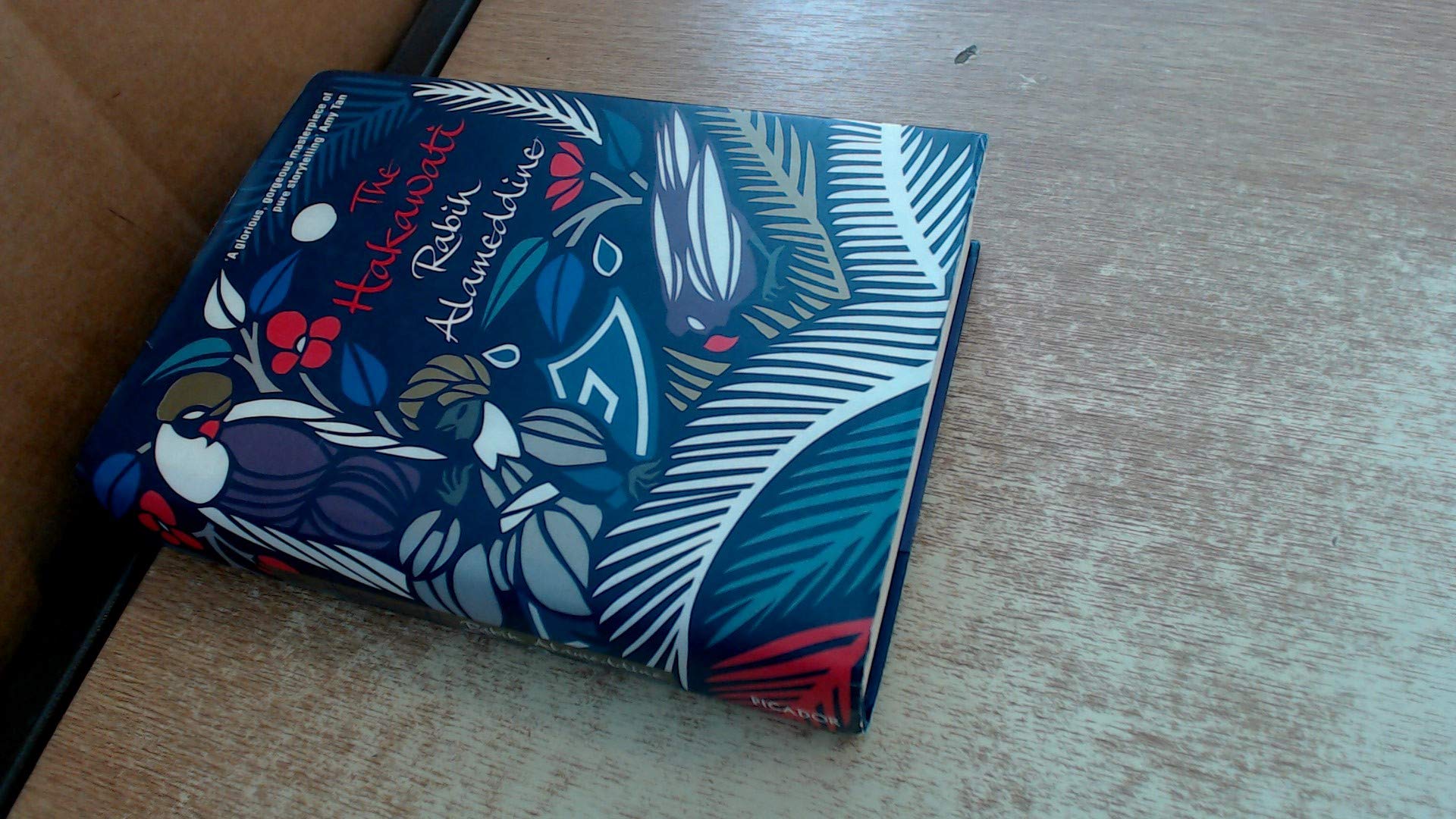



“Here is absolute beauty. One of the finest novels I’ve read in years.” —Junot Diaz An astonishingly inventive, wonderfully exuberant novel that takes us from the shimmering dunes of ancient Egypt to the war-torn streets of twenty-first-century Lebanon. In 2003, Osama al-Kharrat returns to Beirut after many years in America to stand vigil at his father’s deathbed. The city is a shell of the Beirut Osama remembers, but he and his friends and family take solace in the things that have always sustained them: gossip, laughter, and, above all, stories. Osama’s grandfather was a hakawati, or storyteller, and his bewitching stories—of his arrival in Lebanon, an orphan of the Turkish wars, and of how he earned the name al-Kharrat , the fibster—are interwoven with classic tales of the Middle East, stunningly reimagined. Here are Abraham and Isaac; Ishmael, father of the Arab tribes; the ancient, fabled Fatima; and Baybars, the slave prince who vanquished the Crusaders. Here, too, are contemporary Lebanese whose stories tell a larger, heartbreaking tale of seemingly endless war—and of survival. Like a true hakawati, Rabih Alameddine has given us an Arabian Nights for this century—a funny, captivating novel that enchants and dazzles from its very first lines: “Listen. Let me take you on a journey beyond imagining. Let me tell you a story.” Amazon Guest Review: Amy Tan Ive been a huge fan of Rabih Alameddine's work for many years, beginning with his first novel, Koolaids: The Art of War . Rabih is not only a writer whose work I admire, he is also the writer with whom I have spent the most time talking about books, writers, and literary ideas. He reads the most international fiction of anyone else I know. And for now, his French is better than minethough Im working on that. . . . Rabih is what I would call a writer of conscience, of self-consciousness, of subconsciouness, of the great big global unconscious. Within his stories are provocative ideas, housed in fractured narratives, splendid images, daring languageand simply great storytelling. What some might call disjointed narratives, I think of as the way our perceptions of time and space actually unfurl themselves: not linearly, but in a revelatory sense. In The Hakawati , you are often set on a fabulist path, astride a horse, in the echoing halls of an emirs palace, a mythic time and placebut suddenly, it feels as if the emir is ringing your own doorbell as you read, asking if he can borrow a bale of hay for his horse. The Hakawati is already becoming known by both readers and critics as an important, timely story. In part its because of the way the book integrates ancient tales from the Middle East into the lives of one unforgettable family. But it is also because of the upheavals--the violence--taking place in Lebanon today. Fiction has always been part of the wake of real political events. People read fiction, it seems to me, to understand the truth. And they will read The Hakawati to have a connection to those events--to the turmoil faced by real people not only in Lebanon but all across the Middle East. In fiction you can immerse your imagination in someone else's imagination. You are with characters the writer has imagined, and you are living beside them; they operate as your guides to life. By the end of the book, you love those characters. You have a profound interest in where they live. That's what Rabih has done in The Hakawati with Lebanon. It is no longer merely a fictional place, no longer a place you simply read about, or see on television, in the news. Yet The Hakawati is not only timely in that sense: it is a timeless novel. In the world of ideas, fabulist tales are the foundations of many religions, including those in the Middle East, be they Jewish, Christian, Sunni, Shiite, Druze. These tales generally start off with the same kings and genies, the same men and women who are cast out to solve a riddle, slay a monster, or bring back proof of paternity or the death of an enemy, or what have you. Then there are "revisionist" versions of the fabulist tales, because no writer can keep his or her hands off a story to make it his or her own. And so throughout the history of religion, these stories have gathered permutations. And these permutations have gathered followers and enemies. But soon a set of fabulist tales becomes the Tales of the True Believers, and religion itself becomes the one reality. Therein lies the source of conflict, and of so much bloody war. In The Hakawati , some of the bloody parts resonate in tragic ways, while in others they are amplified, magnified, often in bizarre and even in bizarrely humorous fashion, as if to poke fun at the seriousness in which people treat these details. Interwoven with the historical/fabulist stories in The Hakawati are other stories--those about one singular family's past. Invariably, as in any family's stories, there are secrets, scandals, something changed to