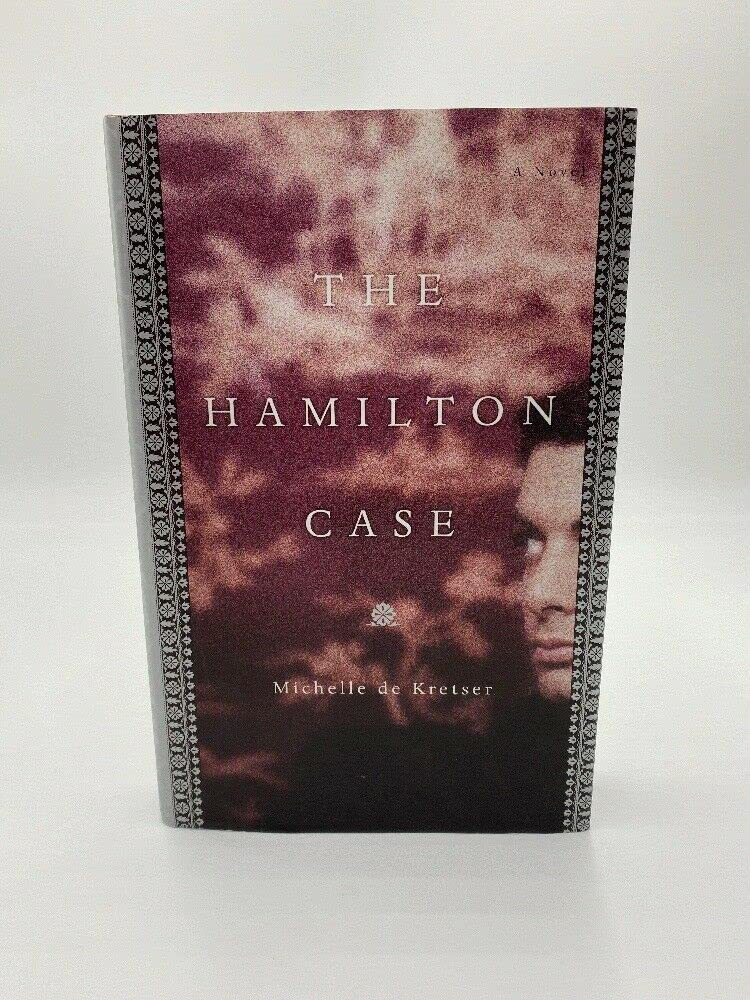



His career guided by British culture and his Oxford education, Ceylon lawyer Sam Obeysekere tackles a scandal-ridden murder trial, mistakenly convinced that his reputation will shield him from the social unrest that the case has exposed. 40,000 first printing. De Kretser’s delicacy, honesty and evocative style, which critics compare to Agatha Christie and Somerset Maugham’s, garnered praise in all quarters. Within a wholly compelling plot, she offers psychological insights rather than icy, intellectual dissections of the characters. However, the tale shifts through four points of view, a device disliked by several critics. Still, Obeysekere’s initially pompous, verbose, and mannered memoir struck some nerves. De Kretser handles the exotic material with authority, which is unsurprising given that the Sri Lankan author emigrated to Australia at age 14. Copyright © 2004 Phillips & Nelson Media, Inc. *Starred Review* "Life is bearable only if it can be understood as a set of narrative strategies." Yes, but the narrative we construct for our lives often bears little relation to the book others read. So it is with Sam Obeysekere, a lawyer from Ceylon in the middle of the last century who "strove to perfect a performance that never deceived its audience." Obeysekere's narrative starred himself as a British gentleman, a latter-day Sherlock Holmes, in fact, but it was all too elementary, both to his fellow Ceylonese and to the British colonists on the island, that the brown-skinned, stiff-collared "native" was not the right kind of gentleman. These dueling narratives come together in the infamous Hamilton case. Would Obeysekere's role in this murder investigation ensure his favored position among the British elite, or would it expose the folly of his dreams? De Kretser's elegant novel answers this question gradually, weaving its way through the often-tragic lives of Obeysekere and those closest to him and luxuriating in detailed descriptions of Ceylon near the end of the colonial era. It is difficult to write about so ultimately pathetic a character, but de Kretser, like Ishiguro in Remains of the Day , finds a heartbreaking dignity in her hero's pathos. This is far too subtle a character study to hold those expecting a literary thriller, but the novel has a way of insinuating itself into the reader's mind--first for its razor-sharp evocation of a place and time, and then, more deviously, for its crushingly sad vision of a man's self-imposed imprisonment in the wrong story. Bill Ott Copyright © American Library Association. All rights reserved Michelle de Kretser's ambitious, gracefully composed second novel might best be described as an enigma wrapped in a mystery. Its title and opening section -- a first-person reminiscence by its central character, a public prosecutor in the former British Indian colony of Ceylon, now Sri Lanka -- prompt readers to expect a straight expository work of detection, in the great and elegant British tradition of Willkie Collins, Conan Doyle and Agatha Christie. Our narrator, one Sam (né Stanley Alban Marriott) Obeysekere is indeed a diehard fan of the mystery genre, with an emphasis on "the sublime Mrs. Christie" and her serene-yet-bloody sorties into well-born British intrigue. Sam grew up in the Ceylonese capital of Colombo as the son of a high-living native-born estate holder of "iconic largesse," who managed to work the British takeover of the island nation into a mammoth personal land grab. The sight of his father whipping the son of a favored overseer instilled in young Sam a reverence for the cold and impersonal authority of British justice. Even though the boy was being punished unfairly, Sam intuited the workings of a grander design: "It was essential to the harmonious functioning of our little community that the boy paid publicly for his crime [of stealing coconuts] in spite of his privileged standing on the estate." Here was the germination of Sam's adult career as a prosecutor, which though "a stern and thankless calling" nevertheless "has a grandeur that the sentimentality of defense can never hope to rival." This paternalistic self-confidence, together with his passion for "the cold brilliance" of British murderers in fact and fiction, produces Sam's big break in the Ceylonese legal world, after Angus Hamilton, a British overseer of a colonial tea plantation, is brutally murdered while riding his horse home late one evening. Suspicion immediately falls on a pair of Tamil workers caught trying to pawn the victim's watch, but Sam applies the tried-and-true principles of the Christie yarn to the case. He directs the King's Advocate who is handling the investigation to a femme fatale, the wife of the victim's best friend, another British colonial hand named Gordon Taylor -- a bit of advice that propels Taylor's swift prosecution, conviction and suicide in prison. Don't worry: This is not giving away any key element of the plot of de Kretser's novel, for The Hamilton Cas