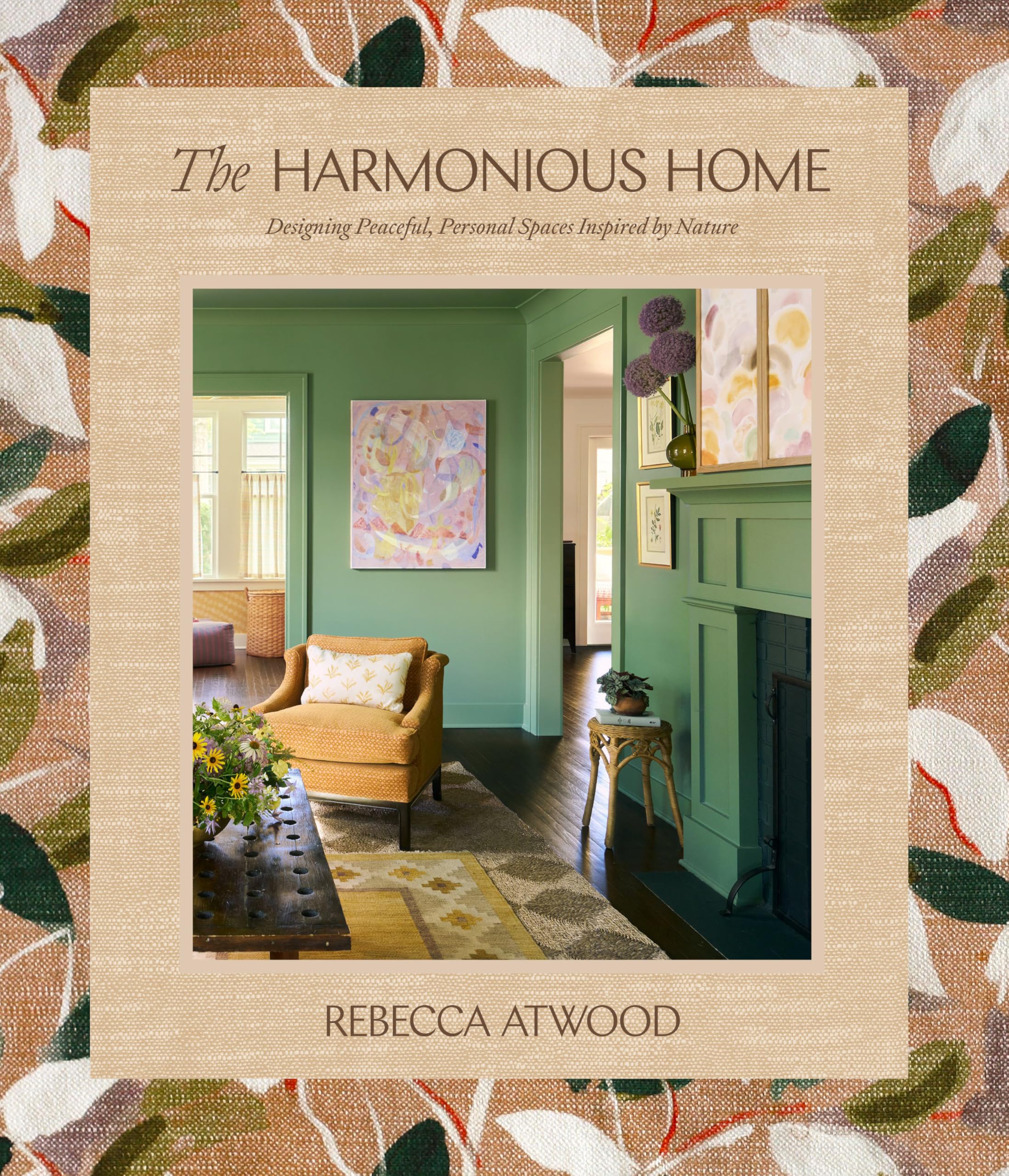
The Harmonious Home: Designing Peaceful, Personal Spaces Inspired by Nature
$22.10
by Rebecca Atwood



A holistic approach to creating a home using the colors, patterns, and textures found in the natural world, from the author of Living with Color and Living with Pattern. Hailed by Vogue for her "approachable patterns and textiles" Rebecca Atwood shares a new method for styling your interiors, one guided by nature: specifically landscapes that capture your imagination. As an artist, she has found that the details of a landscape helps make design accessible, and when decorating a home, it can even direct the decisions you make. Think of a place outside that contains a mood you want to bring into your home, such as the beach or a garden you saw on your travels. Identify the colors in its landscape and you can choose a room’s paint colors. Pick out its textures and you can decide what materials—rugs, wallpaper, upholstery fabric—to bring into the room. The Harmonious Home walks you through six different landscapes—Dunes, Ocean, Field, Forest, Garden, and City—and shows you how to pull together color and pattern combinations you might not have imagined on your own that evoke the feeling of the place without looking overly thematic. Throughout, you’ll find gorgeous photographs of interiors around the country and expert advice from celebrated interior designers for selecting lighting, a floor plan, window treatments, and more. With endless inspiration for building a room around a mood, The Harmonious Home takes you from fabric and paint swatches to a harmonious design that feels like home. Rebecca Atwood received her BFA in painting from the Rhode Island School of Design before beginning her career designing and consulting for major retailers. Today, she is an artist and textile designer, who creates timeless designs that celebrate artistry, color, and the beauty of nature for her namesake line. She is also the author of Living with Pattern and Living with Color . Her interest in pattern is deeply rooted in her childhood on Cape Cod and her everyday observations of life in Charleston, South Carolina, where she lives with her family. Introduction I’ve always looked to nature to make sense of things. In addition to my art, the landscapes I’ve lived in have shaped the way I think about my happiness and what I need to thrive. As a young girl, I remember sitting with my aunt Allison on the Cape Cod beach near where I grew up and telling her that one day I would have a room in my house with sand in it. I can still see the image that popped into my mind: It was a room like a screened porch with a floor covered in sand. There were low beach chairs, a rake for smoothing the sand, and rocks to play with. This room in my future home looked out over the dunes and had a sweeping view so I could watch the changing scene: stormy gray days with crashing waves; peaceful mornings when the horizon is indistinguishable, with the water and sky blurring into one expanse; a colorful golden hour when everything is bathed in pink light. In my imagination I lived right on the beach, but that wasn’t enough. I wanted the beach to surround me. I loved how I felt there. As a child I imagined that an adult could do anything, including create a house that was very tangibly like the beach. Looking back, I realize that even then I sensed just how much the landscape outside us intertwines with the landscape within us—in what I think of as our living landscape. A beach room with a sandy floor doesn’t sound quite as magical to me now that I’m a grown-up with a young daughter and two cats. I remember why I wanted it, though. I was so drawn to the physical sensation of the sand. I loved the feeling of it—hard and packed in some areas and so soupy in others that I’d melt right into it. In the fall, I loved how it felt so cool when I sat down and settled in. I thought bringing sand into my home would bring me all the sensory delights of the beach. The soft, subtle colors. The salty air. These landscapes are essential to my creativity and my happiness. I learned to paint by painting the coast. Later on, when I was studying art at Rhode Island School of Design, abstract drawings finally clicked for me when my teacher, Alfred De Credico, taught me how to see them as landscapes. Applying the order of something I could see and understand— background, middle ground, foreground, like in a landscape painting or a still life—allowed me to imagine the marks and shapes coming together to capture a feeling or tell a story. Visualizing my thoughts, memories, emotions, stories, dreams, and sensations in this way, like the elements in a landscape, also helps me understand myself more clearly, especially when what I feel is complex, messy, or unpleasant. As an adult and a mother, when I’ve processed anxiety and deep sadness, I’ve closed my eyes and seen these emotions moving from the foreground to the background, changing as I breathed. This awareness during challenging times helps me embrace joy and beauty. I try to relish those times when the