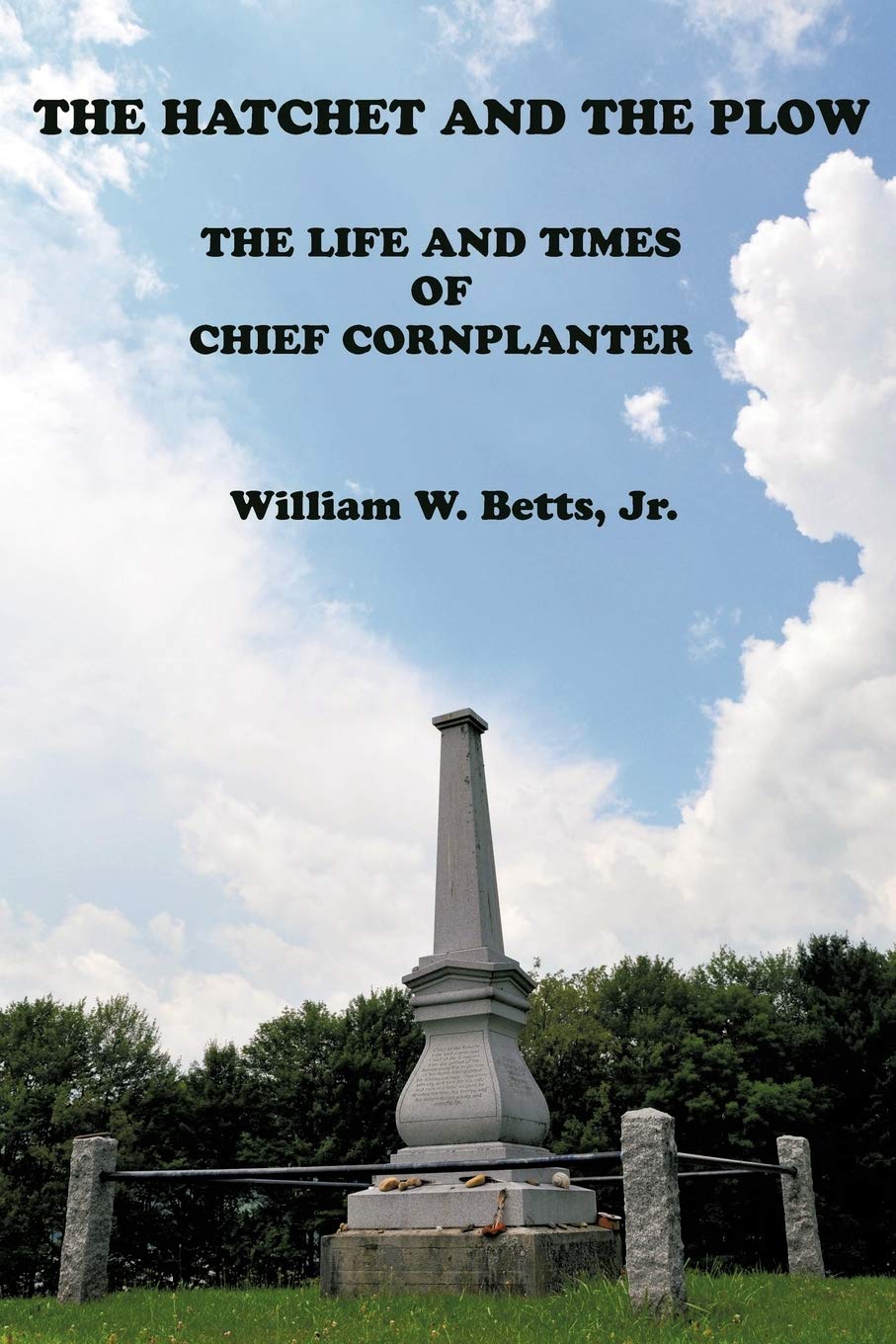
The Hatchet and the Plow: The Life and Times of Chief Cornplanter
$15.69
by William W. Betts Jr



The Seneca war-chief Cornplanter was one of the most prominent and influential of all Native Americans during colonial times and throughout the American Revolution. The son of a Dutch trader and an Indian woman, he lived a long and intensely active life. Drama attended him everywhere. Chief Cornplanter's exciting life unfolds in The Hatchet and the Plow , which follows the chief on his wilderness rivers, as a warrior for the British, as tireless diplomat, and as the devoted leader of his people. Author William W. Betts studies Cornplanter, also known as Gaiantwaka, closely, including his turbulent relationships with the leading figures of two worlds: George Washington, Henry Knox, Anthony Wayne, Timothy Pickering, Thomas Mifflin, John Graves Simcoe, David Mead, Timothy Alden, his uncle Kayahsotha, Handsome Lake, Red Jacket, Joseph Brant, Blacksnake, Little Beard, Blue Jacket, and Little Turtle. Some years after his death on his beloved Allegheny, a grateful Pennsylvania installed a marble monument at his gravesite-the first such monument ever erected to the memory of a Native American. Though it was moved up the river a short distance, it still stands today. The Hatchet and the Plow The Life and Times of Chief Cornplanter By William W. Betts, Jr. iUniverse, Inc. Copyright © 2010 William W. Betts, Jr. All right reserved. ISBN: 978-1-4502-6713-7 Contents Preface..................................................................ixAcknowledgments..........................................................xiOrder Of Events..........................................................xvPrologue.................................................................xixChapter I: Ganawaugus and the Stinking Water.........................1Chapter II: Gaiantwaka................................................14Chapter III: "None of Our Business"....................................22Chapter IV: The Border Wars...........................................35Chapter V: Iroquois Take Up the Hatchet..............................46Chapter VI: Wyoming...................................................66Chapter VII: The Sullivan Campaign.....................................75Chapter VIII: The Mohawk Valley.........................................107Chapter IX: The 1784 Fort Stanwix Treaty..............................113Chapter X: Philadelphia and New York City............................130Chapter XI: Fort Harmar...............................................138Chapter XII: Thomas Miffl in and George Washington.....................144Chapter XIII: Home Again................................................165Chapter XIV: War in the West...........................................180Chapter XV: John Adlum at Cornplanter Town............................216Chapter XVI: Fallen Timbers............................................230Chapter XVII: The Canandaigua Treaty....................................245Chapter XVIII: Cornplanter Town..........................................256Chapter XIX: The Big Tree and the Sawmill..............................270Chapter XX: The Quaker Mission........................................280Chapter XXI: Handsome Lake and Red Jacket..............................303Chapter XXII: The War of 1812...........................................319Chapter XXIII: Last Years................................................325Afterword................................................................351Image Credits............................................................363Works Consulted..........................................................365Notes....................................................................379Index....................................................................407 Chapter One GANAWAUGUS AND THE STINKING WATER When the youthful Dutch trader John Abeel first appeared at the Seneca Indian village known as Ganawaugus, he was doubtless not astonished by what he saw. For Ganawaugus was a typical Iroquois community, one of the many Seneca villages (which at that time accommodated perhaps 4000 Indians) to be found in the region that now is composed of New York, Ontario, and Pennsylvania. He would have perceived a town of 20-25 cabins, rude houses of pole and bark construction. These would be single-family dwellings, as the longhouse had all but disappeared; and there would be no stockade. Likely he could make out a council house, a somewhat larger structure, near the center of the village. Surrounding the cabins cleared fields reached for some distance, and, if it were summer, the "three sisters," maize and beans and squash, together with pumpkins perhaps, and tobacco, would catch his eye. Against the darkness of the forest stood peach trees and apple trees. Wandering in the fields straggled pigs and cows of various shades and sizes. Mangy, mongrel dogs rudely announced his appearance. He probably had heard much about the one distinctive feature of the village, its h