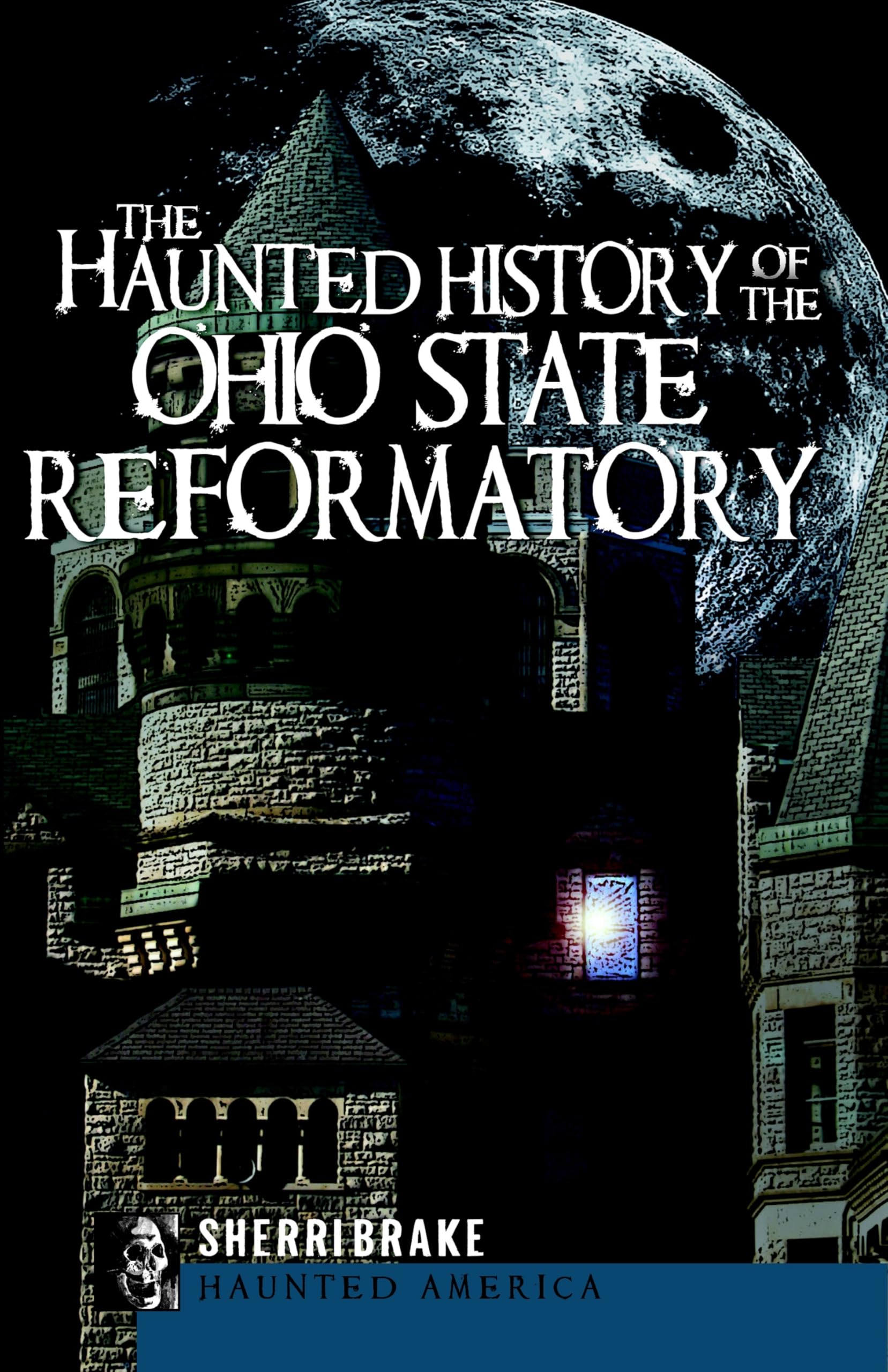



The Ohio State Reformatory has a century long history of housing thousands of the most dangerous criminals, and the angry ghosts of the past still roam the corridors. First opened in 1896, the Ohio State Reformatory intended to do what their name implied, to reform young offenders, but eventually came to house the most dangerous criminals in society. Built on a former Civil War camp ravaged by disease, one can only imagine the unease creeping through the cells and down the dark corridors, made famous as the backdrop for the The Shawshank Redemption. The prison grew to hold more than a thousand prisoners, suffering what were described as brutalizing and inhumane conditions. Ghost tour guide Sherri Brake escorts the reader on a tour of the dark and violent history of one of America's most notorious prisons, the spirits of these men still haunting these halls, forever searching for justice... or revenge. Sherri Brake is an author, paranormal investigator, lecturer, instructor, Civil War reenactor and tour guide. She has over twenty-five years of experience in the field of the paranormal and is a lover of history and folklore. Her company, Haunted Heartland Tours, has been voted into the nation's top ten best ghost tours for the last five years. She continues to seek out new haunted locations to explore and enjoys sharing those places with others. Sherri is the author of Haunted Stark County, Ohio, and writes a monthly column entitled Fireside Folklore� for Two-Lane Livin'. She is a member of various historical societies and heritage organizations and is the mother of two children, Sage and Mason Recco. The author lives in a slightly haunted property on one hundred acres in West Virginia with her husband, Perry Queener. This is her second published book. Visit Sherri's website at www.HauntedHistory.net. The Haunted History of the Ohio State Reformatory By Sherri Brake The History Press Copyright © 2010 Sherri Brake All rights reserved. ISBN: 978-1-59629-935-1 Contents Acknowledgements, Introduction, Mansfield, Ohio, "Blood on the Frontier": Formation and Early History, The Civil War: Camp Mordecai Bartley, Death and Disease, Guilty! The Rope and the Chair in Ohio History, The Birth of the Ohio State Reformatory: Architect Levi Scofield and the Reformatory, Life on the Inside: From Prisoners and Punishments to Reform and Rehabilitation, Escapes and Escapades: Desperate Men and Desperate Measures, Spirits, Ghosts and Shadowy Encounters: They Still Walk the Halls
and Wait in Cells, She Walks Reformatory Road: The Ghost of Phoebe Wise, Stone Walls Were His Home: Memories of a Superintendent's Son, Exploring What Lies Beyond: Psychics, Sensitives and the Entities They See, Conclusion, Bibliography, About the Author, CHAPTER 1 MANSFIELD, OHIO, BLOOD ON THE FRONTIER" Formation and Early History The Ohio frontier time frame spanned from approximately 1720 to the year 1830. Before Ohio became a state, it was known as the Northwest Territory, an organized incorporated territory of the United States that existed from July 13, 1787, until March 1, 1803, when the southeastern portion of the territory was admitted to the Union as the state of Ohio. White immigrants from other areas such as Pennsylvania, the New England states, Virginia and Kentucky inundated the fertile land we now call the "Buckeye State." Although Ohio was an isolated area at first, the Ohio River linked the frontiersmen to civilization and trade, and the canal way systems that cut through Ohio aided in that endeavor as well. The influx of newly arrived settlers caused other changes as well. The federal government developed an Indian policy that basically caused incredible violence in the area before achieving the removal of the Native Americans from the state. When General James Hedges began the original survey in 1806 in what is now Richland County, Ohio, there were no permanent settlers in the area. Later, in 1807, the first cabin in the area was constructed by Jacob Newman and was erected on section 36, which was about sixty rods (a rod is a measurement of sixteen and a half feet) from the first mill. The mill would later be named "Beams Mill." The cabin occupants included Jacob Newman, a housekeeper and four nieces and nephews. The closest neighbors were twenty-five miles in distance in Wooster, Ohio. Originally, Samuel Martin was said to be the first settler in the area of Mansfield, as he built his cabin there in 1809. Old Sam got himself into some trouble selling whiskey, or firewater, to local Indians and was asked to leave the area. Out moved Samuel Martin, and in came Captain James Cunningham, who became the first settler according to many more history sources. Mansfield was laid out on June 11, 1808, by Jacob Newman, James Hedges and Joseph H. Larwill. In 1812, an incident took place in Mansfield that was typical of other such tragedies and misunderstandings on the frontier. There was a friendl