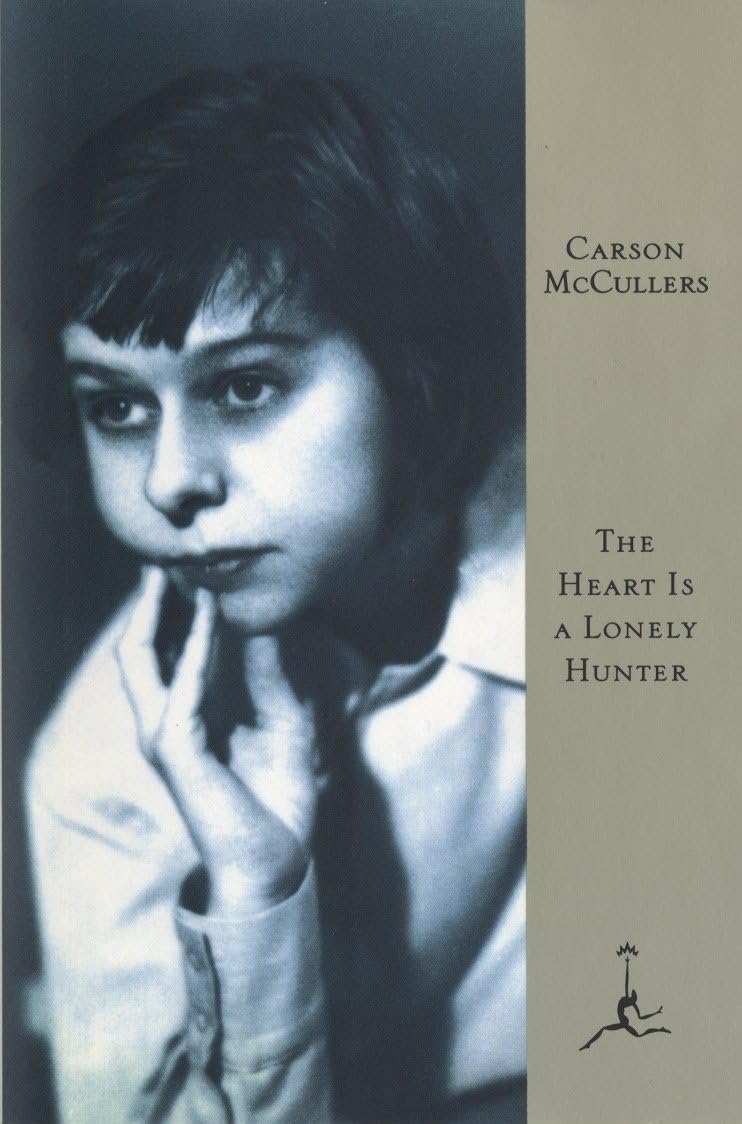



Selected by the Modern Library as one of the 100 best novels of all time • One of The Atlantic ’s Great American Novels of the Past 100 Years When she was only twenty-three, Carson McCullers's first novel created a literary sensation. She was very special, one of America's superlative writers who conjures up a vision of existence as terrible as it is real, who takes us on shattering voyages into the depths of the spiritual isolation that underlies the human condition. This novel is the work of a supreme artist, Carson McCullers's enduring masterpiece. The heroine is the strange young girl, Mick Kelly. The setting is a small Southern town, the cosmos universal and eternal. The characters are the damned, the voiceless, the rejected. Some fight their loneliness with violence and depravity, some with sex or drink, and some—like Mick—with a quiet, intensely personal search for beauty. When she was only twenty-three, Carson McCullers's first novel created a literary sensation. She was very special, one of America's superlative writers who conjures up a vision of existence as terrible as it is real, who takes us on shattering voyages into the depths of the spiritual isolation that underlies the human condition. This novel is the work of a supreme artist, Carson McCullers's enduring masterpiece. The heroine is the strange young girl, Mick Kelly. The setting is a small Southern town, the cosmos universal and eternal. The characters are the damned, the voiceless, the rejected. Some fight their loneliness with violence and depravity, Some with sex or drink, and some -- like Mick -- with a quiet, intensely personal search for beauty. From the Paperback edition. When she was only twenty-three, Carson McCullers's first novel created a literary sensation. She was very special, one of America's superlative writers who conjures up a vision of existence as terrible as it is real, who takes us on shattering voyages into the depths of the spiritual isolation that underlies the human condition. This novel is the work of a supreme artist, Carson McCullers's enduring masterpiece. The heroine is the strange young girl, Mick Kelly. The setting is a small Southern town, the cosmos universal and eternal. The characters are the damned, the voiceless, the rejected. Some fight their loneliness with violence and depravity, Some with sex or drink, and some -- like Mick -- with a quiet, intensely personal search for beauty. "From the Paperback edition. Carson McCullers was born in 1917. She was the critically acclaimed author of several popular novels in the 1940s and '50s, including The Heart Is a Lonely Hunter, The Member of the Wedding, and Reflections in a Golden Eye . Her fiction frequently depicted life in small towns of the southeastern United States and were marked by themes of loneliness and spiritual isolation. McCullers suffered from ill health most of her adult life, including a series of strokes that began when she was in her twenties; she died at the age of fifty. Excerpt 1 In the town there were two mutes, and they were always together. Early every morning they would come out from the house where they lived and walk arm in arm down the street to work. The two friends were very different. The one who always steered the way was an obese and dreamy Greek. In the summer he would come out wearing a yellow or green polo shirt stuffed sloppily into his trousers in front and hanging loose behind. When it was colder he wore over this a shapeless gray sweater. His face was round and oily, with half-closed eyelids and lips that curved in a gentle, stupid smile. The other mute was tall. His eyes had a quick, intelligent expression. He was always immaculate and very soberly dressed. Every morning the two friends walked silently together until they reached the main street of the town. Then when they came to a certain fruit and candy store they paused for a moment on the sidewalk outside. The Greek, Spiros Antonapoulos, worked for his cousin, who owned this fruit store. His job was to make candies and sweets, uncrate the fruits, and to keep the place clean. The thin mute, John Singer, nearly always put his hand on his friend"s arm and looked for a second into his face before leaving him. Then after this good-bye Singer crossed the street and walked on alone to the jewelry store where he worked as a silverware engraver. In the late afternoon the friends would meet again. Singer came back to the fruit store and waited until Antonapoulos was ready to go home. The Greek would be lazily unpacking a case of peaches or melons, or perhaps looking at the funny paper in the kitchen behind the store where he cooked. Before their departure Antonapoulos always opened a paper sack he kept hidden during the day on one of the kitchen shelves. Inside were stored various bits of food he had collected—a piece of fruit, samples of candy, or the butt-end of a liverwurst. Usually before leaving Antonapou