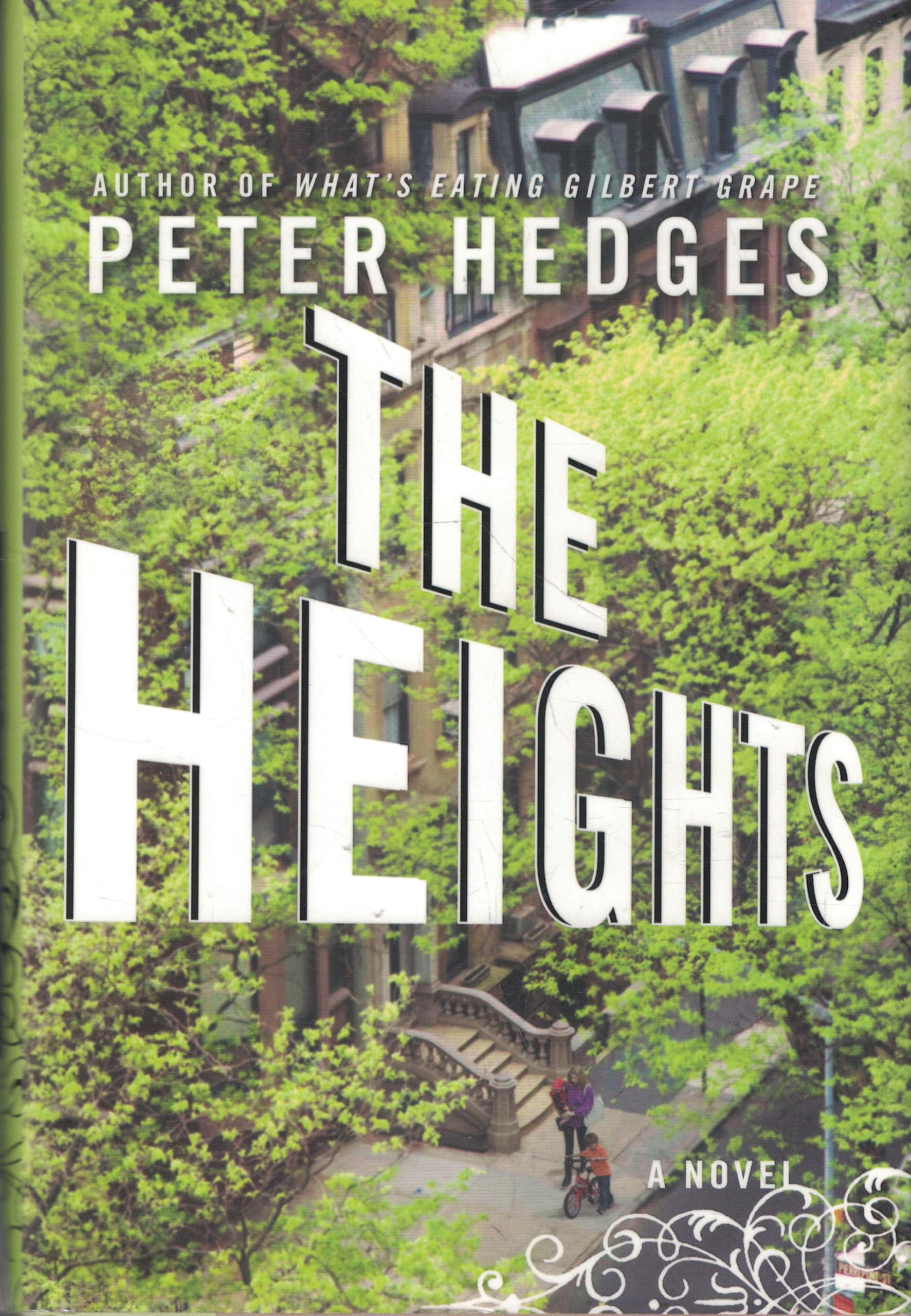



Tim Welch is a popular history teacher at the Montague Academy, an exclusive private school in Brooklyn Heights. As he says, "I was an odd-looking, gawky kid but I like to think my rocky start forced me to develop empathy, kindness, and a tendency to be enthusiastic. All of this, I'm now convinced, helped in my quest to be worthy of Kate Oliver." Now, Kate is not inherently ordinary. But she aspires to be. She stays home with their two young sons in a modest apartment trying desperately to become the parent she never had. They are seemingly the last middle-class family in the Heights, whose world is turned upside down by Anna Brody, the new neighbor who moves into the most expensive brownstone in Brooklyn, sending the local society into a tailspin. Anna is not only beautiful and wealthy; she's also mysterious. And for reasons Kate doesn't quite understand, even as all the Range Rover- driving moms jockey for invitations into Anna's circle, Anna sets her sights on Kate and Tim and brings them into her world. Like Tom Perrotta, Peter Hedges has a keen eye for the surprising truths of daily life. The Heights is at once light of touch and packed with emotion and depth of character. Watch a Video Kate and Tim tell the story of their practically perfect life (he’s a history teacher in a posh private school; she’s a stay-at-home mom) in alternating chapters. Brooklyn Heights, their neighborhood, rife with social strata, rules, and conventions, is rocked by a newcomer, Anna Brody, the beautiful, mysterious wife of a very wealthy man who latches onto the couple. Then, when opportunities impel Kate back to work, Tim becomes the at-home parent, ostensibly at work on his long-delayed dissertation. An old flame of Kate’s, now a TV star, stirs up more mischief, while Bea, a student of Tim’s with a crush, offers her perspective. Ultimately, deceptions replace perfect openness. Hedges, of What’s Eating Gilbert Grape (1991) fame, demonstrates a sure touch with people and settings. The somewhat predictable outcomes are ameliorated by the charm of his characters and his obvious fondness for them. While Hedges’ use of the old-fashioned convention of beginning chapters with a variation on “ if only I had known” can be tiresome, this is an enjoyable novel of modern manners. --Danise Hoover "Hedges delivers an insightful portrayal of parenthood and the strains and temptations of marriage, even in a seemingly perfect relationship. He also makes some wonderful observations about family life." -Associated Press "[A] quirky, amusing book." - Washington Post " The Heights ' witty and honest take on marital claustrophobia shows the virtue of taking your time." - GQ Magazine " The Heights stays with you. As much a metaphor for being swept off your feet by lofty people or aspirations or location, The Heights delves into the marriage of a futurist woman working for a nonprofit and a history teacher at a Brooklyn Heights private school taking a sabbatical to finish his dissertation on the history of loss." - New York Daily News "Hedges has a knack for taking everyday life and making it fascinating... The Heights us a no-holds-barred expose of suburbia and the strains of marriage and childrearing, but Hedges deftly transforms this weighty subject matter into an addictive blend of melodrama carefully balanced with comedy...creating a novel that is devilishly delightful." -BookPage "A must-read if you've ever longed for more excitement in your life." - Parenting magazine PETER HEDGES is a novelist, playwright, and filmmaker. He wrote both the novel and the screenplay What’s Eating Gilbert Grape , and is the writer-director of Pieces of April starring Katie Holmes and Dan in Real Life starring Steve Carrell. His screenplay for About a Boy was nominated for an Academy Award. Hedges lives with his wife and children in Brooklyn, New York. 3 KATE THAT MORNING WE WOKE TO FIND OUR STREET BURIED IN SNOW. THE STOOPS, THE sidewalk, the row of parked cars were a blanket of white; the trees looked as if they’d been dipped in frosting, and the whole of Oak Lane—with its impeccably preserved century-old brownstones—had the look of a vintage photograph. Only the loud scrape from an approaching snowplow betrayed what Tim, my history-teaching husband, would like to believe: Erase the plow, remove the light poles and the telephone wires, toss out all electrical appliances, and it could be any other Brooklyn Heights morning, circa 1848 or 1902. Staring down from our fourth-floor apartment, I made out the faint prints from Tim’s boots. Before sunrise, he’d crossed between two parked cars and trudged with his backpack full of graded papers toward Montague Street, where he’d climbed the steps to the Montague Academy. During the night, the thick flakes had fallen gently, but now it was morning, and the wind blew in gusts that rattled the windows of the living room/dining room/toy room where I was standing. I