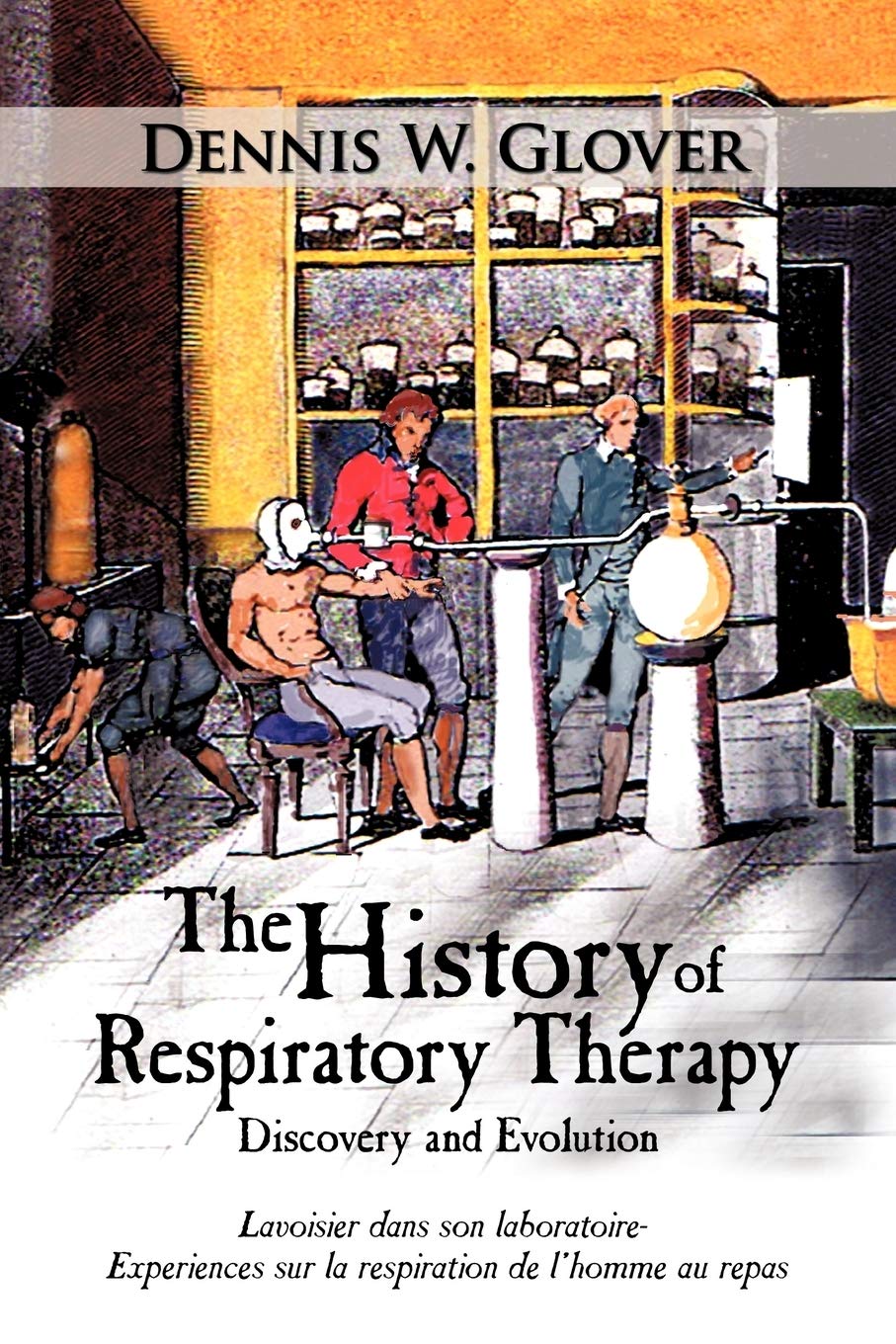



The History of Respiratory Therapy: Discovery and Evolution includes the earliest beginning of the inhalational practice of medicine, vapors, and aromatherapy around 6,000 B.C. Its roots are in Egypt, China, India, and the middle East. From there, it spreads to Europe and the Americas. Some highlights include:In 6000 B.C. aromatherapy has its beginning. In 3000 B.C. Egypt, tracheostomy is depicted on a sculptured slab. 2600 B.C. there is mention of inhalational treatment for asthma in China. Tuberculosis-Pott's Disease is found in mummies in Egypt around 2400 B.C. In 1275 A.D. Lillius discovers ether but it is not apparently used until 1842 when Crawford Long M.D. administers ether to remove two cysts from a patient. In 1783, Caillens was first reported doctor to use oxygen therapy as a remedy. In 1873, Theodore Billroth M.D. performs first laryngectomy. In 1917, Captain Stokes M.D. uses a rubber nasal catheter and nasal prongs to administed oxygen for WWI pulmonary edema patients. But only in the past 100 years is the major evolution of respiratory therapy been realized. The History of Respiratory Therapy: Discovery and Evolution is the first comprehensive written book on this subject and makes it a pioneer which officially documents information which is scattered throughout various resources. The History of Respiratory Therapy Discovery and Evolution By Dennis W. Glover AuthorHouse Copyright © 2010 Dennis W. Glover All right reserved. ISBN: 978-1-4490-1490-2 Contents Preface........................................................................ixAcknowledgments................................................................xiIntroduction...................................................................xiii1. Discovery: 6000 BC..........................................................12. Evolution: First through Sixteenth Centuries................................53. Seventeenth and Eighteenth Centuries........................................64. Nineteenth Century..........................................................175. Twentieth Century...........................................................286. Twenty-first Century........................................................89Appendix A A Tribute to My Patients............................................101Appendix B General Chronological Events........................................109Appendix C Medical Definitions from the Year 1904..............................119Appendix D Patient Support Organizations.......................................123Appendix E References..........................................................127Appendix F Internet Resources..................................................133Appendix G Respiratory Therapy Manufacturers and Providers.....................135 Chapter One Discovery: 6000 BC For more than six thousand years, respiratory therapy has been used to relieve all sorts of ailments. It has only been in the past two hundred years that this practice has achieved more popularity, due to advanced medical understanding. The early use of respiratory, or inhalation, therapy had its origin in ancient India, Greece, Rome, Egypt, the Middle East, China, Japan, Korea, South America, Central America, and North America. Various records depict the empirical inhalation of vapors, anesthesia, aromatherapy, and fumigation started circa 6000 BC. The majority of inhaled herbs, oils, animal parts, and minerals were first tried on the practitioner himself (as in China). The practitioners included folk healers, priests, shamans, medicine men, quacks, and elders. The causes and cures for illness were founded on the beliefs of spirituality, sin, destiny, or astrology, to name a few. Medical practice and education did not stand alone until the founding of medical schools in Italy, Iran (the University of Gundishapur was established during the Sassanian Period, 224-641 CE), and Egypt (Achaemenical Medical Schools built by Darius the Great, 522-486 BCE) (Vohuman.org, August 18, 2005). Before medical institutions were established, alchemy was practiced by scientists. This belief included the study of medicine, but also chemistry, physics, astrology, nature, mysticism, and art. Humorism was the practice in the Roman and Greek period. The theory involved the makeup and working of the human body. It was supposedly the most commonly held view of the human body in Europe until the nineteenth century. The theory maintained that the body was filled with four basic substances, which were the humors. They were identified as phlegm, yellow bile, black bile, and blood. All diseases and disabilities were the result of an excess or deficit of one of these humors. For example, if someone had too much phlegm, they were phlegmatic. In ancient Egypt, physicians mixed vinegar with water poured over Memphite stone to produce a vapor with an analgesic effect; cough was treated by inhalation of honey, cream, milk, carob,