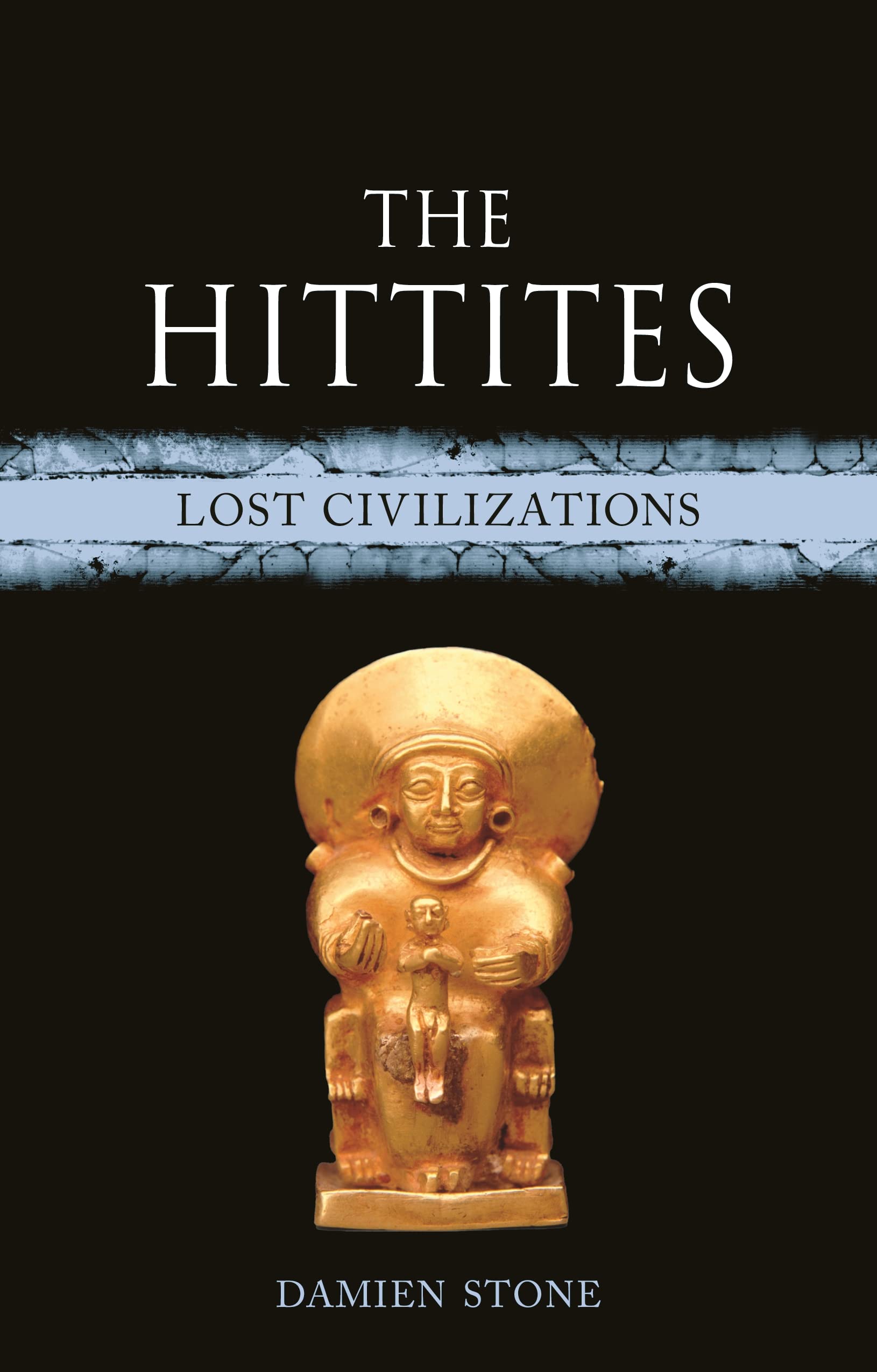



An accessible introduction to the Bronze Age culture in Asia Minor. Famed for their warriors, the Hittites flourished in the region of modern Turkey from the seventeenth to thirteenth centuries BC. In this book, archaeologist Damien Stone explores the rich history of the Hittite civilization beyond their skill in battle, from religious reverence for the sun and storms to eclectic rock carvings which survive to this day. Stone describes the colorful succession of Hittite rulers, complete with assassinations, intrigue, and an evil stepmother, but he also parses the development of the Hittite language and considers the Hittites’ legacy in religion, art, and culture today. In short, The Hittites is a wide-ranging, accessible introduction to this vibrant ancient culture. "Through examination of the documents and material remains of the civilization, the book discusses the Hittites' military and political history, their religion, society and culture in a concise and accessible format . . . [Stone makes] an excellent tour guide: showing the main highlights, providing the odd anecdote and expertly explaining the nuances of the material culture, while tempting visitors to return for a longer sojourn in the land of the Hatti.” ― Get History (UK) "This work will be of interest to general readers and is recommended for use in introductory courses on the pre-Classical history of the Near/Middle East. Tourists planning a trip to Turkey might peruse it to gain an orientation to the archaeological sites treated." ― JAOS "For hundreds of years the Hittite kings, from their citadel in highland Turkey, played a dominant role in the international politics of the Eastern Mediterranean. In this highly readable account, rich in detail and wide in scope, Damien Stone explores the fascinating world of the Hittites, empire-builders and innovators, by weaving a tapestry that draws equally from material and textual remains. Stone offers a clear outline of complex issues and debates and provides insight into the social and economic structures of the civilization. We not only marvel at the innovations of the Hittite military, but meet literate female ritual specialists, learn about the world’s first trade embargo and wonder at the forging of relations between human and divine." -- Margaret C. Miller, University of Sydney Damien Stone is an archaeologist who lives in Sydney, Australia. The seventeenth century BC saw a dynasty of kings emerge speaking an Indo-European language in what is now central Turkey. Their culture was a quirky combination of established ancient Near Eastern practices blended with native Anatolian customs. As their empire expanded, until its fall at the start of the twelfth century BC, it continued to absorb traditions from conquered peoples. Recognized for their military prowess among the contemporary civilizations of the Bronze Age, they are now known as the Hittites. This book aims to give an overview of the Hittites and their customs, in the hope of increasing the recognition and renown that these often-overlooked ancient people deserve. The term ‘Anatolia’ is commonly used as the name for the homeland of the Hittites, the highland plateau region of modern Turkey. It is of Greek origin, first used much later (in the tenth century ad), deriving from anatole meaning ‘rising’− as the Greeks looked east, it was from Anatolia that the Sun rose. The Hittites themselves referred to their homeland simply as the land of Hatti. This designation is not to be confused with the Hattians, fore-runners in the region prior to the arrival of the Hittites − several unique cultures had already developed in this area prior to the emergence of the Hittite society. Likewise, the Hittites would not be the last – from the Phrygians and Graeco-Romans to the Seljuks and Ottomans, this area would remain prime real estate. The high-altitude Anatolian plateau where Hittites dwelled faced climatic extremes, alternating hot, dry summers and cold, snowy winters. Surrounded by mountains, during the Bronze Age this semi-arid area was thickly forested. The Pontic mountain range lies to the north of the plateau, while the Taurus Mountains border the south. To the west lies a fertile river valley. Rivers give rise to great civilizations, and for the Hittites theirs was the Maraššantiya. In the classical era it was called the Halys River, and today it is known by the modern Turkish name of the Kızılırmak (Red River). However, it was rainfall rather than irrigation that offered the main supply of water in this region, on which the Hittite agrarian-based economy depended. Springs also played an important role as a water source for the Hittites, the capital of Hattusa being supplied by seven springs. The borders of the Hittite state were constantly shifting but reached their furthest extent at the end of the fourteenth century BC. Territory outside of the Hittite homeland in central Anatolia was controlled not directly but through