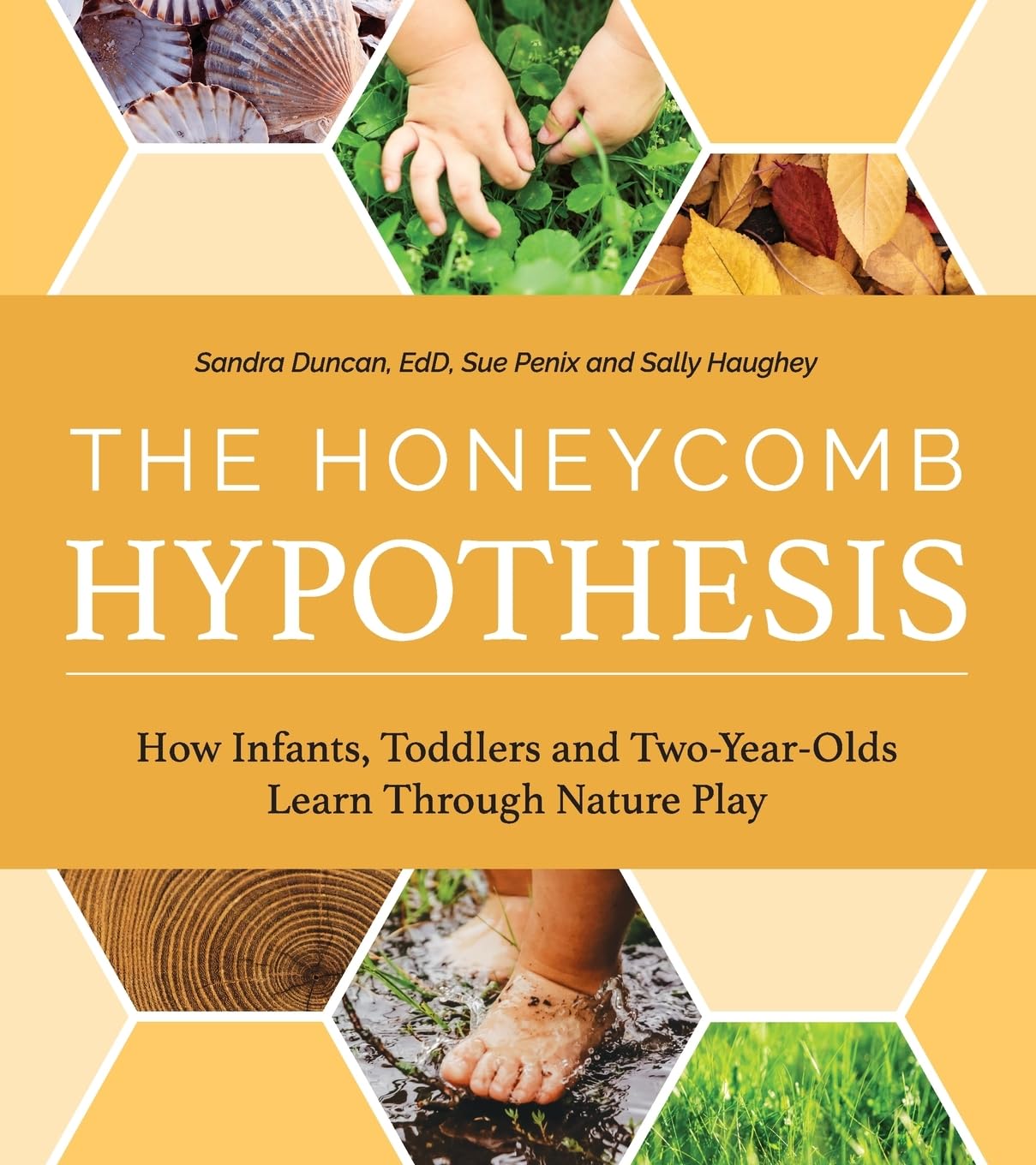
The Honeycomb Hypothesis: How Infants, Toddlers and Two-Year- Olds Learn Through Nature Play
$39.00
by Sandra Duncan



As honeybees instinctively gather and store pollen, young children accumulate understandings through play, novelty, and repeating patterns of movement. Three leaders in early care and education explore this premise with expertise and whimsy, sharing creative, delightful ways to spark the youngest imaginations. The Honeycomb Hypothesis will enliven your teaching practice with original ideas, materials and activities, celebrating the magic that happens when children and nature are brought together with intention and inspiration. The Honeycomb Hypothesis is the perfect title for a book rich in creativity. The book overflows with exciting ideas and interesting analogies about how infants, toddlers and twos learn and grow. While a hypothesis in some situations may keep you guessing, this book doesn't. From the philosophical framework presented in Part I, to the more than one hundred nature-based activities offered in Part II, to the "pulling it all together" discussion in Part III, this book is sure to give readers a clear roadmap for enriching the lives of very young children. -Ruth Wilson, Ph.D., Research Library Curator, Children and Nature Network, Author of Nature and Young Children and Learning Is In Bloom The Honeycomb framework invites us into the fascinating world of young children's natural play and learning through a combination of research and simple, practical suggestions. Based on Jean Piaget's theory of cognitive development and Edward O. Wilson's theory of biophilia we are led into a wonderous natural world all children have the right to explore and be immersed in. This treasure is filled with helpful notes, simple recipes and jewels of information and knowledge. A book that should be required reading for anyone working with young children. -Niki Buchan, International Educational Consultant, Natural Learning Early Childhood Consultancy