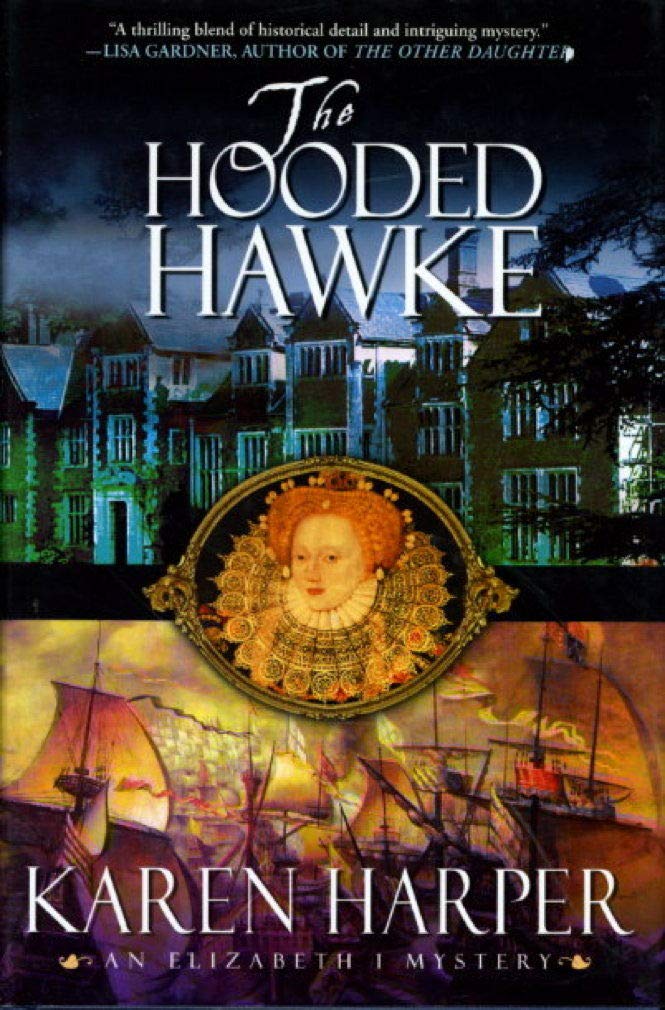



The popular sports and games of the queen's realm, unfortunately, include treachery, treason, and murder. Elizabeth and her court depart London for a summer progress replete with great manor houses, rural receptions, outdoor repasts, forbidden romance, and games and sport. By royal command, the young Francis Drake joins the entourage. A ship's captain in his pre-glory days, he is desperate for Her Majesty's approval, and she is disconcerted to discover that she desires his admiration as well. However, someone's idea of games and sport includes shooting crossbows and longbows at the queen and her captain. As bodies and clues pile up, the mystery and dangers deepen like the surrounding forests. Both Drake and the queen have cousins they cannot trust who may want them dead. Elizabeth struggles to keep up a bold front for the cheering crowds and her watchful courtiers, but what terrifies her most is that her rival, Mary Queen of Scots, does not play by the rules. With Elizabeth's coterie of friends, Elizabeth must fearlessly confront her foes before she loses both her crown and her head. Elizabeth Tudor, queen of England, is making a summer "progress" through the counties of Surrey and Hampshire to expose herself to the common folk, to take a respite from her problems of state and personal security (after all, Catholics and Protestants in her land and everywhere else aren't getting along), and to test the loyalty of certain of her noble subjects. She will stay for lengths of time at stately homes, one after another all summer long. The problem is that this summer, right off the bat, two people are murdered within feet of her. Was Her Majesty the intended target? Was the malefactor someone in her own entourage? Perhaps her own cousin, the Catholic duke of Norfolk? As in Harper's previous entries in her Elizabeth I series, in this latest installment the queen takes sleuthing into her own royal hands to determine who is causing this piece of unpeacefulness. Historical sophistication blends well with all the necessary elements of good mystery storytelling. Brad Hooper Copyright © American Library Association. All rights reserved Praise for Karen Harper's Elizabeth I Mysteries "A walk side by side with one of history's most dynamic characters." - Anne Perry, author of Dark Assassin "Deftly integrates its appealing historical detail with a neatly turned mystery." - Kirkus Reviews on The Hooded Hawke "Harper brings the period vividly to life. . . . One soon is swept up in the rush of events in a turbulent time skillfully described. Recommended for all collections." - Library Journal on The Fatal Fashione "Fabulous . . . a thrilling reading experience . . . Fans of the Ursula Blanches series by Fiona Buckley will definitely love this glimpse into a bygone era." - Midwest Book Review on The Fyre Mirror "A real treat for those who enjoy historical mysteries." - Booklist on The Queene's Christmas "Tudor England's answer to V. I. Warshawski." - Publishers Weekly on The Thorne Maze "Harper delivers high drama and deadly intrigue. . . . Elizabethan history has never been this appealing." - Newsday on The Tidal Poole Karen Harper is the author of eight previous Elizabeth I mysteries: The Poyson Garden, The Tidal Poole, The Twylight Tower, The Queene's Cure, The Thorne Maze, The Queene's Christmas, The Fyre Mirror, and The Fatal Fashione . She also writes historical romance and contemporary suspense novels, including the Mary Higgins Clark Award--winning Dark Angel and the bestselling The Falls . She lives in Columbus, Ohio, and Naples, Florida. Chapter One Ten days later, the queen's summer progress left Oatlands Palace, where everything had been assembled; the parade of wagons, horses, and people stretched into Surrey for nearly four miles. They stopped and ate outside for midday meal, then went on. Led by green-clad harbingers and nearly four hundred laden baggage and provision carts, each pulled by six horses, the middle of the entourage consisted of a military escort, then scarlet-attired yeomen guards with their ceremonial halberds gleaming in the sun. After that, in the heart of the procession, came the queen herself, not riding ahorse for the last few miles toward the town of Guildford but ensconced in a ceremonial gilt and ostrich-feathered coach-and-six. Pulled by matching white horses with manes and tails dyed orange, the conveyance was open-sided with crimson cloth and gold lace upholstery. Its leather curtains were drawn back to show England's queen, decked in a golden gown, waving, nodding, and smiling to acknowledge the cheers. Riding behind her came the court, nearly thirteen hundred people, everyone from councilors to lords and ladies to grooms and pages. "Uncap, knaves!" The cry went out to rude rural fellows standing along country lanes, agape at the grandeur. They hastily snatched off their caps and shouted, "God save our queen! Good save our good q