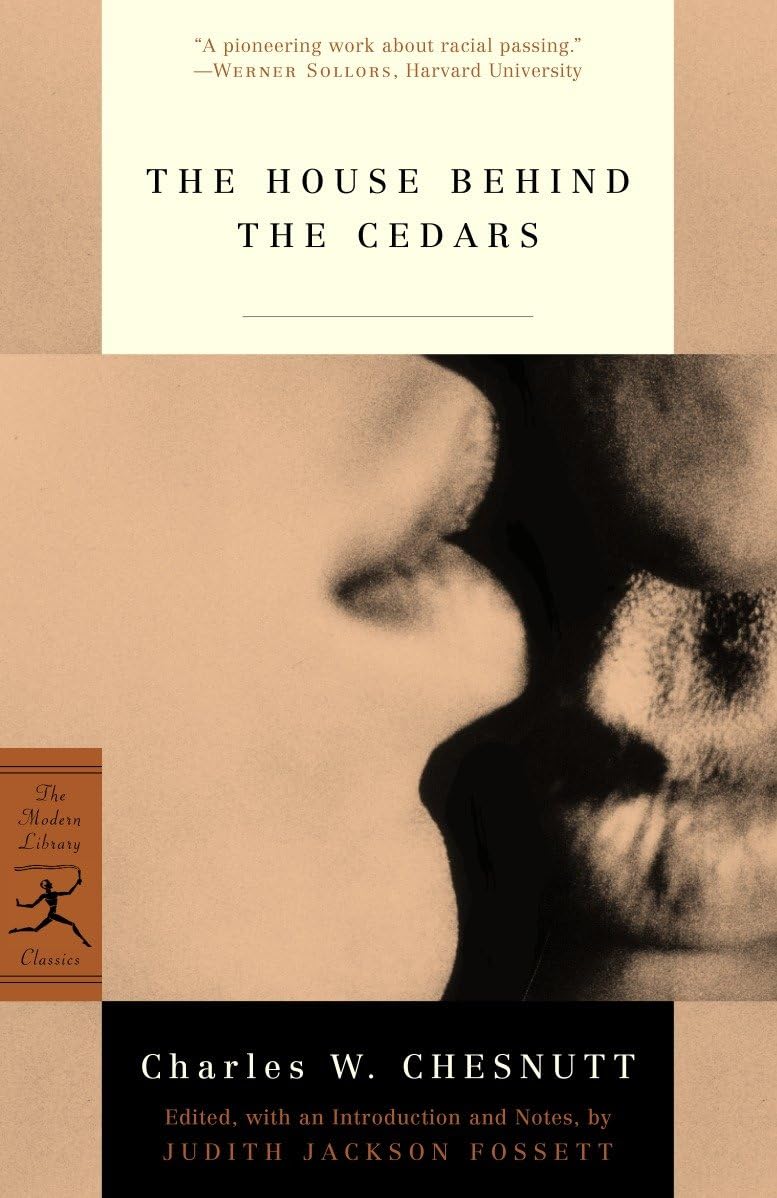



Charles Chesnutt’s classic novel, hailed by Werner Sollors as “a pioneering work of racial passing.” Edited and featuring an introduction and notes from Judith Jackson Fossett. A riveting portrait of the shifting and intractable nature of race in American life, The House Behind the Cedars follows John and Rena Walden, mixed-race siblings who pass for white in the postbellum American South. The siblings travel carefully between Black and white worlds, but their precarious routine is threatened when Rena falls in love with a white man and hides her true heritage to start a life with him. This edition revitalizes a much-neglected masterpiece by one of our most important African American writers. As Werner Sollors writes, “William Dean Howells did not overstate his case when he compared Chesnutt’s works with those by Turgenev, Maupassant, and James.” “A pioneering work about racial passing.” —Werner Sollors, Harvard University The House Behind the Cedars , which many consider Charles Chesnutt?s ?nest novel, tells of John and Lena Walden, mulatto siblings who pass for white in the postbellum American South. The drama that unfolds as they travel between black and white worlds constitutes a riveting portrait of the shifting and intractable nature of race in American life. This edition revitalizes a much-neglected masterpiece by one of our most important African-American writers. As Werner Sollors writes, ?William Dean Howells did not overstate his case when he compared Chesnutt?s works with those by Turgenev, Maupassant, and James . . . and [Chesnutt] has become one of the most important ?crossover? authors from the African-American tradition.? The House Behind the Cedars, which many consider Charles Chesnutt's fi nest novel, tells of John and Lena Walden, mulatto siblings who pass for white in the postbellum American South. The drama that unfolds as they travel between black and white worlds constitutes a riveting portrait of the shifting and intractable nature of race in American life. This edition revitalizes a much-neglected masterpiece by one of our most important African-American writers. As Werner Sollors writes, "William Dean Howells did not overstate his case when he compared Chesnutt's works with those by Turgenev, Maupassant, and James . . . and [Chesnutt] has become one of the most important 'crossover' authors from the African-American tradition." Judith Jackson Fossett, associate professor of English and American Studies and Ethnicity at the University of Southern California, is the author of Illuminated Darkness: Slavery and Its Shadows in Nineteenth-Century America and the editor of Race Consciousness: African-American Studies for the New Century. I A Stranger from South Carolina Time touches all things with destroying hand; and if he seem now and then to bestow the bloom of youth, the sap of spring, it is but a brief mockery, to be surely and swiftly followed by the wrinkles of old age, the dry leaves and bare branches of winter. And yet there are places where Time seems to linger lovingly long after youth has departed, and to which he seems loath to bring the evil day. Who has not known some even-tempered old man or woman who seemed to have drunk of the fountain of youth? Who has not seen somewhere an old town that, having long since ceased to grow, yet held its own without perceptible decline? Some such trite reflection—as apposite to the subject as most random reflections are—passed through the mind of a young man who came out of the front door of the Patesville Hotel about nine o’clock one fine morning in spring, a few years after the Civil War, and started down Front Street toward the market-house.1 Arriving at the town late the previous evening, he had been driven up from the steamboat in a carriage, from which he had been able to distinguish only the shadowy outlines of the houses along the street; so that this morning walk was his first opportunity to see the town by daylight. He was dressed in a suit of linen duck—the day was warm—a panama straw hat, and patent leather shoes. In appearance he was tall, dark, with straight, black, lustrous hair, and very clean-cut, high-bred features. When he paused by the clerk’s desk on his way out, to light his cigar, the day clerk, who had just come on duty, glanced at the register and read the last entry: “ ‘John Warwick, Clarence, South Carolina. “One of the South Ca’lina bigbugs, I reckon—probably in cotton, or turpentine.”2 The gentleman from South Carolina, walking down the street, glanced about him with an eager look, in which curiosity and affection were mingled with a touch of bitterness. He saw little that was not familiar, or that he had not seen in his dreams a hundred times during the past ten years. There had been some changes, it is true, some melancholy changes, but scarcely anything by way of addition or improvement to counterbalance them. Here and there blackened and dismantled walls marked the place where handsome