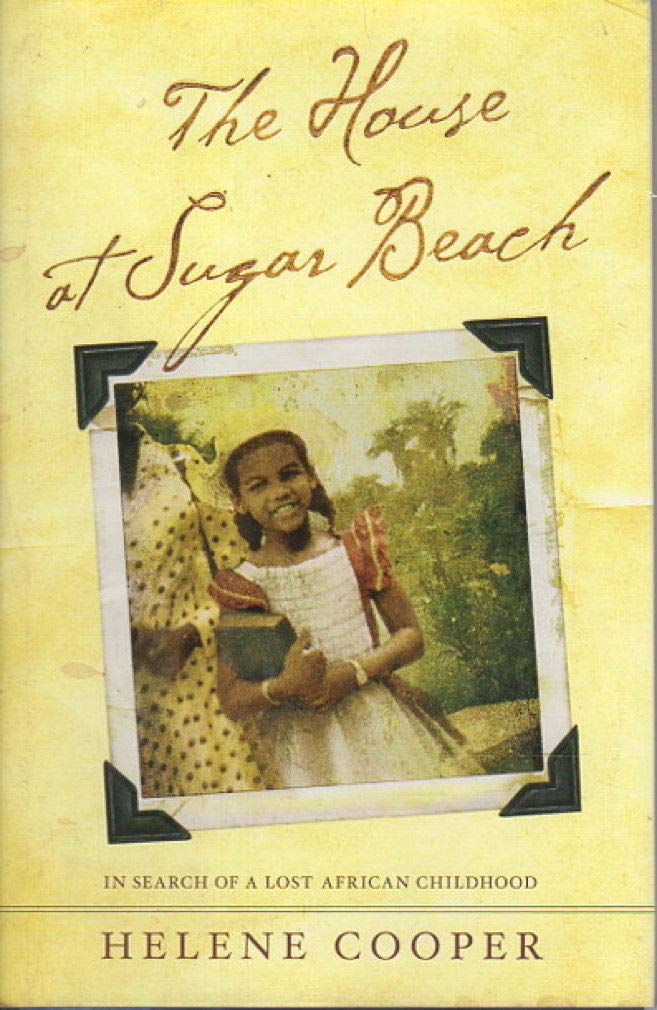



A New York Times special correspondent presents a full-length memoir based on her acclaimed "African Odyssey" cover story for The Wall Street Journal, in a personal account that traces her childhood in war-torn Liberia and her reunion with a foster sister who had been left behind when her family fled the region. 75,000 first printing. In her warm, conversational tone, Helene Cooper vividly evokes the sights, sounds, and smells of Liberia for readers as she describes the customs, history, and culture of her native land. Indeed, she has a great deal of background information to convey to Western readers unfamiliar with the country, but she folds this material masterfully into the narrative. An accomplished storyteller, Cooper relates the arrogance and excesses of her family during her early years without losing her readers’ sympathy, and she likewise depicts the joys of friendship and the horrors of war without becoming melodramatic or maudlin. Like the best nonfiction—and journalism—Cooper’s gripping coming-of-age story enlightens and inspires, often reading like a novel. In sum, it is a very personal and honest memoir from a gifted writer. Copyright 2008 Bookmarks Publishing LLC The family saga of the Wittgensteins, whose most famous members were philosopher Ludwig and concert pianist Paul, unfolds amid arch commentary from the author. Waugh, who chronicled the domestic affairs of his clan, the relatives of novelist Evelyn Waugh, in Fathers and Sons (2007), organizes the strife and tragedies of the Wittgensteins into a series of vignettes. He alights from one sibling to another and brings them together at their ever-more-infrequent family gatherings, which experienced falling attendance as suicides by several sons and the deaths of parents took a toll. Immensely rich because of their father, an Austrian steel magnate, the Wittgenstein brood by the 1920s quarreled over money and a farrago of interpersonal slights. Waugh’s pithy depictions of their personalities and dramas asserts a train-wreck attraction on readers, who, regardless of their interest in philosophy or music, will wonder who will blow up next. Layering the Wittgensteins’ conflicts with the menace to its members posed by the Nazi takeover of Austria in 1938, Waugh portrays the family with acuity, empathy, and style. --Gilbert Taylor Helene Cooper is the White House correspondent for the New York Times, having previously served as the diplomatic correspondent and the assistant editorial page editor. Prior to moving to the Times, Helene spent twelve years as a reporter and foreign correspondent at the Wall Street Journal . She was born in Monrovia, Liberia, and lives in the Washington, D.C., area. Reviewed by Wendy Kann On Feb. 6, 1820, the American Colonization Society, an incongruous mix of mostly Quakers and slaveholders, dispatched a ship from New York Harbor in a bold experiment to repatriate 88 freeborn blacks to Africa's steamy west coast. When the vessel arrived at its destination a few months later, its passengers, far from being welcomed, were regarded with hostile suspicion by a native population still ruthlessly plying the slave trade. For two years, the increasingly ragged immigrants trolled that shore, burying their brethren in one malarial swamp after another until Elijah Johnson, a former U.S. soldier, finally stood on a tiny island that offered neither shelter nor fresh water and refused to move. A country called Liberia was founded. Helene Cooper, formerly with the Wall Street Journal and now diplomatic correspondent for the New York Times, is Elijah Johnson's great-great-great-great-granddaughter. The House at Sugar Beach is her dramatic memoir of Liberia in the years preceding and after its savage revolution in 1980. Along with other descendants of freed black colonists, Cooper's family formed an elite firmly in control of Liberia's wealth and government. They were known as Congo people. The indigenous African tribes, which made up 95 percent of the Liberian population, subsisted in poverty. They were called Country people. When Cooper was 8, her father moved the family from the relative safety of Congo Town, a suburb of the capital Monrovia, to a three-storied mansion 11 miles out of the city on an isolated stretch called Sugar Beach. Their new house had five acres of lawn, central air conditioning and solid marble floors. It also had a toy room, playroom, recreation room, bar, sunken lounge and music room complete with a rock-faced wall and a baby grand piano overlooking the sea. At Sugar Beach, Cooper was fearful of the deep African night. Buried under bedclothes in her new pink bedroom, she whimpered until her exhausted parents finally summoned a Country girl to keep her company, apparently standard practice in that society. Soon a bewildered, bowlegged 11-year-old named Eunice Bull, skinny and stuttering, was obligingly delivered to the estate. She ran away from her new foster home twice, but each time her dest