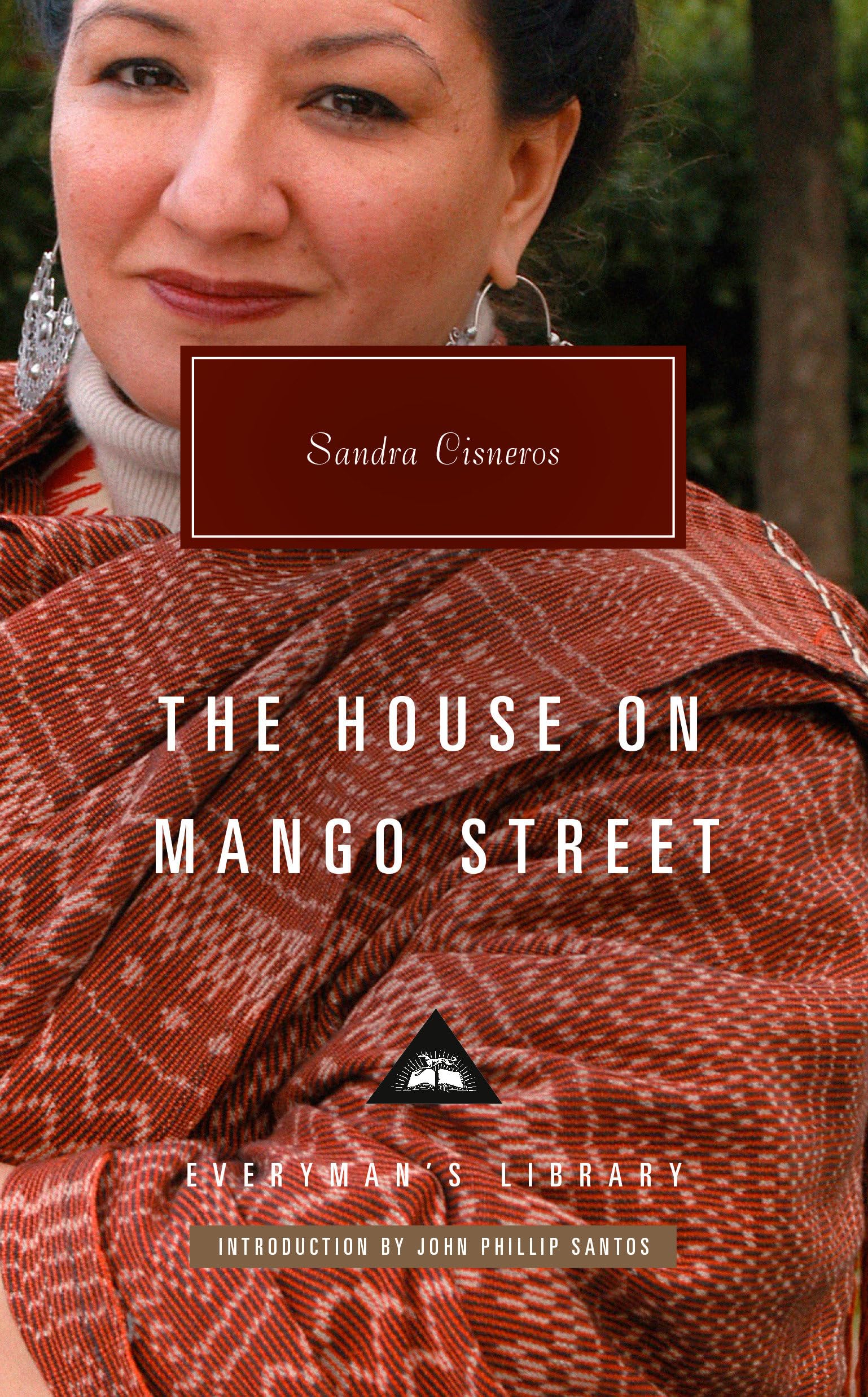
The House on Mango Street: Introduction by John Phillip Santos (Everyman's Library Contemporary Classics Series)
$15.10
by Sandra Cisneros



A TODAY SHOW #ReadWithJenna BOOK CLUB PICK NATIONAL BESTSELLER • A 40th anniversary hardcover edition of Sandra Cisneros’s beloved coming-of-age novel about a young girl growing up in Chicago, with a new introduction by John Phillip Santos • Acclaimed by critics, beloved by readers of all ages, taught in schools and universities alike, and translated around the world—from the winner of the 2025 Ivan Sandrof Lifetime Achievement Award from the National Book Critics Circle. “Cisneros draws on her rich [Latino] heritage...and seduces with precise, spare prose, creat[ing] unforgettable characters we want to lift off the page. She is not only a gifted writer, but an absolutely essential one.” — The New York Times Book Review The House on Mango Street is one of the most cherished novels of the last fifty years. Readers from all walks of life have fallen for the voice of Esperanza Cordero, growing up in Chicago and inventing for herself who and what she will become. “In English my name means hope,” she says. “In Spanish it means too many letters. It means sadness, it means waiting." Told in a series of vignettes—sometimes heartbreaking, sometimes joyous—Cisneros’s masterpiece is a classic story of childhood and self-discovery and one of the greatest neighborhood novels of all time. Like Sinclair Lewis’s Main Street or Toni Morrison’s Sula, it makes a world through people and their voices, and it does so in language that is poetic and direct. This gorgeous coming-of-age novel is a celebration of the power of telling one’s story and of being proud of where you're from. Everyman’s Library pursues the highest production standards, printing on acid-free paper, with full-cloth cases with two-color foil stamping, decorative endpapers, silk ribbon markers, European-style half-round spines, and a full-color illustrated jacket. Contemporary Classics include an introduction, a select bibliography, and a chronology of the author’s life and times. “A classic. . . . This little book has made a great space for itself on the shelf of American literature.” — Julia Alvarez “ Afortunado ! Lucky! Lucky the generation who grew up with Esperanza and The House on Mango Street. And lucky future readers. This funny, beautiful book will always be with us.” — Maxine Hong Kingston “Cisneros draws on her rich [Latino] heritage . . . and seduces with precise, spare prose, creat[ing] unforgettable characters we want to lift off the page. She is not only a gifted writer, but an absolutely essential one.” — The New York Times Book Review “Marvelous . . . spare yet luminous. The subtle power of Cisneros’s storytelling is evident. She communicates all the rapture and rage of growing up in a modern world.” — San Francisco Chronicle “A deeply moving novel...delightful and poignant. . . . Like the best of poetry, it opens the windows of the heart without a wasted word.” — Miami Herald “Sandra Cisneros is one of the most brillant of today’s young writers. Her work is sensitive, alert, nuanceful . . . rich with music and picture.” — Gwendolyn Brooks SANDRA CISNEROS is a poet, novelist, essayist, performer, and artist. Her awards include NEA Fellowships in poetry and fiction, a MacArthur Fellowship, the PEN/Nabokov Award for Achievement in International Literature, the National Medal of Arts, the Ford Foundation's Art of Change Fellowship, and the Ruth Lilly Poetry Prize. A citizen of the United States and Mexico, Cisneros lives in San Miguel de Allende. JOHN PHILLIP SANTOS , born in San Antonio, Texas, is the first Mexican American Rhodes Scholar. His awards include the Academy of American Poets’ Prize at Notre Dame and the Oxford Prize for fiction. His articles on Latino culture have appeared in the Los Angeles Times, The New York Times, and the San Antonio Express-News . from the Introduction by John Phillip Santos When we meet Esperanza Cordero, the almost mystically knowing young Chicana narrator of The House on Mango Street, she is already very much a canny teller of tales, speaking in medias res, in the midst of an unfolding story of her heroic quest to find a true home. “We didn’t always live on Mango Street,” she begins. She details a litany of her family’s peregrinajes through previous houses in Chicago, as if reading from some codex memorializing a series of sacred migrations: “Before that we lived on Loomis on the third floor, and before that we lived on Keeler. Before Keeler it was Paulina, and before that I can’t remember. But what I remember is moving a lot. Each time it seemed there’d be one more of us. By the time we got to Mango Street we were six – Mama, Papa, Carlos, Kiki, my sister Nenny and me.” Involuntary peregrinations and deprivations spark Esperanza’s imagination. Her family has had to leave their previous residence when the “water pipes broke and the landlord wouldn’t fi x them because the house was too old. We had to leave fast.” Esperanza dreams of a house with