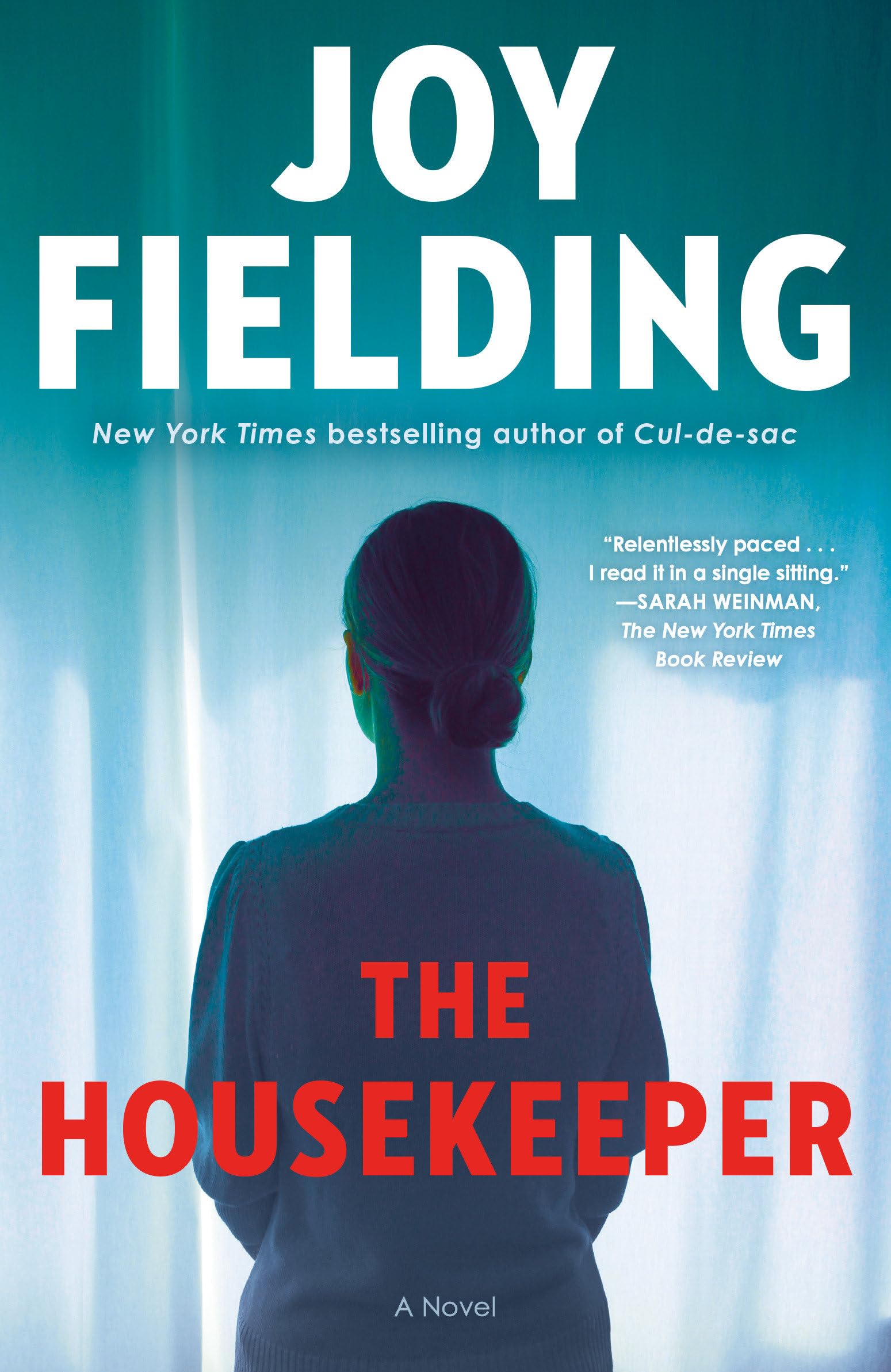



A woman hires a housekeeper to care for her aging parents—only to watch as she takes over their lives in this riveting novel from the New York Times bestselling author Samantha M. Bailey calls “an ingenious master of domestic suspense.” ONE OF THE BEST BOOKS OF THE YEAR: Reader’s Digest In the end, I have only myself to blame. I’m the one who let her in. Jodi Bishop knows success. She’s the breadwinner, a top-notch real estate agent. Her husband, Harrison . . . not so much. Once, he had big dreams. But now, he’s a middling writer who resents his wife’s success. Jodi’s father, Vic, now in his late seventies and retired, is a very controlling man. His wife, Audrey, was herself no shrinking violet. But things changed when Audrey developed Parkinson’s ten years ago and Vic retired to devote himself to her care. But while still reasonably spry and rakishly handsome, Vic is worn down by his wife’s deteriorating condition. Exhausted from trying to balance her career, her family, and her parents’ needs, Jodi starts interviewing housekeepers to help care for Audrey and Vic. She settles on Elyse Woodley, an energetic and attractive widow in her early sixties, who seems perfect for the job. While Vic is initially resistant, he soon warms to Elyse’s sunny personality and engaging ways. And Jodi is pleased to have an ally, someone she can talk to and occasionally even confide in. Until . . . She shuts Jodi out. And Audrey’s condition worsens—rapidly. Who is this woman suddenly wearing her mother’s jewelry? What is she after? And how far will she go to get it? Praise for The Housekeeper “Unexpected plot turns, crisp dialogue and an (at last) emboldened heroine enhance the appeal of this well-crafted domestic suspense thriller.” — The Wall Street Journal “Joy Fielding [is] Canada’s answer to the late, great Mary Higgins Clark. . . . I admire Fielding’s ability to write relentlessly paced novels. . . . I never put The Housekeeper down—I read it in a single sitting.” —Sarah Weinman, The New York Times Book Review “Jodi is a very likable and relatable character, and the novel delivers on its promise to wrap things up satisfactorily, but not without many juicy twists along the way.” — Bookreporter “Engrossing . . . Well-wrought characters carry the story. This insightful exploration of the complexities of caring for aging relatives deserves a wide readership.” — Publishers Weekly “An exciting roller-coaster ride of family dysfunction, marital dynamics, and gaslighting . . . Fielding’s novel is gripping from the beginning, and Jodi is a fleshed-out, relatable protagonist. The plot builds to a nail-biting climax. . . . Recommended for fans of women-led suspense novels such as Mary Kubica’s The Other Mrs. and Ruth Ware’s The Lying Game. ” — Library Journal Praise for Joy Fielding “We can always count on Joy Fielding to turn out a well-dressed, well-developed psychological suspense novel.” — The Globe and Mail “Fielding masterfully manipulates our expectations.” — The Washington Post “Fielding has made the woman-in-jeopardy genre her own.” — People “[Fielding] takes domestic situations that everyone faces and combines them with chilling suspense.” — Richmond Times-Dispatch Joy Fielding is the New York Times bestselling author of All the Wrong Places, The Bad Daughter, She’s Not There, Someone Is Watching, Charley’s Web, Heartstopper, Mad River Road, See Jane Run, and other acclaimed novels. She divides her time between Toronto and Palm Beach, Florida. Chapter One It’s my fault. I’m the one who first brought up the idea, who championed it, who set the ball rolling, and who ultimately insisted on hiring her. My father was adamantly opposed to the idea, my mother ambivalent at best, my sister as indifferent as always. Only my husband, Harrison, thought it was a good idea, and only because he hoped it would take some of the strain off me. “You do too much,” he was always saying. Followed by, “There are things you can control and things you can’t. You can’t be all things to all people. Concentrate on our family. Let the rest go.” He was right, of course. Except it wasn’t that easy to just let the rest go. And try as I might, I couldn’t help hearing the unstated corollary: If only you’d put half the effort and energy into our house . . . our children . . . our marriage, as you do into your parents . . . your sister . . . your career . . . Forget that it was precisely that career that not only covered our mortgage, but paid all the bills, thus allowing him the luxury of working full-time, and without any noticeable remuneration, on his latest novel. I say “latest,” although it’s been almost a decade since his first novel was published. To great acclaim, I might add. But still . . . If I sold only one house every ten years, I think I might be tempted to try my hand at something else. To this, Harrison would undoubtedly point out that writing is more a calling than a