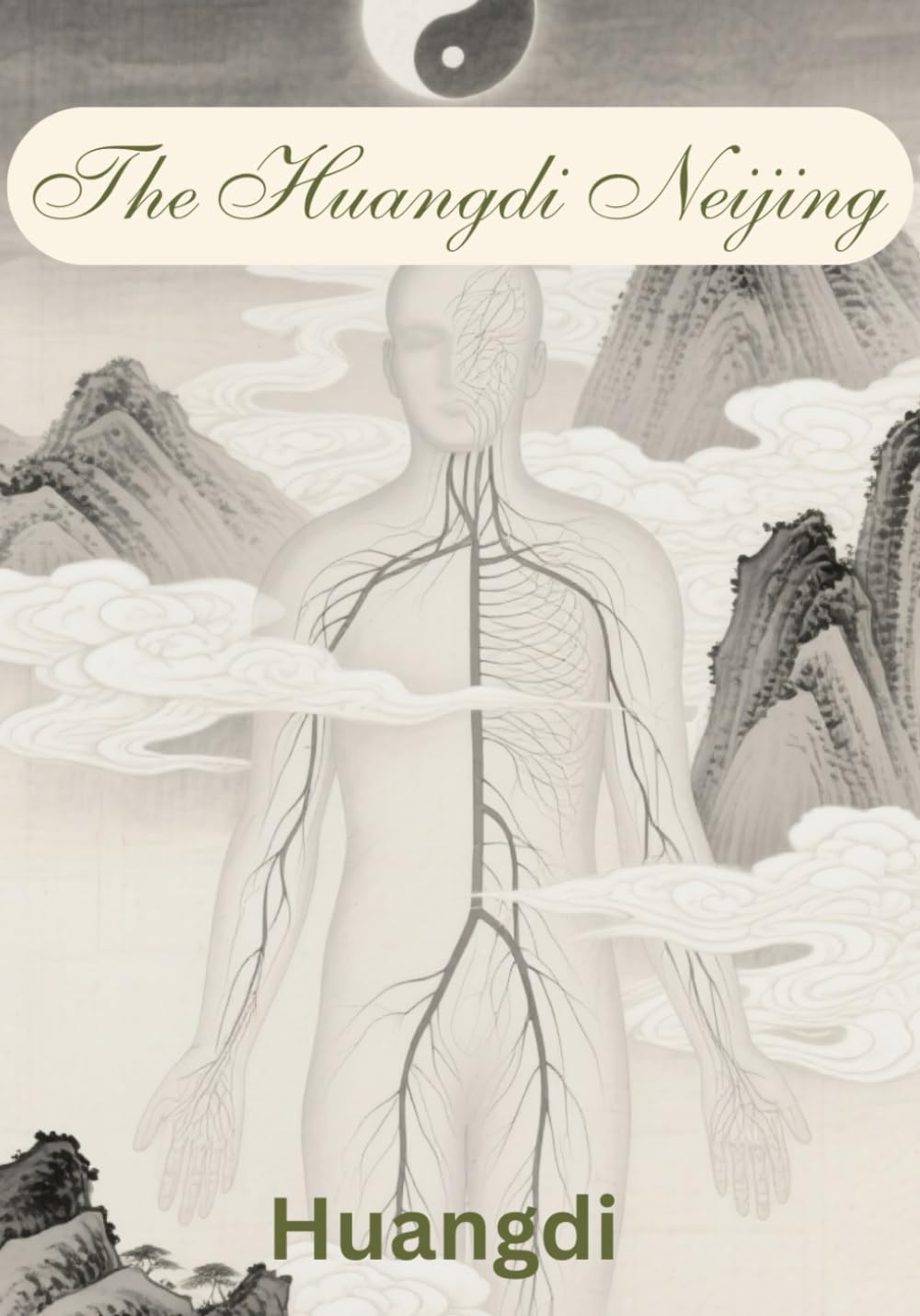



The Huangdi Neijing is divided into two parts, the Lingshu and the Suwen. It is the earliest medical classic in China and one of the four great classic works of traditional medicine (the other three are the Nanjing, the Shanghan Zabing Lun, and the Shennong Bencao Jing). The Huangdi Neijing is a comprehensive medical book. Based on the theories of Huang - Lao Taoism, it established doctrines in traditional Chinese medicine such as the "Theory of Yin - Yang and Five Elements", "Pulse Theory", "Visceral Manifestation Theory", "Meridian Theory", "Etiology Theory", "Pathogenesis Theory", "Diseases and Symptoms", "Diagnostic Methods", "Treatment Principles", as well as "Health Preservation" and "Theory of Five - Elemental Cycles and Six - Qi". It discusses medicine from an overall perspective, presenting a "holistic medical model" that encompasses nature, biology, psychology, and society. (According to the research of modern scholars, it is believed that the traces of Huang - Lao Taoism in the current version were inserted by the Taoist Wang Bing during the Sui and Tang dynasties.) The Huangdi Neijing is the earliest and most influential medical book extant in China, and it is respected as "the origin of medical scholars" by later generations. The content of the Huangdi Neijing is very extensive. In addition to medicine, it also records ancient philosophy, astronomy, meteorology, phenology, biology, geography, mathematics, sociology, psychology, music theory, etc., and permeates these knowledge and achievements into medicine, thus making this book a work with medicine as the main body and involving multiple disciplines. The Lingshu is an inseparable sister volume of the Suwen, with its content generally similar. In addition to discussing the functions of internal organs, causes of diseases, and pathogenesis, it also focuses on expounding meridians and acupoints, acupuncture tools, needling methods, and treatment principles. The Huangdi Neijing adopts the ancient Chinese materialistic philosophical idea of the unity of qi, regarding humans as a part of the entire material world. All things in the universe are formed by the original substance "qi". Guided by the concepts of "man corresponds to heaven and earth" and "corresponds to the sun and the moon", it closely links humans with nature.