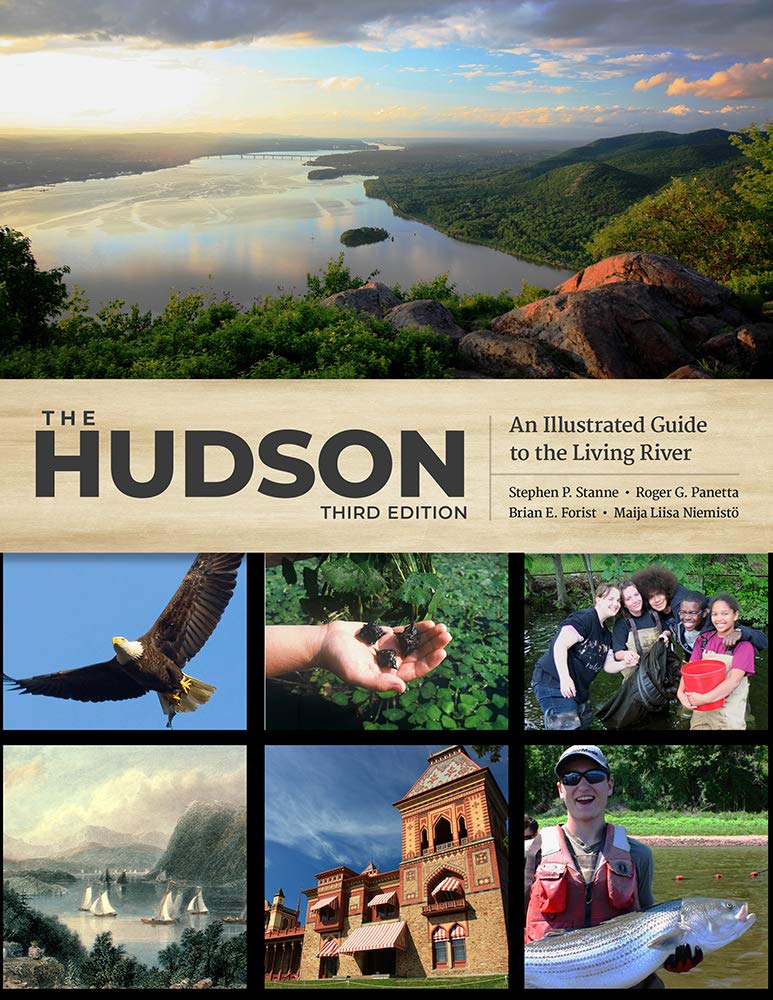



Since 1996, The Hudson: An Illustrated Guide to the Living River has been an essential resource for understanding the full sweep of the great river's natural history and human heritage. This updated third edition includes the latest information about the ongoing fight against pollution and environmental damage to the river, plus vibrant new full-color illustrations showing the plants and wildlife that make this ecosystem so special. This volume gives a detailed account of the Hudson River’s history, including the geological forces that created it, the various peoples who have lived on its banks, and the great works of art it has inspired. It also showcases the many species making a home on this waterway, including the Atlantic sturgeon, the bald eagle, the invasive zebra mussel, and the herons of New York Harbor. Combining both scientific and historical perspectives, this book demonstrates why the Hudson and its valley have been so central to the environmental movement. As it charts the progress made towards restoring the river ecosystem and the effects of emerging threats like climate change, The Hudson identifies concrete ways that readers can help. To that end, royalties from the sale of this book will go to the non-profit environmental advocacy group Hudson River Sloop Clearwater, Inc. "The breadth of topics covered in this book allows readers to make connections between local history, artistic expression, environmental conservation, and political action. The level of writing is accessible and straightforward, but also suggests further avenues of exploration and learning. This is a valuable resource for everyone from the novice to the river veteran." -- Chris Bowser ― Marist College, Poughkeepsie, NY "An essential resource for understanding the full sweep of the great river's natural history and human heritage. The revised volume gives a detailed account of the Hudson River's history, including the geological forces that created it, the species that inhabit it, the various peoples who have lived on its banks, and the great works of art it has inspired. Combining both scientific and historical perspectives, this book demonstrates why the Hudson and its valley have been so central to the environmental movement." ― Chronogram STEPHEN P. STANNE has taught about the Hudson since 1980, coordinating the education programs of Hudson River Sloop Clearwater and those of the Hudson River Estuary Program of New York’s Department of Environmental Conservation, in partnership with the New York State Water Resources Institute at Cornell University. ROGER G. PANETTA, now retired professor of history at Fordham University, has made the Hudson River a central subject of his teaching, writing, and curatorial work. He is also editor of Westchester: The American Suburb, Dutch New York , and Kingston: The IBM Years , and author of The Tappan Zee Bridge and the Forging of the Rockland Suburb . BRIAN E. FORIST coordinates the undergraduate program in Outdoor Recreation, Parks, and Human Ecology at Indiana University—Bloomington. His many years of experience as an environmental educator include six years as education specialist with Clearwater. MAIJA LIISA NIEMISTÖ worked for Clearwater for ten years as an onboard educator and director of the organization’s education programs. In 2019 she joined the Hudson River Estuary Program and the New York State Water Resource Institute as an environmental science education specialist. Chapter 1: A Physical Overview of the Hudson The Chapter in Brief The Hudson River flows 315 miles—507 kilometers (km)—from Lake Tear of the Clouds in the Adirondacks to the Battery in New York City. Its course and shoreline topography result from erosion by water and glacial ice over the past sixty-five to seventy-five million years. The river is influenced by ocean tides to Troy, 153 miles (246 km) north of the Battery. Diluted seawater typically ranges upriver to a point between the Tappan Zee and Newburgh, depending on the volume of runoff from the Hudson’s watershed. The lower Hudson is an estuary, a type of ecosystem that ranks among the most productive on the planet. The Hudson's Origins To begin a study of the Hudson River at its source, lay out a map of eastern New York State and trace the blue line north from New York Harbor along the cliffs of the Palisades, under the ramparts at West Point, through the sunset shadows of the Catskill Mountains, past the capital city of Albany, and on into the Adirondack Mountains. There, at the confluence of two creeks near Henderson Lake, the name Hudson River disappears; the map offers the option of following Calamity Brook northeastward or the outlet from Henderson Lake westward. Looking for the highest body of water feeding the Hudson, turn northeast and face the heart of the High Peaks region. Continue upward along Calamity Brook, the Opalescent River, and little Feldspar Brook to find, as Verplanck Colvi