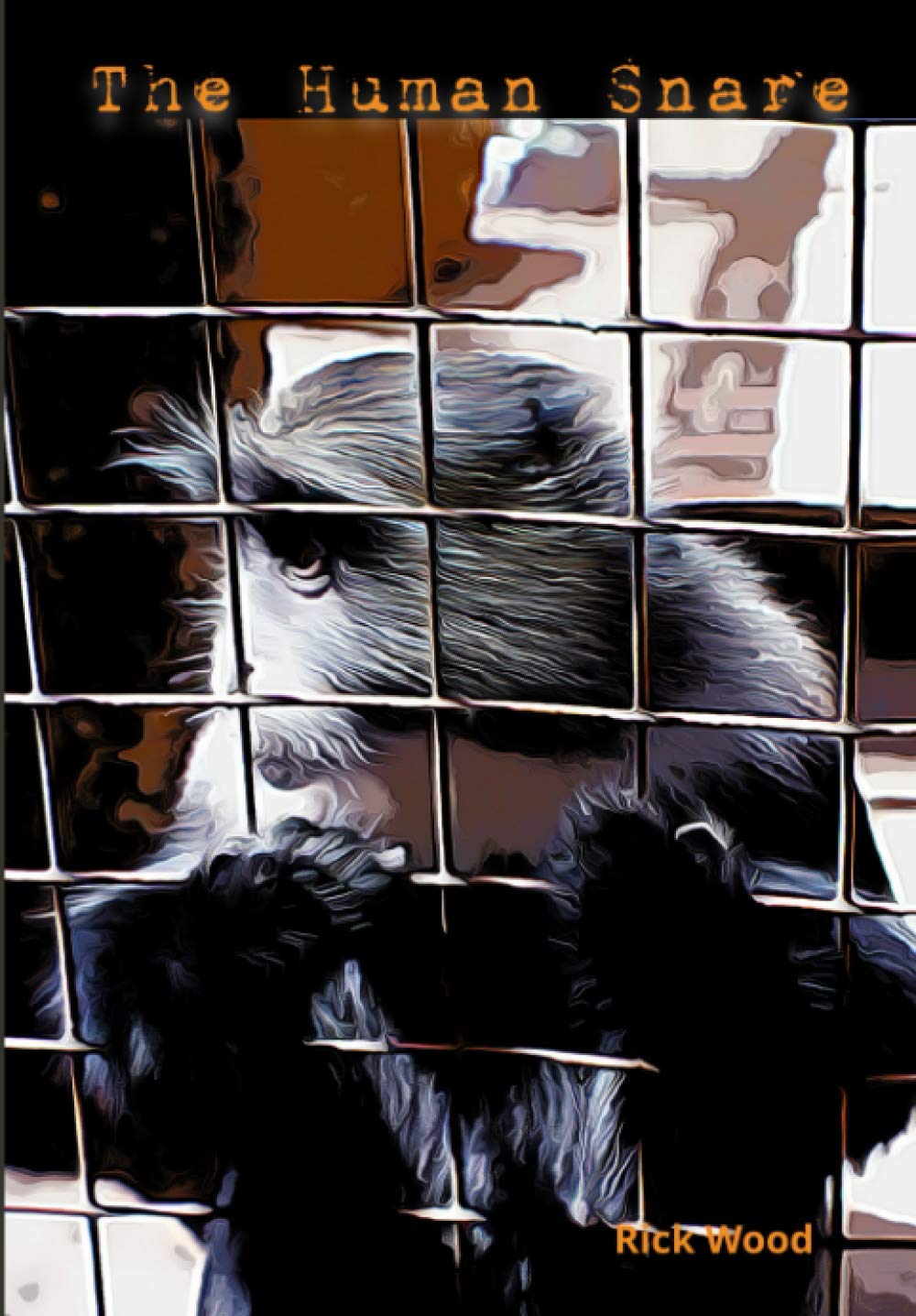



The world is dying. Wildlife photographer Rick Wood finds himself asking difficult questions about critical losses to global biodiversity.Poached to near extinction, African elephants are rapidly vanishing from the savanna. In China, giant pandas struggle to recover from habitat loss and wildlife trafficking.Readers join Rick's odyssey to find clues in Sichuan Province's misty hills, with the Maasai of Tanzania, on a crocodile-infested river in Costa Rica, and among herds of bison in Yellowstone. If he can find answers, there could be hope for solutions.Ultimately it's a race against a tightening human snare with everything hanging in the balance.Extinction looms on the horizon. Is there time to save us all from the human snare? From an editorial review by Jack Magnus for Readers’ Favorite:"The Human Snare is a non-fiction wildlife conservation book written and with art by Rick Wood. Wood is a wildlife photographer and journalist. He’s also filmed documentaries in his efforts to bring the plight of marine mammals and turtles to the public’s attention. When Cecil the lion was slaughtered in 2015, there was an international outcry. Cecil had been safely ensconced in the Hwange National Park in Zimbabwe for 13 years until an American dentist paid $50,000 for a guided hunt which led to Cecil being shot, beheaded, and skinned. Wood wanted to understand how we got to this point, how poaching was leading to the deaths of not only Cecil but a significant portion of the more than 20,000 elephants who die annually. The first stop on his four-year effort to get to the bottom of this issue was Tanzania, where poachers and conservationists are at loggerheads, and the elephants are caught in the crossfire. He soon discovered there were no easy answers. Poverty is widespread in the country, leading some to poach to feed their families and simply survive. " "Splendid... Deeply stirring and elegiac." - The Prairies Book Review Wood combines stunningly shot photographs with his own odyssey of traveling around the globe to tell the story of world's decimation of wildlife in this beautiful and devastating yet hopeful account. Wood began his journey to research wildlife trafficking and poaching after Cecil, a well-studied lion in Hwange National Park in Matabelel and North, Zimbabwe, died in a guided hunt in 2015 after an American dentist reportedly paid $50,000 to hunt Cecil as a trophy. Beginning his journey from Tanzania and conversing with the local poachers and the ancient Maasai there, Wood visited and worked in a panda sanctuary in Chengdu and traversed the narrow alleyways of Hutongs in Beijing in China, took a cross-country trip to Yellowstone National Park in America and traveled to the tropical rainforests of Costa Rica. He asserts that poachers are regular people with hopes and dreams, struggles and sorrows, and it is poverty that forces them to participate in the unlawful act of wildlife trafficking. He argues that they exist because there is a demand of poached goods in affluent countries across the globe, and nations like Africa, China etc. are merely there to process that demand. Wood's stunning black and white photographs capture the surreal magic of vast and varied landscapes in their full glory. The future of vulnerable species such as African elephants, giraffe, giant panda among others remain uncertain, but Wood excellently conveys the importance of preserving wildlife and delivers a moving and powerful photojournalistic account of the unscrupulous wildlife trafficking and poaching. "This is a powerful and enthralling work." - BookView Review The wildlife photographer Wood delivers a sensitive, hard-hitting portrait of wildlife destruction through trafficking and poaching in his remarkable latest. Trying to search for answers to his burning questions about wildlife trafficking and poaching, Wood decides to travel around the globe. He begins his journey from the unforgiving terrains of Tanzanian Savanna and travels to the misty hills of Sichuan Province in China, the vast wilderness of Yellowstone National park in USA, and further to the remote tropical rainforests of Costa Rica, but realizes that he already knows the answers; we, as humans must restore balance by consciously making choices that change the economics of supply and demand for poached goods. Wood's stunning black and white photographs feel intimate and compliment his subdued but passionate narrative voice. Using language that is deceptively simple, wood paints a heart-rending portrait of a world where poachers are just ordinary, poverty-stricken people trying to stay alive. Wood blames the economics and demand for poached goods in affluent nations behind the illogical decimation of wildlife. Recognizing that the situation is grave and some species have already been driven to extinction in recent years, Wood stresses the need for serious human intervention. Reviewed By Jack Magnus for Readers' Favorite The Human Snare is a non-fi