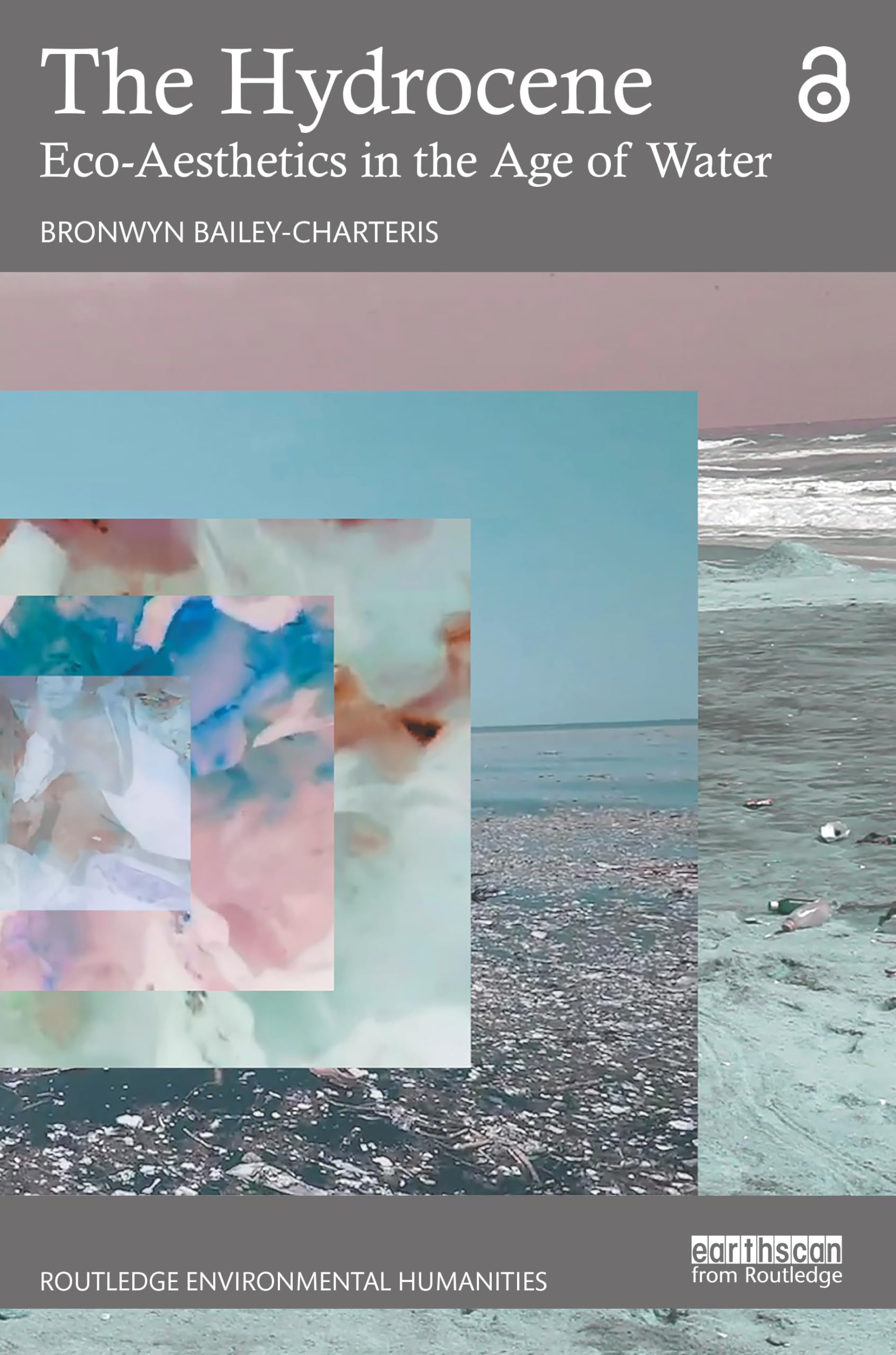



This book challenges conventional notions of the Anthropocene and champions the Hydrocene: the Age of Water. It presents the Hydrocene as a disruptive, conceptual epoch and curatorial theory, emphasising water's pivotal role in the climate crisis and contemporary art. The Hydrocene is a wet ontological shift in eco-aesthetics which redefines our approach to water, transcending anthropocentric, neo-colonial and environmentally destructive ways of relating to water. As the most fundamental of elements, water has become increasingly politicised, threatened and challenged by the climate crisis. In response, The Hydrocene articulates and embodies the distinctive ways contemporary artists relate and engage with water, offering valuable lessons towards climate action. Through five compelling case studies across swamp, river, ocean, fog and ice, this book binds feminist environmental humanities theories with the practices of eco-visionary artists. Focusing on Nordic and Oceanic water-based artworks, it demonstrates how art can disrupt established human–water dynamics. By engaging hydrofeminist, care-based and planetary thinking, The Hydrocene learns from the knowledge and agency of water itself within the tide of art going into the blue. The Hydrocene urgently highlights the transformative power of eco-visionary artists in reshaping human–water relations. At the confluence of contemporary art, curatorial theory, climate concerns and environmental humanities, this book is essential reading for researchers, curators, artists, students and those seeking to reconsider their connection with water and advocate for climate justice amid the ongoing natural-cultural water crisis. The Open Access version of this book, available at http://www.taylorfrancis.com, has been made available under a Creative Commons Attribution-Non Commercial-No Derivatives (CC-BY-NC-ND) 4.0 license. "With the all-pervasive hydrosphere guiding its organising structure, an ethos nurtured through feminist relations of care; and attention attuned to the most critical of materialities subtending life – The Hydrocene: Eco-Aesthetics in the Age of Water – offers significant insights into the approaches that artists and curators are making to reimagine and practice relations with the planet’s myriad watery formations. It does this while addressing the social and ethical implications and responsibilities of creative engagements beyond anthropocentric and extractive modalities. It positions its principal concept of the Hydrocene as being continually suffused by embodied connections between human and non-human forms and forces. In the Hydrocene being, thinking and practising are always done in profound intra-relationship with . This timely book offers new ways to learn from, think through and practice hydrologically in the context of rapid planetary change and offers a range of innovative methods for contending with the climate crisis." Bianca Hester, Associate Professor, Co-Director of Research and Engagement, University of New South Wales, Australia "This impressive survey of aqueous artwork reminds us of the urgency of creative practice as a bold research method in a time of climate catastrophe. Diffracted through water, both predicament and possibility become strangely clearer." Astrida Neimanis , Canada Research Chair in Feminist Environmental Humanities, The University of British Columbia, Canada "Harnessing the transformative qualities of water, hydro-artistic practices from Scandinavia to Australia are proposing more empathic forms of engagement with the natural world. In demonstrating how artists are re-framing human relationships with water, this timely book challenges conventional perceptions of environmental art and articulates new approaches to curatorial care-taking." Felicity Fenner, Associate Professor, University of New South Wales, Australia "Bronwyn Bailey-Charteris’ book is a timely overview and analysis of an emerging field of artistic and curatorial practices relating to water – not only as a theme or topic of interest but as an ontological starting point, methodology, and collaborator. Bailey-Charteris’ way of linking practices operating in the Nordic and Oceanic regions is indicative of the far-reaching scope of the matters at hand: water, and the manifold challenges connected to it in the face of the climate catastrophe, is a planetary issue. It is also a cultural question: what stories are called for in the age of ecological collapse and how should they be told in order to make a difference? The excellent examples discussed in this book show how art can contribute to the understanding of the climate crisis as embodied and relational. This is an urgent and much-needed contribution to the fields of artistic and curatorial practice, as well as to the wider sphere of ecological thinking." Lisa Rosendahl, independent Curator and Associate Professor of Exhibition Studies, Oslo National Academy of the Arts, Norway "This bo