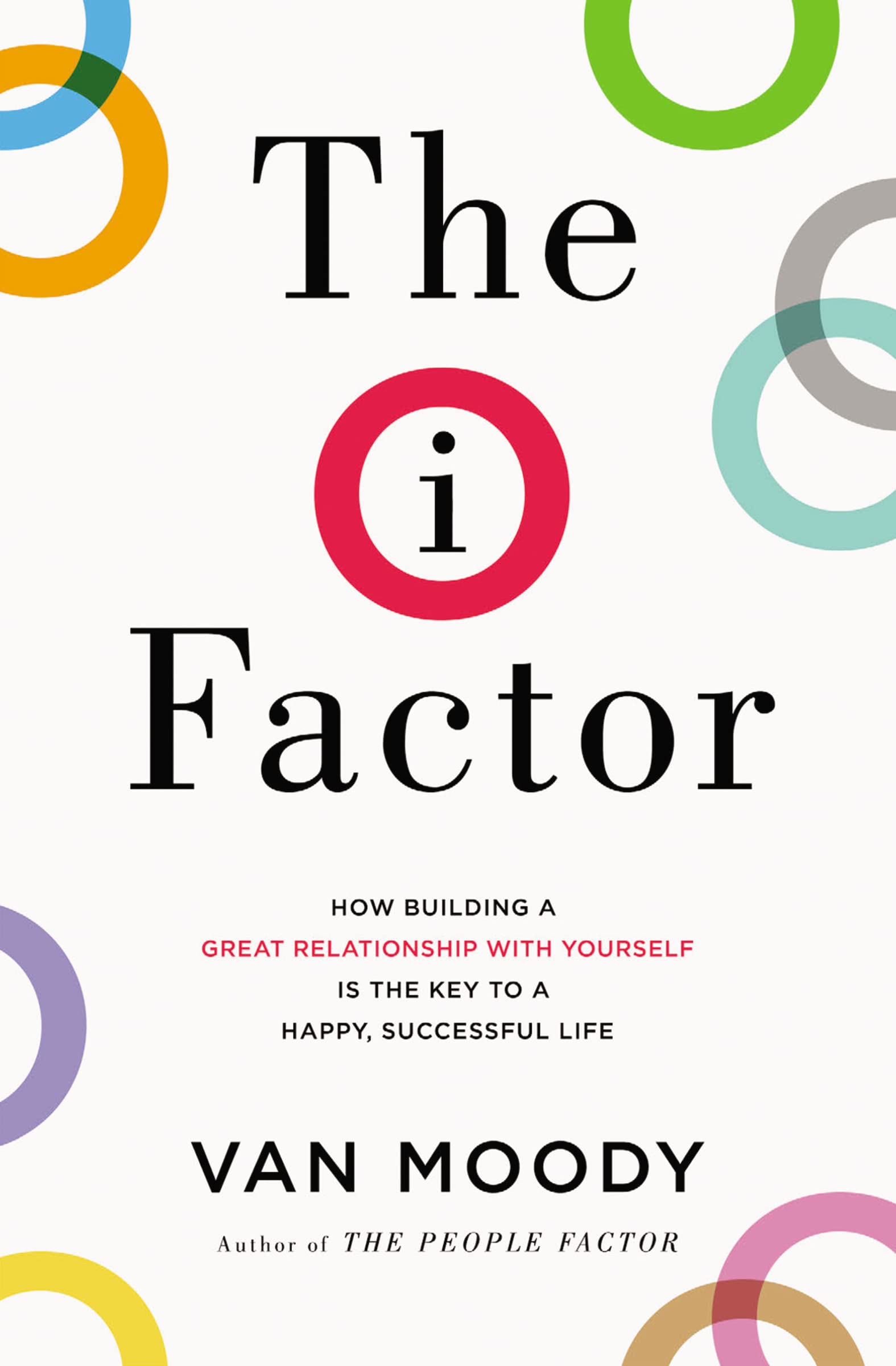



The key to the life you want is already within your grasp. Join bestselling author Van Moody as he helps you learn the 3 keys necessary to discover your life's purpose and the satisfying fulfillment you're longing for. One question lies behind every struggle we face: How do I deal with myself? Behind all our stumbles, behind each of our missteps, behind every one of our failings lies an inability to handle what Moody calls the "I-Factor." More than self-worth or self-respect, beyond even character and perception of purpose, the I-Factor is about managing yourself--your whole life--well. In this inspiring book, Moody reveals how to get hold of your I-Factor and finally get out of your own way. In The I-Factor , Moody identifies three dynamics essential to winning the battle of the I-Factor: Identity: When you understand your identity you know who you are, setting your foundation for everything - Significance: When you understand your significance, you see the purpose and the greatness you were created for - Perspective: When you understand perspective, you can view the problems you face as stepping stones to greatness rather than stumbling blocks Weaving together personal stories, practical principles, and profound biblical truth, The I-Factor provides the key to achieving the life of greatness that you are destined for. Praise for The I-Factor : "Van Moody takes you on a biblically balanced, often painfully penetrating look--not just a look at the you in you, but a look at the God in you who defines and declares your destiny and worth." --Kenneth C. Ulmer, D.Min, PhD; Faithful Central Bible Church; founder-CEO, The Ulmer Institute Van Moody serves as pastor of the Worship Center in Birmingham, Alabama. In addition, he is on the board of Joel Osteen's Champions Network, is a member of Dr. Oz’s Core Team, and is an associate trainer in Japan for Dr. John C. Maxwell’s EQUIP leadership organization. Moody, his wife, Ty, and their children, Eden Sydney and Ethan Isaiah, live in Birmingham, Alabama. The I-Factor How Building A Great Relationship With Yourself Is The Key To A Happy, Successful Life By VAN MOODY Thomas Nelson Copyright © 2016 Vanable H. Moody, II All rights reserved. ISBN: 978-0-7180-7756-3 Contents Introduction, xvii, 1 More Than Meets the Eye, 1, 2 It's Time to Peel the Onion, 19, 3 The Best-Kept Secret of Sustained Success, 37, 4 Your True Self Is Your Best Self., 55, 5 Proof of Identity, 73, 6 The Journey to Significance, 91, 7 A Training Ground for Greatness, 107, 8 The Biggest Favor You Can Do Yourself, 123, 9 Success Is an Inside Job, 143, 10 Don't Stop Now, 163, 11 Head First, 181, 12 The Power of Perspective, 199, 13 Seven Steps to Greatness, Part 1, 219, 14 Seven Steps to Greatness, Part 2, 235, A Final Word, 255, Acknowledgments, 257, Notes, 259, About the Author, 265, CHAPTER 1 More Than Meets the Eye If you want to be truly successful, invest in yourself to get the knowledge you need to find your unique factor. When you find it and focus on it and persevere your success will blossom. — Sydney Madwed "IT'S BEEN EIGHTY-FOUR YEARS," RESCUED PASSENGER Rose DeWitt Bukater reminisced in the movie Titanic, "and I can still smell the fresh paint. The china had never been used. The sheets had never been slept in. Titanic was called the 'Ship of Dreams.' And it was. It really was." I'm sure you have heard about the majestic passenger ship, Titanic. It was the finest vessel of its day — larger, faster, and better equipped than any other. It boasted all the engineering and shipbuilding expertise of the times and every luxury its wealthy travelers were accustomed to. The ship had been called unsinkable, and no doubt those aboard felt safe, pampered, and privileged. If ever a ship seemed destined for success, it was the Titanic. No one could have possibly imagined that this ship would go down. It would go down in history, for sure, they must have thought, because it was such an excellent vessel, but they were also convinced it could withstand any challenge it met at sea. An employee of the Titanic 's parent company, the White Star Line, said, "Not even God himself could sink this ship." But at 11:40 p.m. on Sunday, April 14, 1912, only five days into its voyage from Southampton, England, to New York City, the Titanic's lookout sent an urgent message to the bridge: "Iceberg, right ahead." Less than forty seconds later, the ship hit the iceberg. Within three hours, the celebrated vessel rested at the bottom of the frigid Atlantic Ocean, and more than fifteen hundred lives were lost. The lookouts in the crow's nest did not have binoculars. Had a simple pair of binoculars been available, someone could have seen the iceberg ahead, and one of the greatest tragedies in maritime history might have been avoided. As it happened that day, the time elapsed between the first sighting of the iceberg and the ship's impact was a little more tha