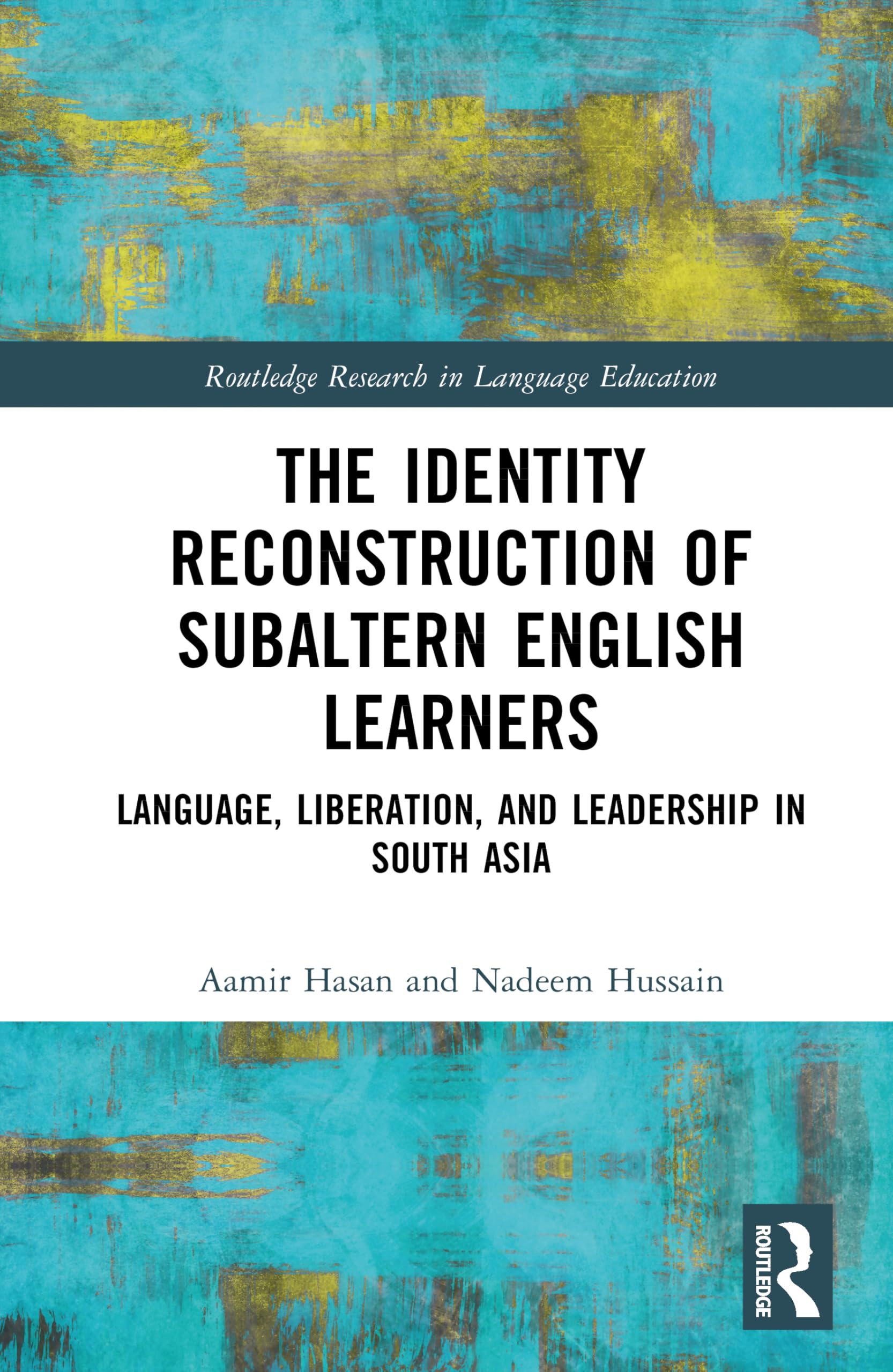
The Identity Reconstruction of Subaltern English Learners (Routledge Research in Language Education)
$200.00
by Aamir Hasan



This book presents a qualitative study of language learners in the Global South who overcame insurmountable odds to acquire the English language. Drawing on rich data from successful non-elite, or Subaltern, learners, it explores the intersection of leadership development and English acquisition, documenting their identity reconstruction and metamorphosis. The authors provide a detailed overview of the position of English in the modern world as well as the unique historical relationship between the language and South Asia. They then examine the determination of marginalized individuals to acquire English and introduce the term Liberative Motivation to define their desire to break out of restrictive class/caste-based silos. Filling a crucial gap in the narrative of English in South Asia, they explore the influence that English acquisition has on Subaltern identity, leadership, and self-esteem. The participants’ stories are deeply moving, demonstrating that for the Subaltern, dignity, respect, inclusion, and an educated identity are near impossibilities without knowing English. The authors propose the ‘ Subaltern Self-Determination and English Acquisition Framework’ to encapsulate the interplay of factors in the Subaltern’s journey toward English, and they argue that the denial of English education borders on the denial of a basic human right in our present reality. A unique account of the learning experiences of Subaltern populations, this book is an essential read for scholars, researchers, and postgraduate students with interests in Subaltern studies, English language acquisition, identity, and leadership, and human rights. South Asian language activists who advocate displacing English in favor of indigenous languages should carefully consider the arguments presented in this important book. Else, they might betray the interests of the very people they fight for. Perhaps counterintuitively, the authors argue that English proficiency can actually enhance respect for and inject vitality into mother tongues. The book rightly insists that English is the primary language of science, research, and international communication, and those lacking facility in it cannot access an ever‑expanding repository of human wisdom and experience. For South Asian women who face limitations in terms of mobility, learning English is especially important. By investing in English acquisition, individuals can leverage ties to global knowledge for revitalizing society and enhancing their own social mobility. Dr. Pervez Hoodbhoy, Ph.D. (MIT), Physicist and columnist In this groundbreaking and deeply humane work, Hasan and Hussain illuminate how English acquisition becomes a powerful vehicle for social mobility, identity transformation, and leadership development among South Asia’s non‑elite popu‑ lations. Through rich narratives and careful analysis, they reveal how access to English has become inseparable from access to dignity, opportunity, and full participation in global society. This meticulously researched book makes an invaluable contribution to our understanding of language, power, and social justice – essential reading for educators, policymakers, and scholars interested in linguistic equity and social transformation in the Global South. Dr. Carola Suarez-Orozco, HGSE This book makes a persuasive case for learning and using English agentively by people in South Asia for their leadership and development efforts. The authors articulate how subaltern people can resist the hegemony of English from within by diversifying its norms and values for empowering purposes. They inspire us to engage in critical education and activism from their own experiences at the community level. Dr. Suresh Canagarajah, Penn State Through heart‑wrenching tales and razor‑sharp analyses, Hasan and Hussain offer a never‑before‑seen look into the fraught reality of learning English for the non‑elites in South Asia, whose struggles and triumphs constitute a powerful counter‑narrative to the often elitist position of undermining English under the banner of promoting mother tongues. Policy makers take heed! Dr. Hansun Zhang Waring, Teachers College In The Identity Reconstruction of Subaltern English Learners (2026), Hasan and Hussain offer a powerful reimagining of English language education in the Global South. Drawing on fieldwork across six South Asian countries, they chal‑ lenge deficit narratives and show how subaltern learners are reclaiming Eng‑ lish as a tool for resistance, dignity, and self‑determined leadership. Through community‑rooted pedagogies grounded in indigenous onto‑epistemologies, this work disrupts colonial hierarchies and centers belonging. A vital contribu‑ tion to decolonial and critical pedagogy, this book is essential for educators and policymakers envisioning English classrooms as a space of humanization, resist‑ ance, and radical hope. Dr. Sarina Chugani Molina, University of San Diego This is a beautifully written and a