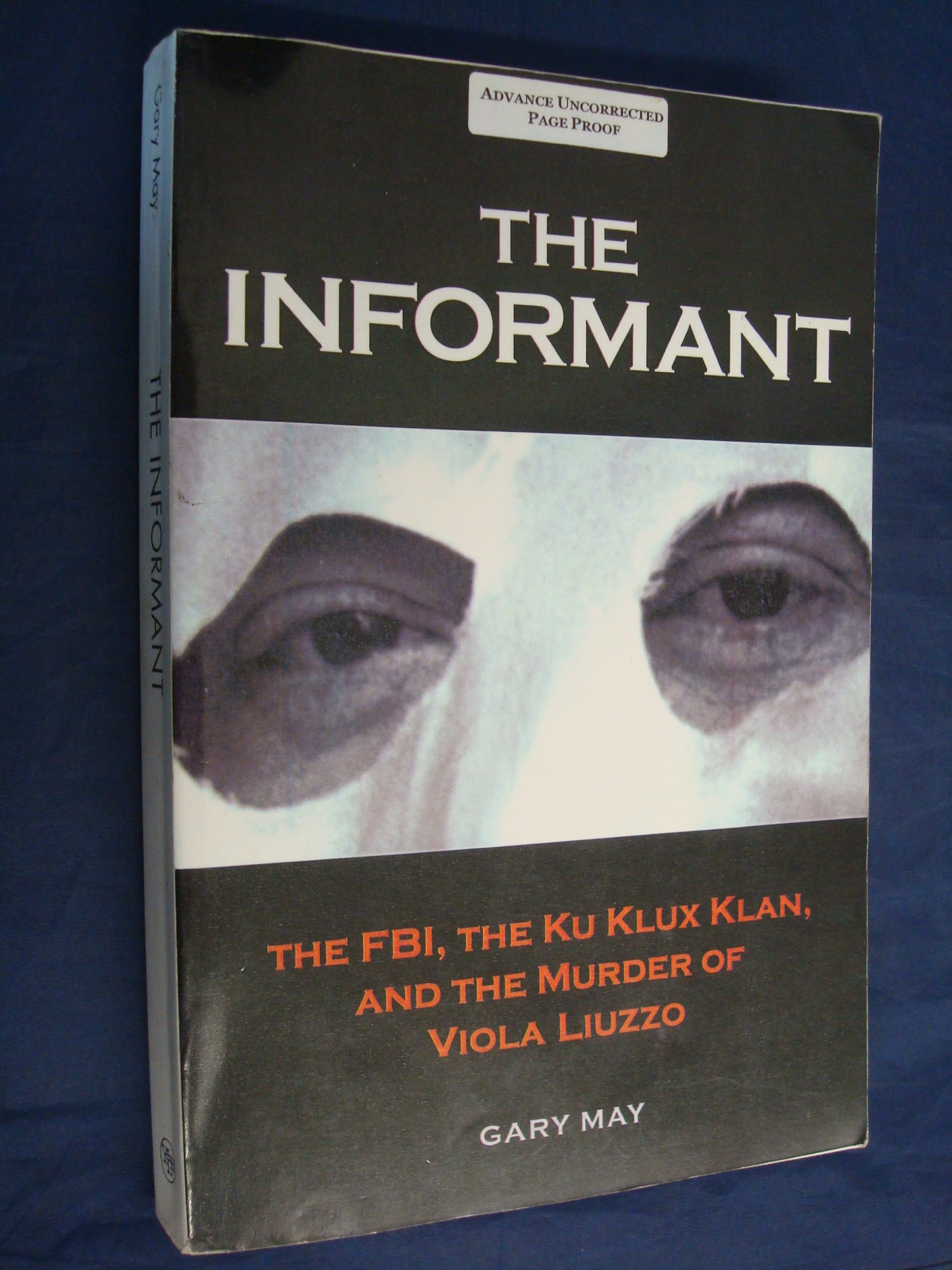



In The Informant , historian Gary May reveals the untold story of the murder of civil rights worker Viola Liuzzo, shot to death by members of the violent Birmingham Ku Klux Klan at the end of Martin Luther King’s historic Voting Rights March in 1965. The case drew national attention and was solved almost instantly, because one of the Klansman present during the shooting was Gary Thomas Rowe, an undercover FBI informant. At the time, Rowe’s information and subsequent testimony were heralded as a triumph of law enforcement. But as Gary May reveals in this provocative and powerful book, Rowe’s history of collaboration with both the Klan and the FBI was far more complex. Based on previously unexamined FBI and Justice Department Records, The Informant demonstrates that in their ongoing efforts to protect Rowe’s cover, the FBI knowingly became an accessory to some of the most grotesque crimes of the Civil Rights era--including a vicious attack on the Freedom Riders and perhaps even the bombing of the Sixteenth Street Baptist Church. A tale of a renegade informant and an intelligence system ill-prepared to deal with threats from within, The Informant offers a dramatic and cautionary tale about what can happen when secret police power goes unchecked. “Gary May’s page-turner is a demonstration that truth can be stranger than fiction. His book is a cautionary tale about secret government in general and the misuse of secret agents in particular. Part biography, part history, May’s book is a window on personalities and events essential to our understanding of the Civil Rights era of the 1960s.”—Robert Dallek “The Informant is a gripping and suspenseful account of an enormously important event in American history. Based on unprecedented access to internal FBI documents, it offers fresh revelations about the Ku Klux Klan, the FBI, and the Civil Rights movement. This is a great book and, incidentally, a real page-turner.”—Richard Gid Powers, author of Broken: The Troubled Past and Uncertain Future of the FBI " The Informant is an important book. As a wonderful storyteller and historian, Gary May uses a dramatic 1965 Civil Rights murder to tell the fascinating account of an FBI informant system that had careened out of control. Breaking new ground with his prodigious research, May takes readers back to the 1960s, inside the violent world of the Ku Klux Klan and the strife that was splitting America. May vividly demonstrates the danger of fighting today’s terrorists by relying on violent informants operating in a criminal netherworld with no fear of arrest. The Informant is a riveting and cautionary tale for modern times."—Gerald Posner, author of Why America Slept: The Failure to Prevent 9/11 (Gerald Posner) " The Informant is a gripping and suspenseful account of an enormously important event in American history. Based on unprecedented access to internal FBI documents, it offers fresh revelations about the Ku Klux Klan, the FBI, and the Civil Rights movement. This is a great book and, incidentally, a real page-turner."—Richard Gid Powers, author of Broken: The Troubled Past and Uncertain Future of the FBI (Richard Gid Powers) "Gary May’s page-turner is a demonstration that truth can be stranger than fiction. His book is a cautionary tale about secret government in general and the misuse of secret agents in particular. Part biography, part history, May’s book is a window on personalities and events essential to our understanding of the civil rights era of the 1960s."— Robert Dallek (Robert Dallek) The murder of Viola Liuzzo, the only white woman killed during the Civil Rights Movement, shocked the nation. This compelling book documents the even more shocking story of FBI informant Tommy Rowe, who not only infiltrated the KKK but also became a violent participant. The Informant uncovers frightening details about FBI information-gathering gone awry. Gary May is professor of history and director of the Master of Arts in Liberal Studies Program, University of Delaware. His previous books include China Scapegoat: The Diplomatic Ordeal of John Carter Vincent and Un-American Activities: The Trials of William Remington. On the evening of March 25, 1965, following a demonstration for voting rights in Montgomery, the capital of Alabama, Viola Liuzzo set out in her Oldsmobile for Selma, 50 miles away. She was a 39-year-old white woman from Detroit. Her passengers were three other white women and two black men. She dropped off the three women and one of the men in Selma. She then offered to drive her remaining passenger, a 19-year-old black Alabamian, Leroy Moton, back to Montgomery. A few miles out of town, they began to be followed by a Chevrolet Impala. Suddenly it pulled up beside them, and its occupants began to shoot at them. The Oldsmobile swerved off the road into a field. One of the men in the Chevrolet said: "I'm one hell of a shot. That bitch and that bastard are dead and i