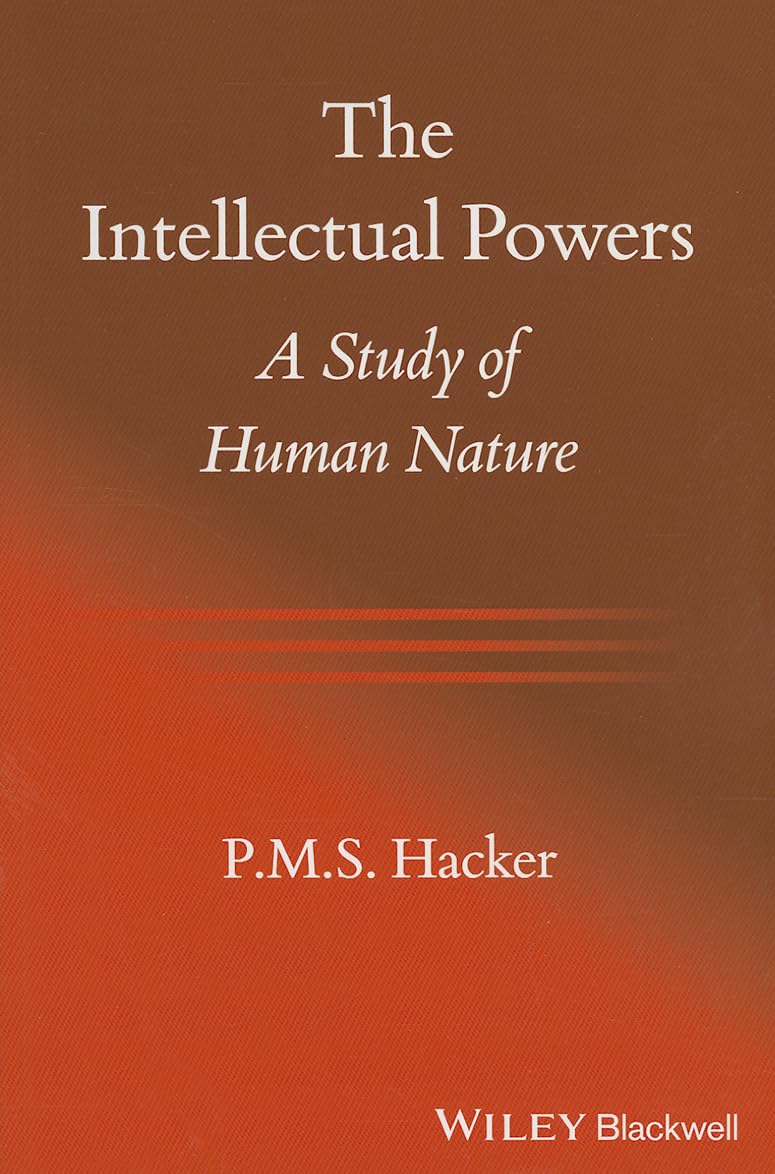



The Intellectual Powers is a philosophical investigation into the cognitive and cogitative powers of mankind. It develops a connective analysis of our powers of consciousness, intentionality, mastery of language, knowledge, belief, certainty, sensation, perception, memory, thought, and imagination, by one of Britain’s leading philosophers. It is an essential guide and handbook for philosophers, psychologists, and cognitive neuroscientists. The culmination of 45 years of reflection on the philosophy of mind, epistemology, and the nature of the human person - No other book in epistemology or philosophy of psychology provides such extensive overviews of consciousness, self-consciousness, intentionality, mastery of a language, knowledge, belief, memory, sensation and perception, thought and imagination - Illustrated with tables, tree-diagrams, and charts to provide overviews of the conceptual relationships disclosed by analysis - Written by one of Britain’s best philosophical minds - A sequel to Hacker’s Human Nature: The Categorial Framework - An essential guide and handbook for all who are working in philosophy of mind, epistemology, psychology, cognitive science, and cognitive neuroscience “Peter Hacker is the most subtle and penetrating philosopher of the age. In recent years he has demolished the pretentions of cognitive neuroscience and caused outrage among fellow philosophers by showing that many of their claims are meaningless. The Intellectual Powers, his most recent book, is another masterpiece, examining the cognitive capacities of the human species. If, as the Ancient Greeks believed, philosophy is the most important subject, Hacker is one of our most seminal thinkers.” ( Matthew Syed , The Times , 7 December 2013) “An essential guide and handbook for all who are working in philosophy of mind, epistemology, psychology, cognitive science, and cognitive neuroscience.” ( Expofairs.com , 21 November 2013) “This is Peter Hacker at his best – an investigation of the cognitive and cogitative powers that quintessentially distinguish us from other animals which is at once painstaking, unsettling, and bracing.” ―A.W. Moore, St Hugh’s College Oxford “A meticulous, illuminating, and brilliantly sustained exercise in conceptual cartography. This is Peter Hacker writing at the height of his formidable powers and displaying his unerring ability to uncover philosophical pretension and confusion.” ―John Cottingham, University of Reading and Heythrop College, University of London The Intellectual Powers: a Study of Human Nature is a philosophical investigation into the cognitive and cogitative abilities of mankind. It elaborates a connective analysis of consciousness and self-consciousness, intentionality, linguistic ability, knowledge, belief, sensation, perception, memory, thought, and imagination. Each chapter contains a detailed survey of one of these faculties, as well as an analysis of the illusions of reason that have dogged the efforts of past and present philosophers to grasp the nature and limits of our epistemic powers. Together they present a compelling picture both of what connects us to the rest of the animal kingdom and of what is unique to humankind. This book is a sequel to Human Nature: the Categorial Framework (2007), but it is completely self-contained. It is written in a style that is lucid and jargon-free. The text is illustrated by tables, tree-diagrams, and charts to provide overviews of the conceptual relationships disclosed by analysis. This comprehensive investigation constitutes an indispensable handbook for all students of epistemology and philosophy of mind. Ranging widely over topics in epistemology, philosophy of psychology, metaphysics, and philosophical anthropology, this work presents the mature, original reflections of one of Britain's best philosophical minds. The Intellectual Powers: a Study of Human Nature is a philosophical investigation into the cognitive and cogitative abilities of mankind. It elaborates a connective analysis of consciousness and self-consciousness, intentionality, linguistic ability, knowledge, belief, sensation, perception, memory, thought, and imagination. Each chapter contains a detailed survey of one of these faculties, as well as an analysis of the illusions of reason that have dogged the efforts of past and present philosophers to grasp the nature and limits of our epistemic powers. Together they present a compelling picture both of what connects us to the rest of the animal kingdom and of what is unique to humankind. This book is a sequel to Human Nature: the Categorial Framework (2007), but it is completely self-contained. It is written in a style that is lucid and jargon-free. The text is illustrated by tables, tree-diagrams, and charts to provide overviews of the conceptual relationships disclosed by analysis. This comprehensive investigation constitutes an indispensable handbook for all students of epistemology and philosophy of mind.