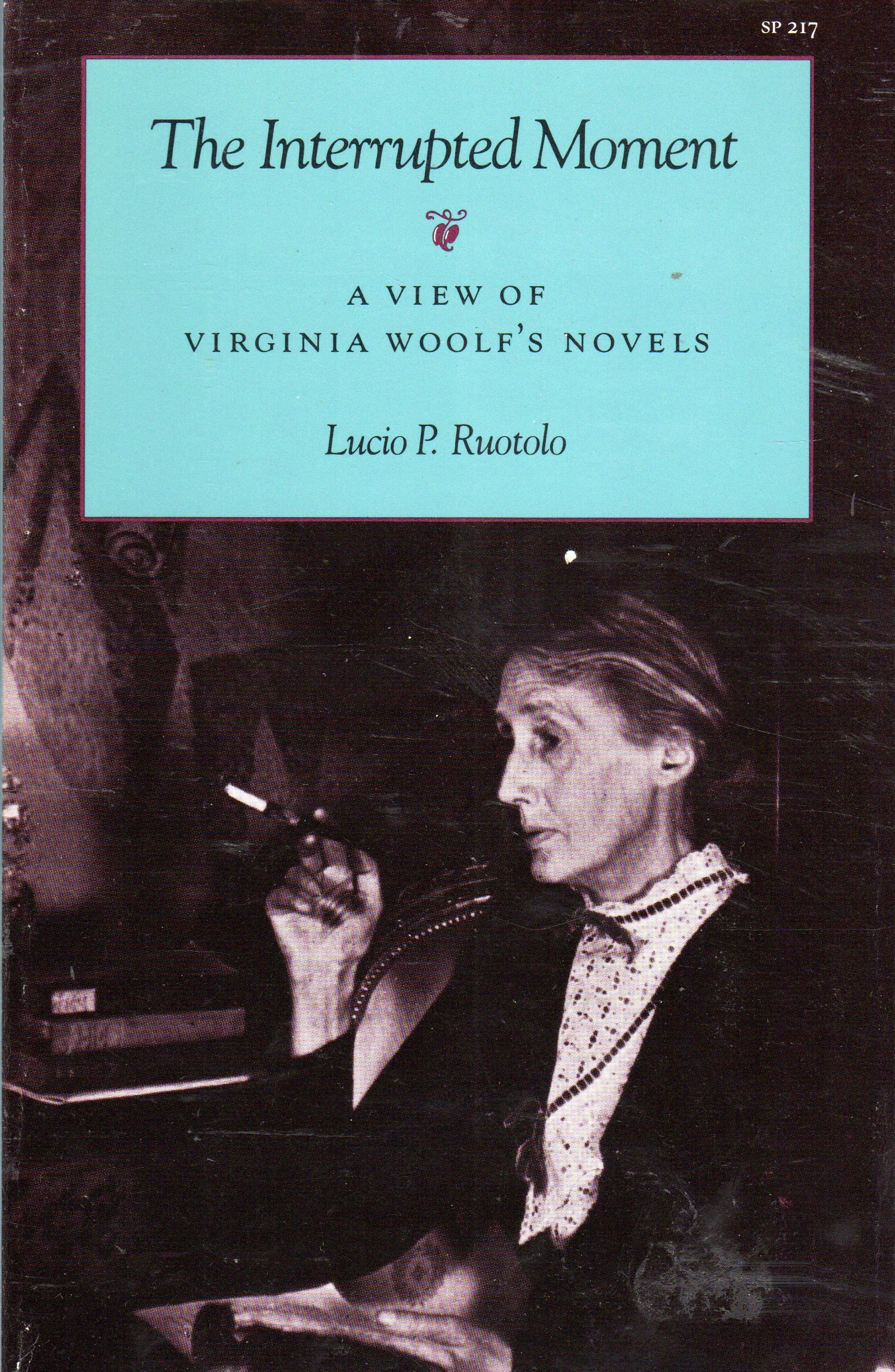



Throughout Virginia Woolf’s life and fiction, interruptions arouse inventive impulses, and such disorienting moments constitute, in the author’s view, a key aspect of Woolf’s experimental intention. To remain open to the shock of unmediated experience, what Woolf calls its “anarchy and newness,” is to recognize and celebrate the random diversity of modern life. Those of her characters who allow the chaotic intrusion of events or people to reshape expectations emerge as her most creative heroines. Those who voice distaste for interruption, and succumb to a protective impulse to close themselves off, invariably fall back into postures of self-supporting insularity. In widening perception, the impact of discontinuity occasions a more communal view of art and society—a shift from “I” to “we.” Woolf’s recurring impulse to break derived sequences of art and politics reveals a growing critique of something more fundamental than either patriarchal hierarchy or what Leonard Woolf described as “bourgeois Victorianism.” In the manner of anarchism, she comes to question those presumptions that underlie the theory of governance itself. Central to all her thinking is the revelation of interruption, heralding change, and the growing expectation that society is on the verge of radical transformation. The author studies each novel in turn, showing how the issues that motivated Woolf as a creative writer gradually developed in complexity—from The Voyage Out and its attempt to cultivate the art of doing nothing to Between the Acts and its vision of an egalitarian society where each new interruption emerges with a promise of renewal. Throughout Virginia Woolf’s life and fiction, interruptions arouse inventive impulses, and such disorienting moments constitute, in the author’s view, a key aspect of Woolf’s experimental intention. To remain open to the shock of unmediated experience, what Woolf calls its “anarchy and newness,” is to recognize and celebrate the random diversity of modern life. Those of her characters who allow the chaotic intrusion of events or people to reshape expectations emerge as her most creative heroines. Those who voice distaste for interruption, and succumb to a protective impulse to close themselves off, invariably fall back into postures of self-supporting insularity. In widening perception, the impact of discontinuity occasions a more communal view of art and society—a shift from “I” to “we.” Woolf’s recurring impulse to break derived sequences of art and politics reveals a growing critique of something more fundamental than either patriarchal hierarchy or what Leonard Woolf described as “bourgeois Victorianism.” In the manner of anarchism, she comes to question those presumptions that underlie the theory of governance itself. Central to all her thinking is the revelation of interruption, heralding change, and the growing expectation that society is on the verge of radical transformation. The author studies each novel in turn, showing how the issues that motivated Woolf as a creative writer gradually developed in complexity—from The Voyage Out and its attempt to cultivate the art of doing nothing to Between the Acts and its vision of an egalitarian society where each new interruption emerges with a promise of renewal. Throughout Virginia Woolf’s life and fiction, interruptions arouse inventive impulses, and such disorienting moments constitute, in the author’s view, a key aspect of Woolf’s experimental intention. To remain open to the shock of unmediated experience, what Woolf calls its “anarchy and newness,” is to recognize and celebrate the random diversity of modern life. Those of her characters who allow the chaotic intrusion of events or people to reshape expectations emerge as her most creative heroines. Those who voice distaste for interruption, and succumb to a protective impulse to close themselves off, invariably fall back into postures of self-supporting insularity. In widening perception, the impact of discontinuity occasions a more communal view of art and society—a shift from “I” to “we.” Woolf’s recurring impulse to break derived sequences of art and politics reveals a growing critique of something more fundamental than either patriarchal hierarchy or what Leonard Woolf described as “bourgeois Victorianism.” In the manner of anarchism, she comes to question those presumptions that underlie the theory of governance itself. Central to all her thinking is the revelation of interruption, heralding change, and the growing expectation that society is on the verge of radical transformation. The author studies each novel in turn, showing how the issues that motivated Woolf as a creative writer gradually developed in complexity—from The Voyage Out and its attempt to cultivate the art of doing nothing to Between the Acts and its vision of an egalitarian society where each new interruption emerges with a promise of renewal. Lucio P. Ruotolo is Professor of English at Stanford University,