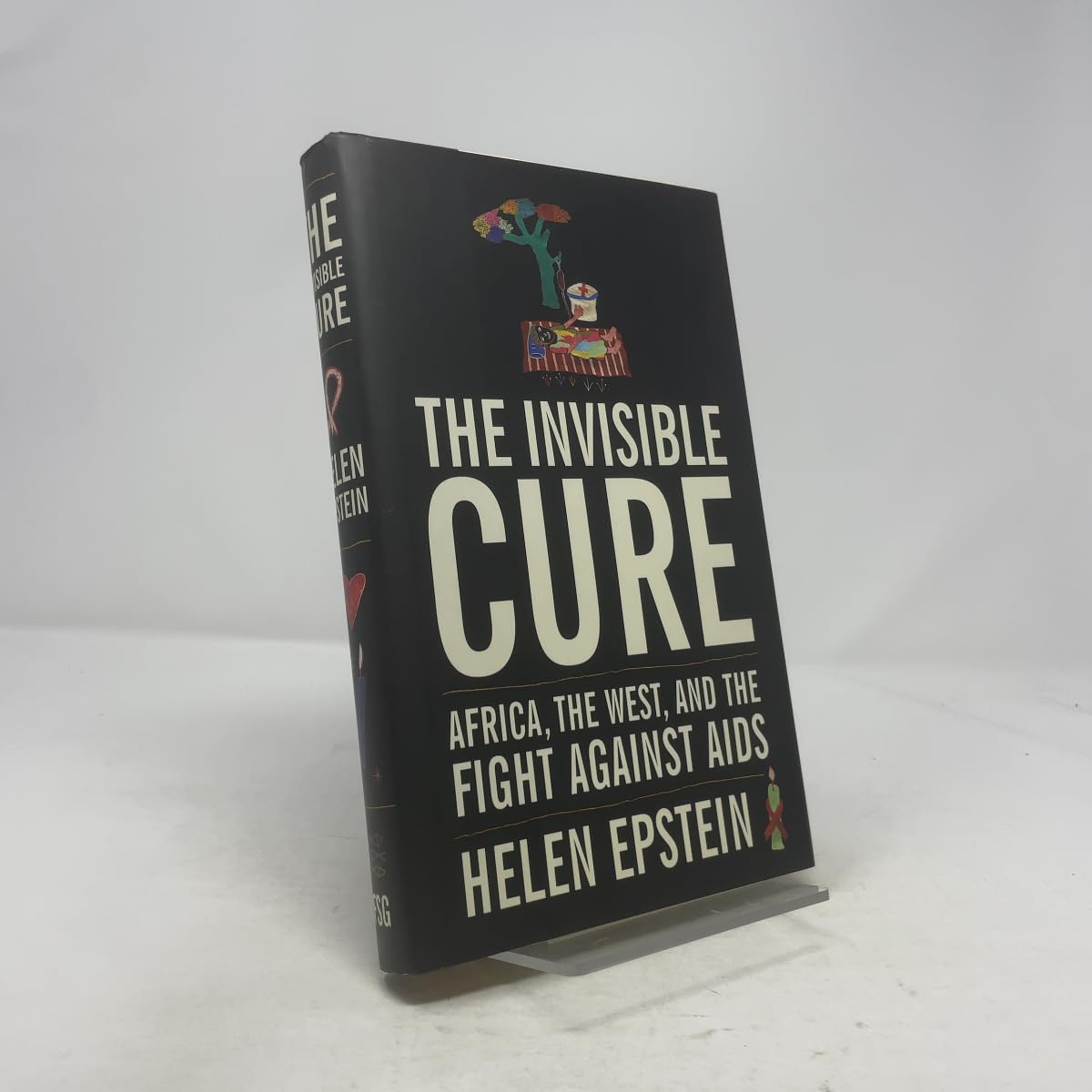



In 1993, Helen Epstein, a scientist working with a biotechnology company searching for an AIDS vaccine, moved to Uganda, where she witnessed firsthand the suffering caused by the epidemic. Now, in her unsparing and illuminating account of this global disease, she describes how international health experts, governments, and ordinary Africans have struggled to understand the rapid and devastating spread of the disease in Africa, and traces the changes wrought by new medical developments and emerging political realities. It is an account of scientific discovery and intrigue with implications far beyond the fight against one tragic disease. The AIDS epidemic is partly a consequence of the rapid transition of African societies from an agrarian past to an impoverished present. Millions of African people have yet to find a place in an increasingly globalized world, and their poverty and social dislocation have generated an earthquake in gender relations that deeply affects the spread of HIV. But Epstein argues that there are solutions to this crisis, and some of the most effective ones may be simpler than many people assume. Written with conviction, knowledge, and insight, Why Don't They Listen? will change how we think about the worst health crisis of the past century, and our strategies for improving global public health. Some countries in Africa report that approximately one-third of their adult populations are infected with HIV. Epstein wondered how such a state of affairs came about. Seeking answers, she contracted with a biotechnical company to go to Africa and work toward discovering an AIDS vaccine. What she subsequently learned exploded some preconceived and widely shared notions about AIDS, about how African culture all but ensures its spread, and about what might be a deceptively simple answer to the complex question of how to stem that spread. Her absorbing report reveals governmental inefficiencies and medical bureaucracies and social structures that have done nothing to slow the epidemic's pace—and may be accelerating it. Besides the epidemic's social and medical aspects, she discusses the business of AIDS, and she examines the mystery of how the HIV infection rate dropped some 70 percent between 1992 and 1997 in Uganda and the Kagera region of Tanzania; she believes that the invisible cure involved in that plunge provides clues to resolving the issue of AIDS in Africa generally. Chavez, Donna Copyright © American Library Association. All rights reserved "Her tone is level and undogmatic, but the news that Helen Epstein brings from the African front lines about AIDS is searing. So many lives have been lost, so much time and money wasted in badly-designed public and private campaigns against the disease. What actually works is both simple and subtle. There may be no magic bullet--there may never be a vaccine--but there are success stories, even in very poor countries. This is a landmark study. " --William Finnegan, author of Cold New World: Growing Up in a Harder Country and A Complicated War: The Harrowing of Mozambique Helen Epstein writes frequently on public health for various publications, including The New York Review of Books and The New York Times Magazine . She is currently a visiting research scholar at the Center for Health and Wellbeing at Princeton University. Preface One morning in November 2001, two officials from a Kenyan AIDS organization picked me up from my hotel in Nairobi and took me on a drive. We drove and drove all day, over muddy tracks, through endless pineapple and coffee plantations, rural villages and slums, through all of Africa, it seemed, to arrive at a small field, perhaps half an acre, with some weeds growing in it and an old woman standing there with a hoe. I had not expected this. I was reporting on AIDS programs for an American foundation, and most of the other projects I had visited were either medical programs, AIDS awareness campaigns using billboards, radio or television spots, or traveling roadshows designed to promote AIDS awareness or condoms or HIV testing. I was about to say something when one of my guides spoke first. "We are very proud of this project." So I said nothing. About twenty women had saved up for two years to buy this land. All of them were supporting orphans whose parents had died of AIDS, and they hoped the land would produce enough food for about fifty people in all. On a nearby hill, one of Kenya's vast corporate-owned coffee plantations loomed like the edge of the sea. The old woman kept glancing at it as though it might sweep her away. I was moved by what I saw, although I didn't understand at the time how this project was supposed to fight AIDS. This book explains how I came to do so. The worldwide AIDS epidemic is ruining families, villages, businesses, and armies and leaving behind an immense sadness that will linger for generations. The situation in East and southern Africa is uniquely severe. In 2005, roughly 40 percent o