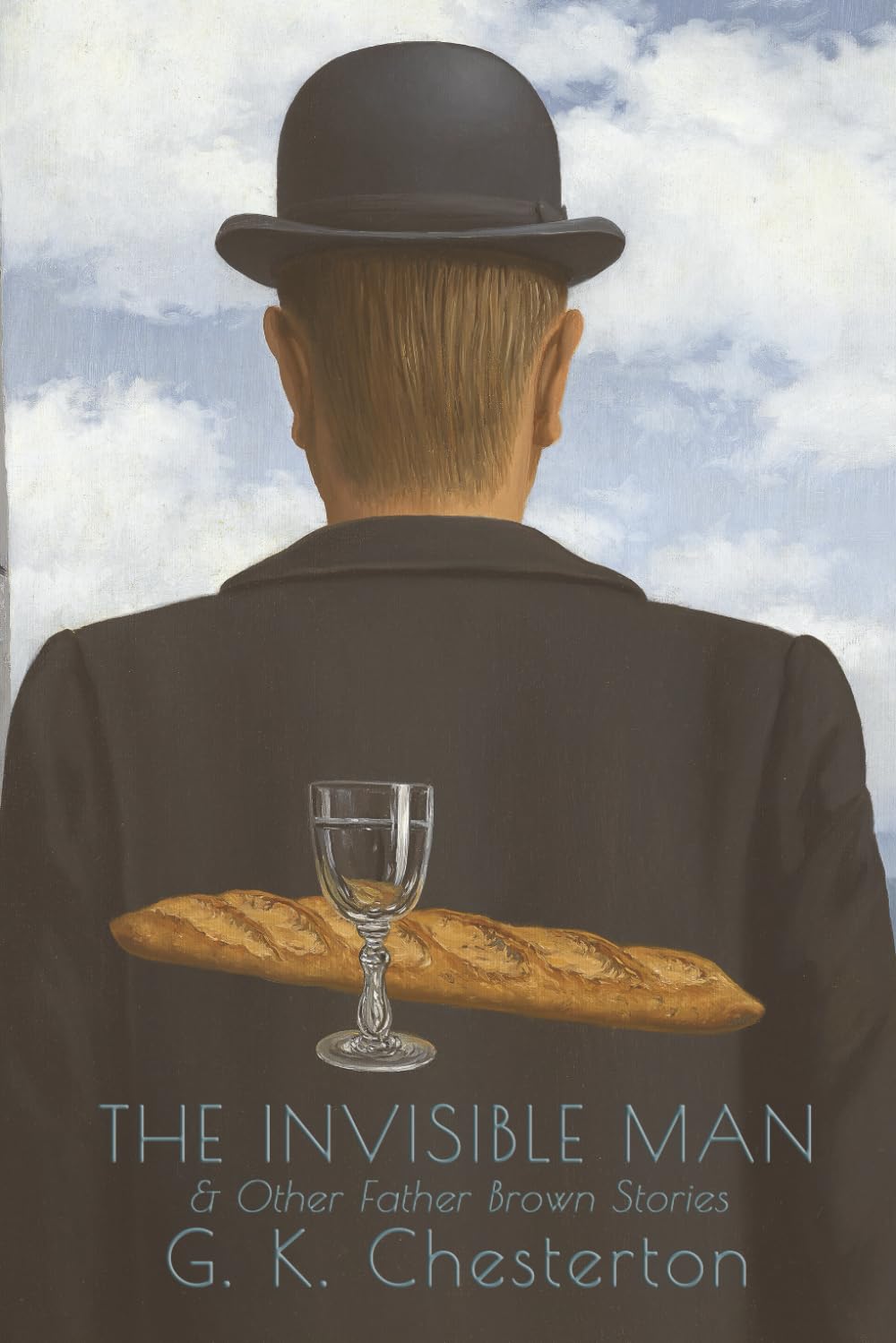
The Invisible Man & Other Father Brown Stories: A Defence of Detective Stories - The Blue Cross - The Secret Garden - The Flying Stars - The Wrong ...
$5.99
by G K Chesterton



The Invisible Man & Other Father Brown Stories G.K. Chesterton’s Immortal Catholic Detective “I am a man,” he said, “and therefore have all devils in my heart.” Between 1910 and 1936, G.K. Chesterton created the most unlikely, most beloved, and most philosophically profound detective in English literature: Father Brown—a shabby little Essex priest with an umbrella, a face like a Norfolk dumpling, and the most terrifying weapon of all: he knows what evil looks like because he has stared into his own soul. Where Sherlock Holmes trusts reason and science, Father Brown trusts sin. Where Poirot trusts order and method, Father Brown trusts paradox. He does not catch criminals by being cleverer than they are—he catches them by understanding that every human heart is a battlefield between grace and damnation. A Defence of Detective Stories - Chesterton’s own essay on detective fiction - The Blue Cross - The very first Father Brown story. A Parisian police detective pursues Flambeau, the world’s greatest thief, across London. Only the unassuming priest with the umbrella sees the real danger — and turns the hunter into the hunted with nothing but logic and a parcel of brown paper. - The Secret Garden - Aristide Valentin, the greatest detective in France, hosts a perfect dinner party in his perfect garden. The guests enter. Only eleven leave. The twelfth is found later — with his head cut off. The garden was locked. No footprints in the snow. No weapon. Father Brown’s solution is so shocking that even Valentin loses his faith in reason. - The Flying Stars - A priceless set of diamonds is to be given away at a Christmas pantomime. A reformed thief, a socialist revolutionary, and a harmless English colonel are all under one roof. When the lights go out, the jewels vanish into thin air... - The Invisible Man - The most famous impossible crime in detective fiction. A wealthy suitor is murdered in a house under constant watch. Four witnesses swear nobody entered or left. Yet the corpse lies in the snow with its throat cut. Father Brown’s solution is so simple, so devastating, it has stunned readers for over a century. - The Wrong Shape A famous Indian poet, obsessed with Eastern mysticism, is found dead in his sealed study — a curved Oriental dagger in his heart. Suicide, clearly. Except Father Brown notices that the dagger is the wrong shape… and the corpse is holding the wrong end of it... - The Hammer of God - In a sleepy English village, the local blacksmith—a notorious sinner—is found beneath the church tower with his skull smashed to pulp. The only weapon: a tiny hammer belonging to the saintly curate... - The Eye of Apollo - A glamorous new sun-worshipping cult sweeps London. Its prophet, Apollo, claims the healing power of light. A blind millionaire’s daughter plunges to her death from a high-rise office—in full view of the street yet unseen by anyone... - The Sign of the Broken Sword - The greatest soldier in Christendom, General St. Clare, was found hanging from a South American tree with his legendary sword shattered beneath him. Decades later, Father Brown quietly reveals the most terrible truth of all... - The Three Tools of Death A millionaire philanthropist is found shot, stabbed, and strangled—with three different weapons lying beside him. Suicide? Impossible. Murder? No one had a motive. Only Father Brown understands that sometimes the kindest men are killed by kindness itself. H.P. Lovecraft called Father Brown “the greatest detective in literature.” Jorge Luis Borges kept the stories by his bedside. Neil Gaiman, Umberto Eco, and Kingsley Amis all named Chesterton as their master. The BBC’s long-running series brought him to millions more. “The criminal is the creative artist; the detective only the critic.”