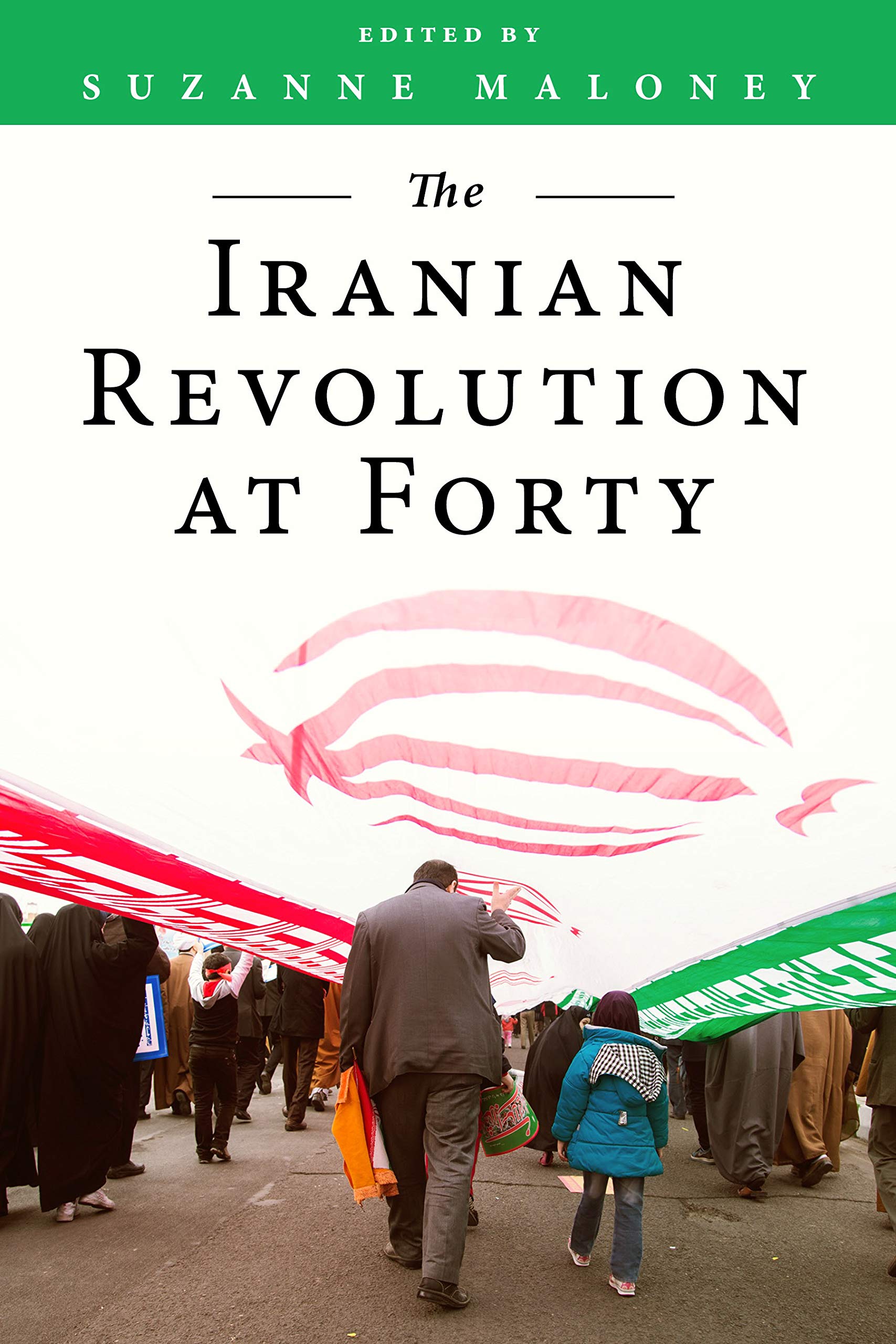



How Iranand the world around ithave changed in the four decades since a revolutionary theocracy took power Iran's 1979 revolution is one of the most important events of the late twentieth century. The overthrow of the Western-leaning Shah and the emergence of a unique religious government reshaped Iran, dramatically shifted the balance of power in the Middle East and generated serious challenges to the global geopolitical orderchallenges that continue to this day. The seizure of the U.S. Embassy in Tehran later that same year and the ensuing hostage crisis resulted in an acrimonious breach between America and Iran that remains unresolved to this day. The revolution also precipitated a calamitous war between Iran and Iraq and an expansion of the U.S. military's role in maintaining security in and around the Persian Gulf. Forty years after the revolution, more than two dozen experts look back on the rise of the Islamic Republic and explore what the startling events of 1979 continue to mean for the volatile Middle East as well as the rest of the world. The authors explore the events of the revolution itself; whether its promises have been kept or broken; the impact of clerical rule on ordinary Iranians, especially women; the continuing antagonism with the United States; and the repercussions not only for Iran's immediate neighborhood but also for the broader Middle East. Complete with a helpful timeline and suggestions for further reading, this book helps put the Iranian revolution in historical and geopolitical perspective, both for experts who have long studied the Middle East and for curious readers interested in fallout from the intense turmoil of four decades ago. The tumultuous history of Iran’s evolution should check any temptation toward easy optimism: Progress is rarely linear and, given the Islamic Republic’s survival instincts, the political atmosphere within Iran is bound to get worse before it gets better.Suzanne Maloney The loss of the shah as a U.S. partner in the Persian Gulf was widely understood as a major strategic defeat, at a key moment in the Cold Warand the humiliation of the hostage crisis only underscored this judgment.Tamara Cofman Wittes The overthrow of one key leader in the Middle East and the martyrdom of another set back American policy in the region in ways that have yet to be recovered.Strobe Talbott The hostage crisis and subsequent acts of terrorism in the name of Islam created a powerful strain of public opinion that continues to play a role in American life and politics.Elaine Kamarck The collapse of the shah’s government in Iran in early 1979 had an impact on the entire world, but no country was more af fected than Iraq.Bruce Riedel The Iranian Revolution and the oil price shocks that followed catalyzed a number of important changes in petroleum markets that remain in place today.Samantha Gross If Iran were to hold a referendum on the Islamic Republic today, over 70 percent would clearly oppose itamong them the wealthy, academics, clerics, and village and city dwellers.Ali Fathollah-Nejad Iranian-Israeli hostility is actually quite odd. . . . It can be traced directly to one period, forty years ago: the Iranian Revolution and the birth of the Islamic Republic.Natan Sachs Forty years after its birth, the Islamic Republic is still fueled by a blend of religious zeal, geopolitical ambitions, and vested interest.Itamar Rabinovich The 1979 Islamic Revolution in Iran proved to be one of the most consequential events in the history of modern terrorism.Daniel Byman Perhaps someday America’s cherished desire for better ties will be reciprocated by the leaders of Iran. But the history of the past forty years seems to suggest that will never be more than a tantalizing dream until new leaders take the helm in Tehran.Kenneth Pollack Suzanne Maloney is the interim vice president and director of the Foreign Policy program at the Brookings Institution. Her books include Iran's Political Economy since the Revolution and Iran's Long Reach. Maloney has advised both Republican and Democratic administrations on Iran and the Middle East and previously served as Middle East advisor for ExxonMobil Corporation. She holds a Ph.D from the Fletcher School of Law and Diplomacy at Tufts University and has studied and conducted research in Iran.