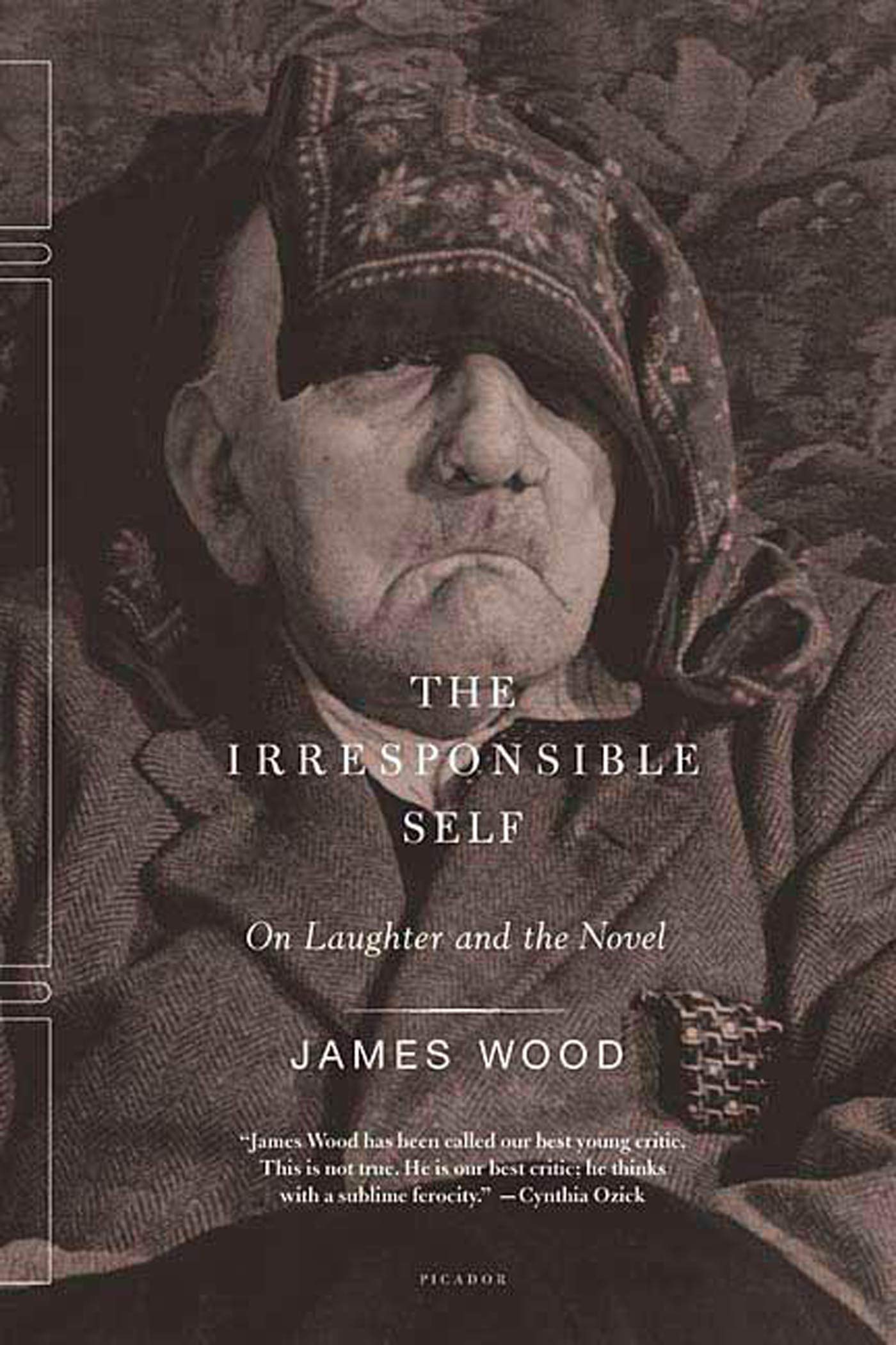



"James Wood has been called our best young critic. This is not true. He is our best critic; he thinks with a sublime ferocity."--Cynthia Ozick Following the collection The Broken Estate --which established James Wood as the leading critic of his generation-- The Irresponsible Self confirms Wood's preeminence, not only as a discerning judge but also as an appreciator of contemporary novels. In twenty-three passionate, sparkling dispatches, he effortlessly connects his encyclopedic, passionate understanding of the literary canon with an equally earnest and appreciative view of the most discussed authors writing today, including Franzen, Pynchon, Rushdie, DeLillo, Naipaul, David Foster Wallace, and Zadie Smith. This collection includes Wood's famous and controversial attack on "hysterical realism", and his sensitive but unsparing examinations of White Teeth and Brick Lane . The Irresponsible Self is indispensable reading for anyone who cares about modern fiction. “Inimitable...He has not only a well-tuned ear for prose but a remarkable ability to convey how novelistic language transubstantiates life into literature...Wood's essays...vibrate with the difficult, serious pleasure that literature uniquely provides.” ― A.O. Scott, New York Times Book Review “Wood writes with such felicity and zeal that one feels neither the inclination nor the possibility of disagreeing with him...[His] enthusiasm provides such an attractive alternative to the truculence of Dale Peck, and the bloodlessness of 'in-house' academic criticism.” ― Robert McFarlane, The Times Literary Supplement "James Wood has been called our best young critic. This is not true. He is our best critic; he thinks with a sublime ferocity."--Cynthia Ozick Following the collection The Broken Estate --which established James Wood as the leading critic of his generation-- The Irresponsible Self confirms Wood's preeminence, not only as a discerning judge but also as an appreciator of contemporary novels. In twenty-three passionate, sparkling dispatches, he effortlessly connects his encyclopedic, passionate understanding of the literary canon with an equally earnest and appreciative view of the most discussed authors writing today, including Franzen, Pynchon, Rushdie, DeLillo, Naipaul, David Foster Wallace, and Zadie Smith. This collection includes Wood's famous and controversial attack on "hysterical realism", and his sensitive but unsparing examinations of White Teeth and Brick Lane . The Irresponsible Self is indispensable reading for anyone who cares about modern fiction. "Inimitable...He has not only a well-tuned ear for prose but a remarkable ability to convey how novelistic language transubstantiates life into literature...Wood's essays...vibrate with the difficult, serious pleasure that literature uniquely provides."--A.O. Scott, New York Times Book Review "Wood writes with such felicity and zeal that one feels neither the inclination nor the possibility of disagreeing with him...[His] enthusiasm provides such an attractive alternative to the truculence of Dale Peck, and the bloodlessness of 'in-house' academic criticism."--Robert McFarlane, The Times Literary Supplement James Wood was the chief literary critic of The Guardian and is a senior editor at The New Republic . His previous work includes The Book Against God (Picador, 2004). James Wood is a staff writer at The New Yorker and Professor of the Practice of Literary Criticism at Harvard University. He is the author of How Fiction Works , as well as two essay collections, The Broken Estate and The Irresponsible Self , and a novel, The Book Against God . The Irresponsible Self On Laughter and the Novel By James Wood Picador USA Copyright © 2005 James Wood All right reserved. ISBN: 9780312424602 Chapter One Don Quixote's Old and New Testaments * * * The famous windmills Don Quixote mistakes for giants have somethingin common with the madeleine that makes Marcel's memory-budssalivate: they both occur conveniently early in very long booksthat are, in English at least, more praised than read. And Cervantesmay resemble Proust in one further dimension. Both are comic writers,properly snagged in the mundane, whose fiction has too oftenbeen etherealized out of existence. Miguel de Unamuno, the relentlesslyidealizing Spanish philosopher, considered Don Quixote a "profoundly Christian epic" and the true Spanish bible, and correspondinglymanaged to write about the novel as if not a singlecomic episode occurs in it. W. H. Auden thought that Don Quixote was a portrait of a Christian saint; and Unamuno's unlikely Americansupporter, Harold Bloom, reminds us that although " DonQuixote may not be a scripture," it nonetheless contains us all asShakespeare does-which sounds more like religious lament thansecular caution. So it is worth reminding ourselves of the gross, the worldly, theviolent, and above all the comic in Don Quixote -worth rem