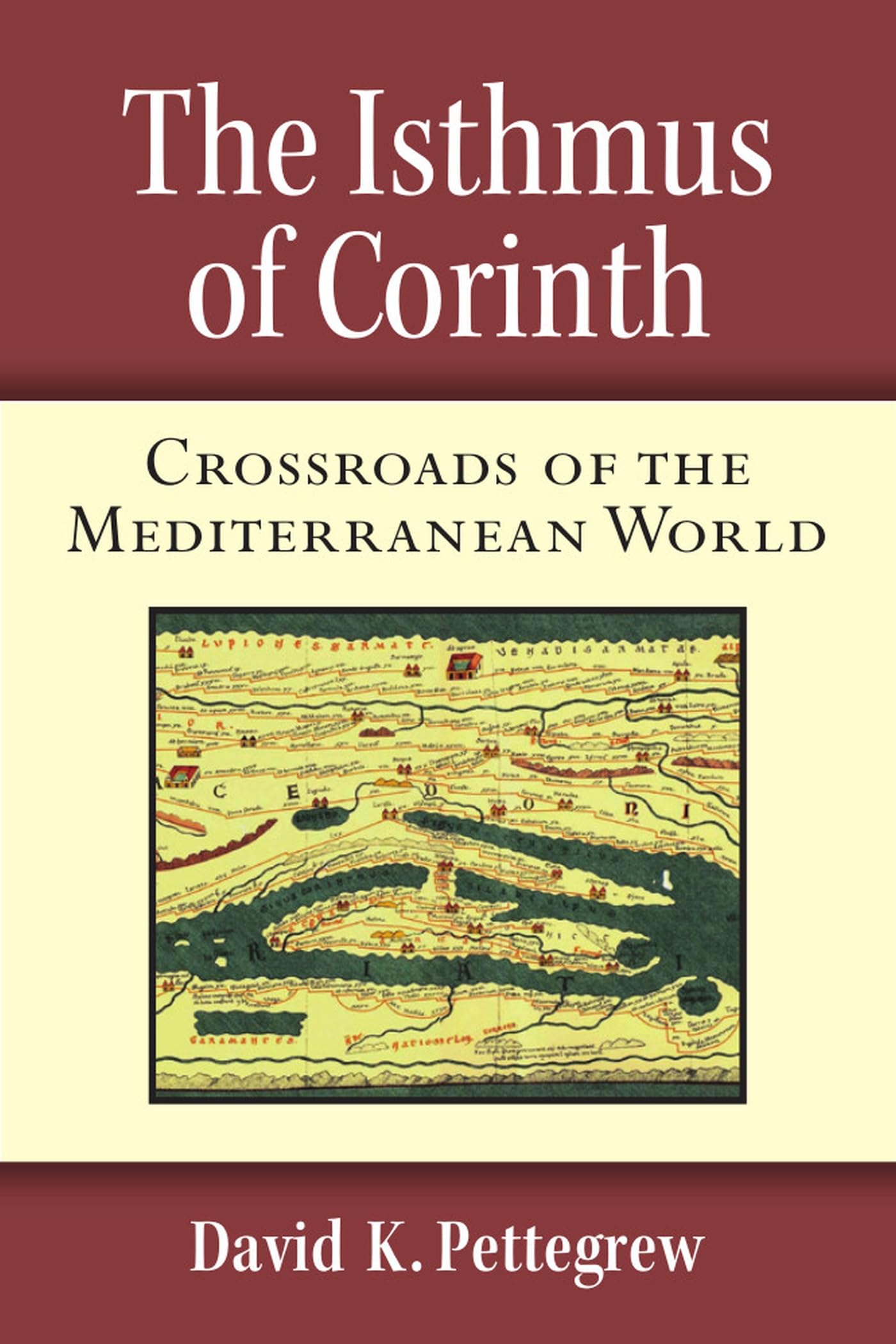



The narrow neck of land that joins the Peloponnese with the Greek mainland was central to the fortunes of the city of Corinth and the history of Greece from the classical Greek period to the end of the ancient world. Corinth was perfectly situated for monitoring land traffic between Athens and Sparta and overland movements between eastern and western seas. David Pettegrew’s book offers a new history of the Isthmus of Corinth from the Romans’ initial presence in Greece during the Hellenistic era to the epic transformations of the Empire in late antiquity. A new interpretation of the extensive literary evidence outlines how the Isthmus became the most famous land bridge of the ancient world, central to maritime interests of Corinth, and a medium for Rome’s conquest, annexation, and administration in the Greek east. A fresh synthesis of archaeological evidence and the results of a recent intensive survey on the Isthmus describe the physical development of fortifications, settlements, harbors, roads, and sanctuaries in the region. The author includes chapters on the classical background of the concept isthmos , the sacking of Corinth and the defeat of the Achaean League, colonization in the Late Roman Republic, the Emperor Nero’s canal project and its failure, the growth of Roman settlement in the territory, and the end of athletic contests at Isthmia. The Isthmus of Corinth offers a powerful case study in the ways that shifting Mediterranean worlds transformed a culturally significant landscape over the course of a millennium. ¨The author, who focuses on the Roman period, skillfully compares aerial photographs and archaeological reports to the ancient sources...Highly recommended.¨ -- Choice Reviews -- AJ Papalas ― Choice Reviews Published On: 2017-01-05 ¨Has both the depth and scholarship that would make it invaluable to undergraduate and postgraduate alike. The general interested reader could also find much to engage with.¨ -- Classics for All -- Cath Milnes ― Classics for All Published On: 2017-01-07 "...The diachronic perspective highlights regional fluctuations in a useful way." -- Ancient History Bulletin -- Kathleen Slane ― Ancient History Bulletin Published On: 2017-01-09 "In this beautifully written and well-illustrated new book, David Pettegrew takes aim at what he terms the modern, ‘timeless’ view of the territory surrounding the isthmus of Corinth as a region whose significance was dictated by its connective geography and was therefore unchanging over time." -- Journal of Historical Geography -- Jeannette Marchand ― Journal of Historical Geography Published On: 2017-03-23 "This authoritative study sets new standards for methodological approaches for the analysis of geographically-specific regions." -- Classical Review -- REBECCA SWEETMAN ― Classical Review Published On: 2017-04-24 "It is a rich work with much to reward the reader...the book will be of interest to anyone working on economic and social history, the intersection of text and material culture, or the history of archaeology." -- American Journal of Archaeology -- Daniel Stewart ― American Journal of Archaology Published On: 2017-06-28 "Pettegrew has presented a very welcome study, one of the strengths of which is that the author looks at archaeological and literary testimonies as well as evaluating them in a contextual and well-balanced manner. His argumentation is as convincing as it is compelling." -- Bryn Mawr Classical Review -- Michael Kleu ― Bryn Mawr Classical Review Published On: 2017-07-26 "An essential read for archaeologists, historians, (historical) geographers and students alike, as the rich body of references provides a proper introduction on the archaeology of Corinth and its close region." -- Journal of Greek Archaeology ― Journal of Greek Archaeology Published On: 2017-12-06 David Pettegrew is Associate Professor of History at Messiah College. He is also the author of Corinthian Countrysides: Linked Open Data and Analysis from the Eastern Corinthia Survey (2024), co-author of Pyla- Koutsopetria I: Archaeological Survey of an Ancient Coastal Town (2014), and co-editor of The Oxford Handbook of Early Christian Archaeology (2019).