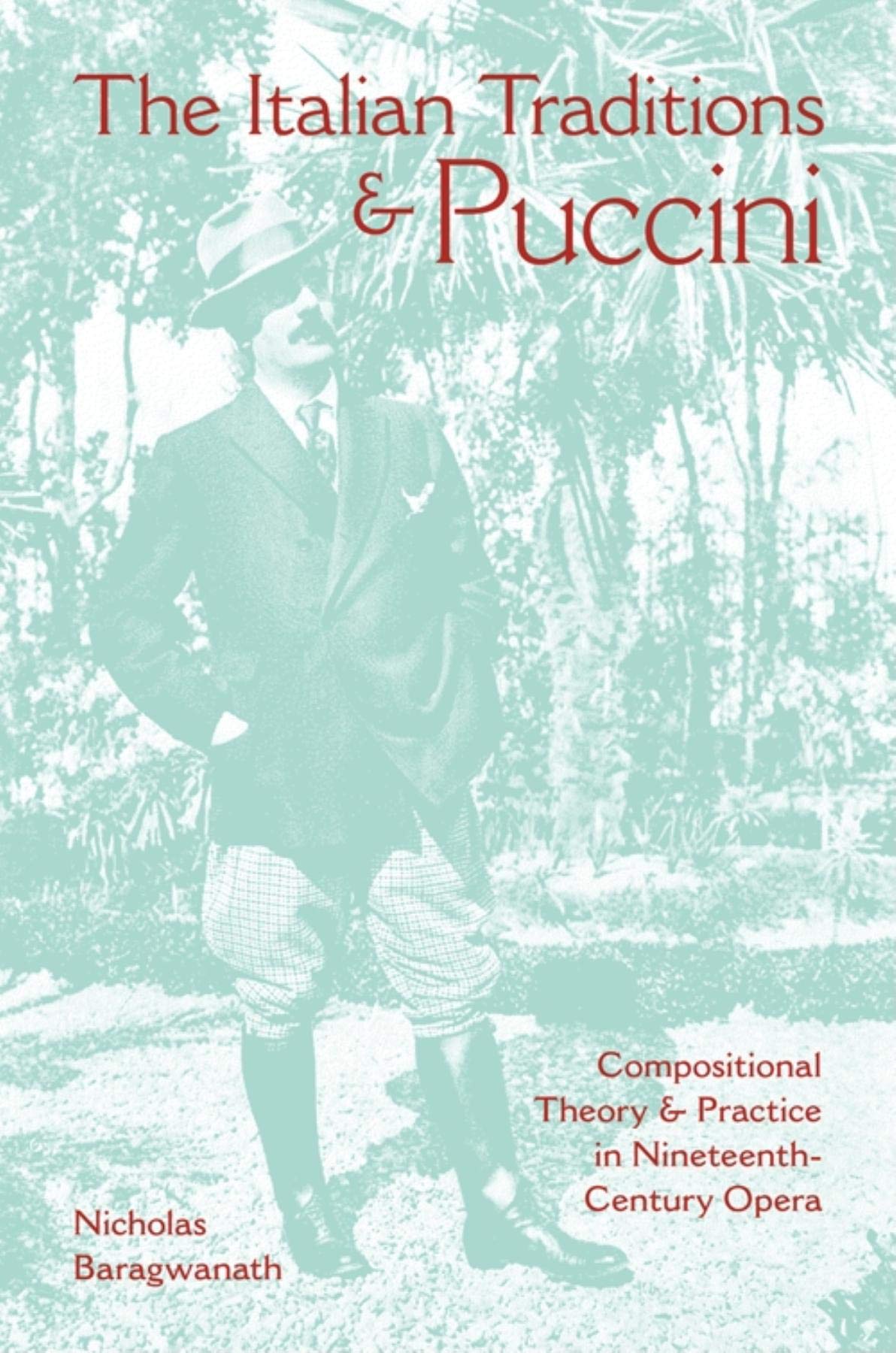
The Italian Traditions and Puccini: Compositional Theory and Practice in Nineteenth-Century Opera (Musical Meaning and Interpretation)
$49.95
by Nicholas Baragwanath



In this groundbreaking survey of the fundamentals, methods, and formulas that were taught at Italian music conservatories during the 19th century, Nicholas Baragwanath explores the compositional significance of tradition in Rossini, Bellini, Donizetti, Verdi, Boito, and, most importantly, Puccini. Taking account of some 400 primary sources, Baragwanath explains the varying theories and practices of the period in light of current theoretical and analytical conceptions of this music. The Italian Traditions and Puccini offers a guide to an informed interpretation and appreciation of Italian opera by underscoring the proximity of archaic traditions to the music of Puccini. "Baragwanath represents with admirable clarity the most important (and entangled) facets of the Italian theoretical traditions. . . . An impressive tour de force."―Giorgio Sanguinetti, University of Rome, Tor Vergata "Dense and challenging in its detail and analysis, this work is an important addition to the growing corpus of Puccini studies. . . . Highly recommended."― Choice "Baragwanath's is a very full treatment of Italian teaching methods and curricula, now based not ony on traditional harmony but on other relevant strategies for learning to create what every Italian composer wanted to create: opera. The pedagogical traditions and the Puccini family's part in them are tracedbroadly The positivistic research is thorough and results in a reference-source useful to all further historians of 19th-century Italian opera. The topic is a big one, with many ramifications, and the book does provide a definitive service in explaining the prevailing Italian view that 'music should be pleasing, fulfilling or entertaining in a variety of contexts.'"― Musical Times "[B]y offering another component to the analyst's tool kit, Baragwanath has comprehensively achieved what he set out to do: create a framework for further study."― Music and Letters "Nicholas Baragwanath has made a major contribution – one of the most major to date, in any language – not only to Puccini studies but also to the study of nineteenth-century Italian opera in general."― Nineteenth-Century Music Review "[Offers] us no less than a thorough reappraisal of how composition was learned by those who would actually become composers."― Journal of Music Theory Baragwanath represents with admirable clarity the most important (and entangled) facets of the Italian theoretical traditions. . . . An impressive tour de force. -- Giorgio Sanguinetti Nicholas Baragwanath is Director of Postgraduate Studies and Associate Professor of Musicology in the Department of Music, University of Nottingham.