


Listen to a short interview with Karen Ordahl KuppermanHost: Chris Gondek
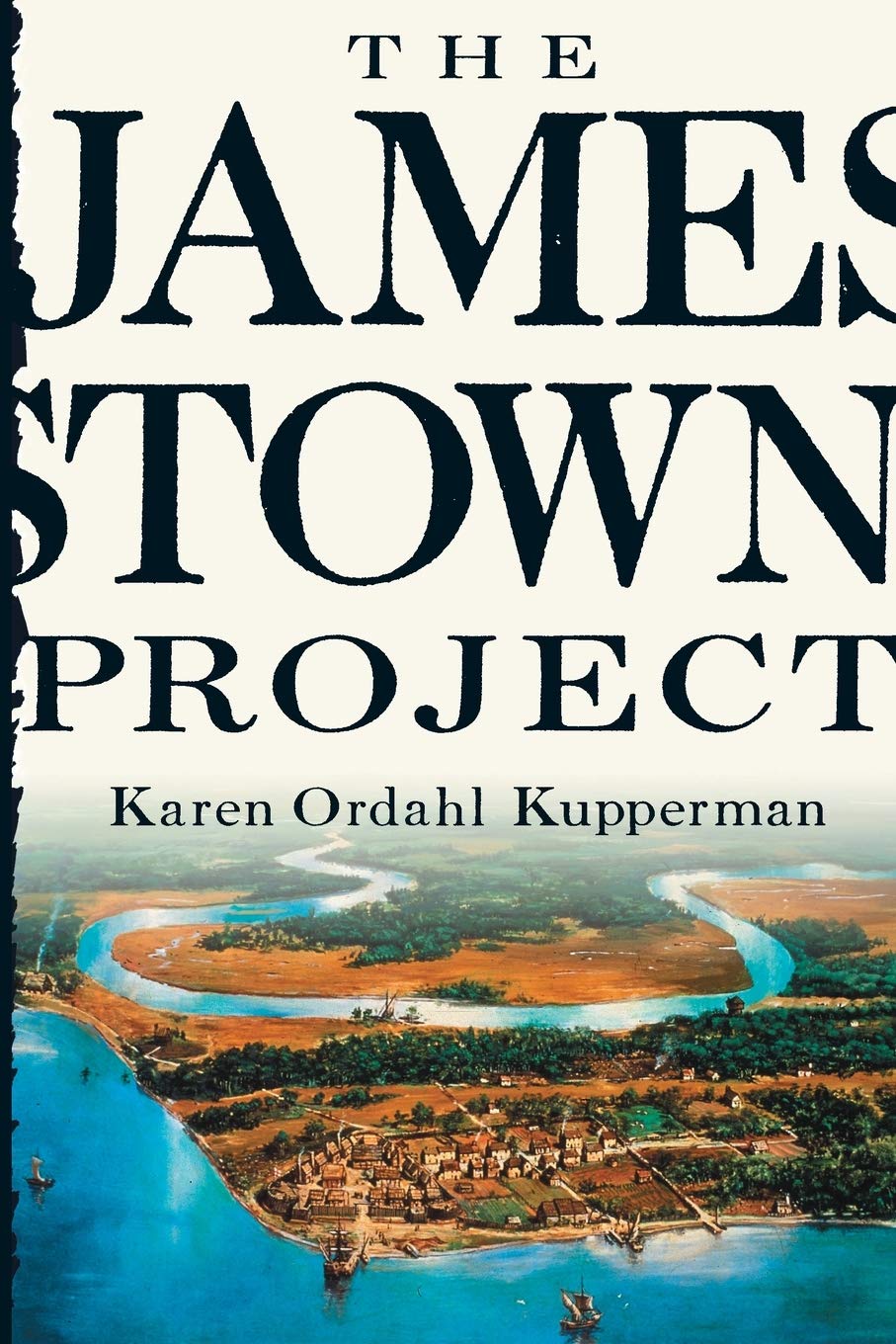
Producer: Heron & Crane Captain John Smith's 1607 voyage to Jamestown was not his first trip abroad. He had traveled throughout Europe, been sold as a war captive in Turkey, escaped, and returned to England in time to join the Virginia Company's colonizing project. In Jamestown migrants, merchants, and soldiers who had also sailed to the distant shores of the Ottoman Empire, Africa, and Ireland in search of new beginnings encountered Indians who already possessed broad understanding of Europeans. Experience of foreign environments and cultures had sharpened survival instincts on all sides and aroused challenging questions about human nature and its potential for transformation. It is against this enlarged temporal and geographic background that Jamestown dramatically emerges in Karen Kupperman's breathtaking study. Reconfiguring the national myth of Jamestown's failure, she shows how the settlement's distinctly messy first decade actually represents a period of ferment in which individuals were learning how to make a colony work. Despite the settlers' dependence on the Chesapeake Algonquians and strained relations with their London backers, they forged a tenacious colony that survived where others had failed. Indeed, the structures and practices that evolved through trial and error in Virginia would become the model for all successful English colonies, including Plymouth. Capturing England's intoxication with a wider world through ballads, plays, and paintings, and the stark reality of Jamestown--for Indians and Europeans alike--through the words of its inhabitants as well as archeological and environmental evidence, Kupperman re-creates these formative years with astonishing detail. “The Jamestown experiment receives a new slant in this carefully researched book. Indeed, Kupperman...treats all of the factors that converged to bring forth the realization of the project, emphasizing the extraneous aspects of the founding of the Virginia colony rather than the unfolding of the New World venture itself. Not until two-thirds of the way through does the author take up the actual Virginia settlement. Kupperman places Jamestown in the context of a hundred years of European expansion. The book is especially valuable for thorough introductions of important players hitherto neglected by historians.” ― H.M. Ward , Choice “Americans have too long obscured Jamestown's history by shrouding it in nationalistic myths and overwrought stories of Captain John Smith and Pocahontas. With extraordinary skill, Karen Ordahl Kupperman corrects the record by placing the settlement into its proper context as one among a number of early modern English ventures. Happy Four Hundredth Birthday, Jamestown: you now have the history you have always deserved.” ― Peter C. Mancall, author, Hakluyt's Promise: An Elizabethan's Obsession for an English America “If anyone is equipped to say something really new about Jamestown at its four hundredth anniversary, it is Karen Kupperman, with her deep knowledge of early modern colonial ventures of all sorts. This marvelous book teaches us why our usual way of thinking about Jamestown as the "first English colony" is utterly wrong--and why, nonetheless, Jamestown invented patterns that every other English colony would follow.” ― Daniel K. Richter, author of Facing East from Indian Country: A Native History of Early America “ The Jamestown Project is the culmination of nearly everything that Karen Kupperman has written in the last three decades. She makes a compelling case that early Virginia, despite its false starts and appalling mortality, taught the English what successful colonization required. A rare combination of exhaustive research, original ideas, and graceful writing.” ― John Murrin, Princeton University “Kupperman, marrying vivid narration with trenchant analysis, has done the history of Jamestown, and of early America, a great service.” ― Publishers Weekly “In this four hundredth anniversary year of Jamestown, historian Kupperman enlarges its story to encompass the Atlantic world that gave rise to it. The view from England toward the New World is what the author strives to reconstruct, successfully so. A century behind rival Spain in colonizing ventures, English captains eyed the east coast of North America with myriad possibilities in mind: as a base for raiding Spanish ships, as harboring a water route to the East Indies, and as an opportunity for reestablishing Christianity on a purified footing. The encounter of these concepts with the reality that was America--its people, climate, and landscape––is where Kupperman's account thrives, as she explores the experiences of various colonizing ventures, of which Jamestown was but one. Kupperman argues that Jamestown survived by attracting tremendous public interest in England, which translated into sustained supply for a decade, and by a trial-and-err
Producer: Heron & Crane Captain John Smith's 1607 voyage to Jamestown was not his first trip abroad. He had traveled throughout Europe, been sold as a war captive in Turkey, escaped, and returned to England in time to join the Virginia Company's colonizing project. In Jamestown migrants, merchants, and soldiers who had also sailed to the distant shores of the Ottoman Empire, Africa, and Ireland in search of new beginnings encountered Indians who already possessed broad understanding of Europeans. Experience of foreign environments and cultures had sharpened survival instincts on all sides and aroused challenging questions about human nature and its potential for transformation. It is against this enlarged temporal and geographic background that Jamestown dramatically emerges in Karen Kupperman's breathtaking study. Reconfiguring the national myth of Jamestown's failure, she shows how the settlement's distinctly messy first decade actually represents a period of ferment in which individuals were learning how to make a colony work. Despite the settlers' dependence on the Chesapeake Algonquians and strained relations with their London backers, they forged a tenacious colony that survived where others had failed. Indeed, the structures and practices that evolved through trial and error in Virginia would become the model for all successful English colonies, including Plymouth. Capturing England's intoxication with a wider world through ballads, plays, and paintings, and the stark reality of Jamestown--for Indians and Europeans alike--through the words of its inhabitants as well as archeological and environmental evidence, Kupperman re-creates these formative years with astonishing detail. “The Jamestown experiment receives a new slant in this carefully researched book. Indeed, Kupperman...treats all of the factors that converged to bring forth the realization of the project, emphasizing the extraneous aspects of the founding of the Virginia colony rather than the unfolding of the New World venture itself. Not until two-thirds of the way through does the author take up the actual Virginia settlement. Kupperman places Jamestown in the context of a hundred years of European expansion. The book is especially valuable for thorough introductions of important players hitherto neglected by historians.” ― H.M. Ward , Choice “Americans have too long obscured Jamestown's history by shrouding it in nationalistic myths and overwrought stories of Captain John Smith and Pocahontas. With extraordinary skill, Karen Ordahl Kupperman corrects the record by placing the settlement into its proper context as one among a number of early modern English ventures. Happy Four Hundredth Birthday, Jamestown: you now have the history you have always deserved.” ― Peter C. Mancall, author, Hakluyt's Promise: An Elizabethan's Obsession for an English America “If anyone is equipped to say something really new about Jamestown at its four hundredth anniversary, it is Karen Kupperman, with her deep knowledge of early modern colonial ventures of all sorts. This marvelous book teaches us why our usual way of thinking about Jamestown as the "first English colony" is utterly wrong--and why, nonetheless, Jamestown invented patterns that every other English colony would follow.” ― Daniel K. Richter, author of Facing East from Indian Country: A Native History of Early America “ The Jamestown Project is the culmination of nearly everything that Karen Kupperman has written in the last three decades. She makes a compelling case that early Virginia, despite its false starts and appalling mortality, taught the English what successful colonization required. A rare combination of exhaustive research, original ideas, and graceful writing.” ― John Murrin, Princeton University “Kupperman, marrying vivid narration with trenchant analysis, has done the history of Jamestown, and of early America, a great service.” ― Publishers Weekly “In this four hundredth anniversary year of Jamestown, historian Kupperman enlarges its story to encompass the Atlantic world that gave rise to it. The view from England toward the New World is what the author strives to reconstruct, successfully so. A century behind rival Spain in colonizing ventures, English captains eyed the east coast of North America with myriad possibilities in mind: as a base for raiding Spanish ships, as harboring a water route to the East Indies, and as an opportunity for reestablishing Christianity on a purified footing. The encounter of these concepts with the reality that was America--its people, climate, and landscape––is where Kupperman's account thrives, as she explores the experiences of various colonizing ventures, of which Jamestown was but one. Kupperman argues that Jamestown survived by attracting tremendous public interest in England, which translated into sustained supply for a decade, and by a trial-and-err