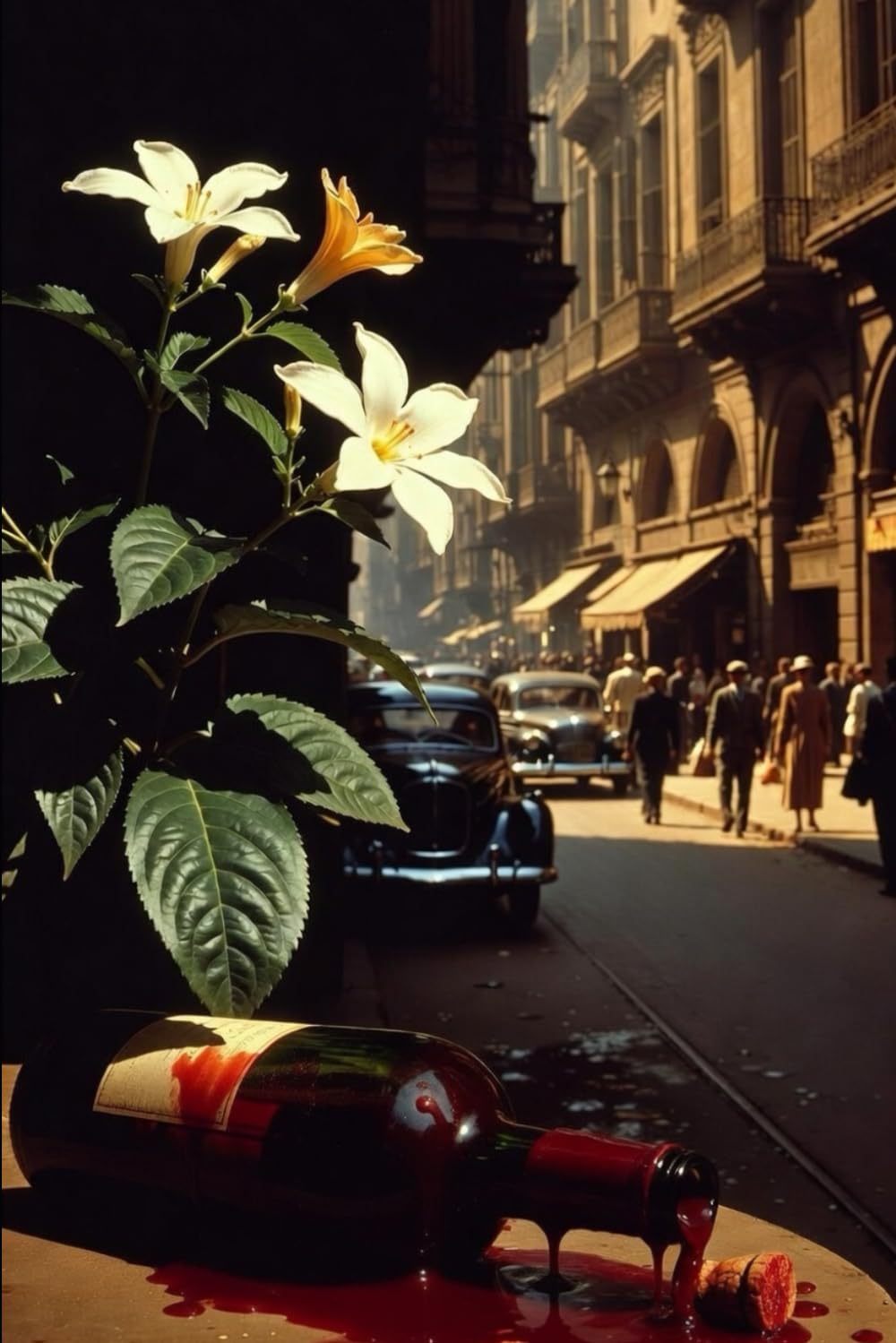



Cairo, 1959. Peter Ashcroft has spent fifteen years making himself useful to people who cannot afford to be useful themselves. A British freelance operative working from a flat in Zamalek, Peter lives by discipline: fencing lessons with a Russian émigré, a cook who will not be rushed, a Browning in the drawer and a silence that passes for contentment. When his fixer Julius Cade asks him to find and eliminate a ghost called Crag — an assassin who stages his kills as falls from height — Peter takes the job for the same reason he takes most jobs. There is nothing else. Then he meets Katarina Voss at a party in Heliopolis, and everything he has spent two decades building begins to come apart. She is Austrian. A professional climber. She laughs at things that aren't funny and is silent about things that are. She is also, Peter realizes with the particular horror of a man who has made his peace with a certain kind of life, exactly who he has been looking for. The Jasmine and the Crag is a novel about the cost of expertise, the violence of intimacy, and what a man will sacrifice when he discovers, too late, that he has been living the wrong life. It moves from the drawing rooms of Cairo to the rooftops of Rome, the backstreets of Genoa, the maquis country of Lyon, and the grey Channel coast — propelled by two people who are very good at disappearing and find, for the first time, that they do not want to. For readers of John le Carré, Graham Greene, and Trevanian.