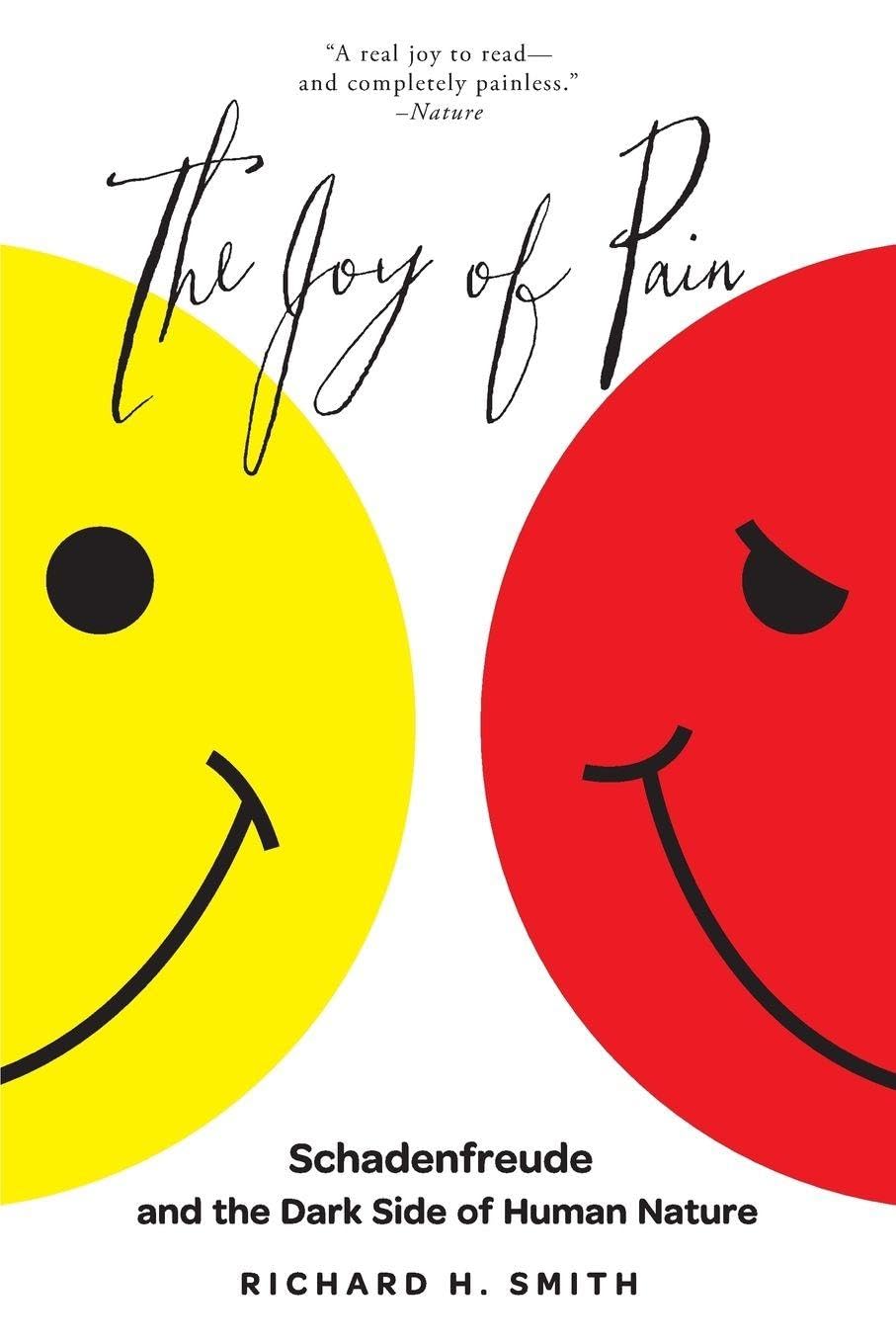
The Joy of Pain: Schadenfreude and the Dark Side of Human Nature
$21.87
by Richard H. Smith



Few people will easily admit to taking pleasure in the misfortunes of others. But who doesn't enjoy it when an arrogant but untalented contestant is humiliated on American Idol, or when the embarrassing vice of a self-righteous politician is exposed, or even when an envied friend suffers a small setback? The truth is that joy in someone else's pain--known by the German word schadenfreude--permeates our society. In The Joy of Pain , psychologist Richard Smith, one of the world's foremost authorities on envy and shame, sheds much light on a feeling we dare not admit. Smith argues that schadenfreude is a natural human emotion, one worth taking a closer look at, as it reveals much about who we are as human beings. We have a passion for justice. Sometimes, schadenfreude can feel like getting one's revenge, when the suffering person has previously harmed us. But most of us are also motivated to feel good about ourselves, Smith notes, and look for ways to maintain a positive sense of self. One common way to do this is to compare ourselves to others and find areas where we are better. Similarly, the downfall of others--especially when they have seemed superior to us--can lead to a boost in our self-esteem, a lessening of feelings of inferiority. This is often at the root of schadenfreude. As the author points out, most instances of schadenfreude are harmless, on par with the pleasures of light gossip. Yet we must also be mindful that envy can motivate, without full awareness, the engineering of the misfortune we delight in. And envy-induced aggression can take us into dark territory indeed, as Smith shows as he examines the role of envy and schadenfreude in the Nazi persecution of the Jews. Filled with engaging examples of schadenfreude, from popular reality shows to the Duke-Kentucky basketball rivalry, The Joy of Pain provides an intriguing glimpse into a hidden corner of the human psyche. "[An] enjoyable book... worth reading for its insights into the dark side of human nature and the delightful drawings that turn up periodically in the text. Created by the author's daughter, Rosanna Smith, these depictions -- a tortoise raising its arm in victory, Aesop's ant and grasshopper sharing a meal -- give the same sense of delight as those drawings that pepper the pages of The New Yorker" --IThe New York Times " The Joy of Pain presents an enjoyable mix of evidence from experimental psychology, pop culture and literature." -- Wall Street Journal "Smith's portrait of this complex response combines experimental studies with many well-chosen examples drawn from political scandals, biographies, reality-television shows, literature, sitcoms, cartoons and the observations of comedians and satirists. The Joy of Pain is a real joy to read -- and completely painless." --Nature "Smith's The Joy of Pain: Schadenfreude and the Dark Side of Human Nature , just out from Oxford University Press, is an entertaining explanation of the phenomenon, told through accounts of research as well as Smith's personal experiences and observations of popular culture." --Chronicle Review "An accessible, fun, schadenfreudean romp through pop culture (a contestant embarrasses himself on American Idol), sports (an opponent suffers injury), politics (an economic crisis during the other guy's term), and, of course, religion (the downfall of an ultramoral Christian evangelist)." --Publishers Weekly "Richard Smith's long-awaited book is a profound, thoughtful meditation on one of the most puzzling and disturbing forms of human emotion. Mixing scientific research, popular culture, striking anecdotes, and personal reflection, it is a stimulating, enjoyable, yet unsettling read. I recommend it to anyone with a serious interest in human emotion and motivation -- and to anyone with an abiding curiosity about the peculiar twists and turns of human nature." --Roy F. Baumeister, author of Willpower: Rediscovering the Greatest Human Strength "A very enjoyable read; this is the most comprehensive collection of Schadenfreude research to date. Interweaving the science with historical and fictional anecdotes, Smith contextualizes and thereby humanizes the experience of Schadenfreude -- a feat unto itself. Readers will undoubtedly relish learning more about when and why another's pain can be cause for pleasure." --Mina Cikara, Assistant Professor, Department of Social and Decision Sciences, Carnegie Mellon University "Richard Smith's wonderful book gives us new insight into ourselves, and the 'dark' emotions of envy and schadenfreude that we all feel, but like to deny. The book is fun and easy to read, even as it gives us insight into some of our darker emotions. You will learn more about yourself and the world from this book than most any book you have read recently. If you want a book that can improve you as a person, this book is it. Although it focuses on dark emotions, it shows the reasons for these emotions, how very pervasive they are, and how th