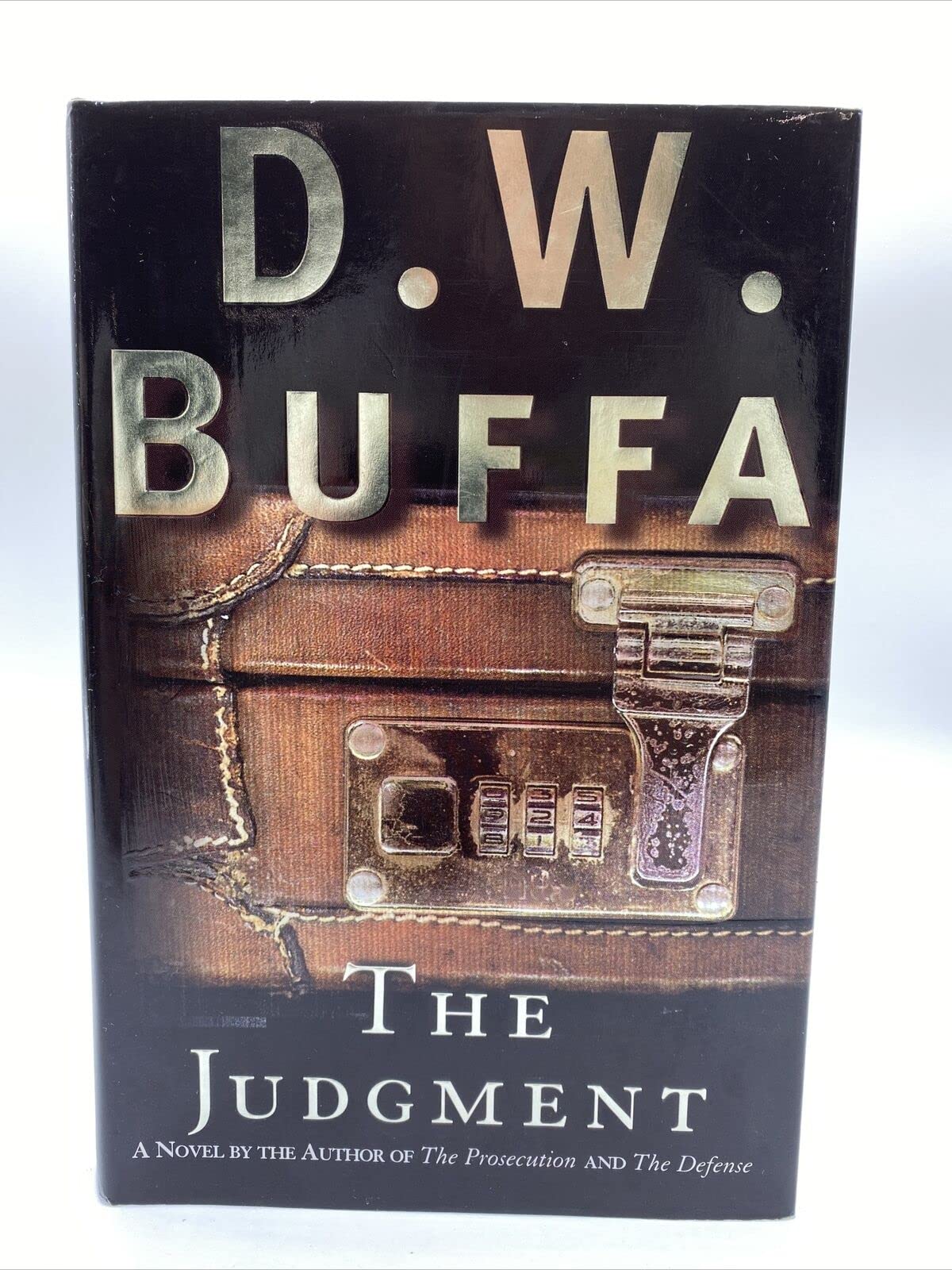



The author of The Defense and The Prosecution returns with a novel of murder and suspense centered on the assassination of sitting judge Calvin Jeffries, a case in which charismatic criminal defense attorney Joseph Antonelli soon finds himself playing a key role. 100,000 first printing. When Calvin Jeffries's body is found in the courthouse parking garage, eyes widen and horrified tongues wag. The fact that Jeffries was a thoroughly reprehensible human being doesn't detract from the notoriety of the first murder of a sitting Oregon judge. Defense attorney extraordinaire Joe Antonelli has a long history with Jeffries. Years ago the judge threw him into jail for contempt in a vain attempt to deter Antonelli from winning yet another case. But one of Antonelli's colleagues suffered even more. As the curious Antonelli pieces together fragments of the legendary judge's past, he discovers that Jeffries apparently drove Elliott Winston insane, had him committed, and married his wife. If only Elliott weren't still securely in the psychiatric hospital, what a sterling suspect he'd make! But the police find the killer, a homeless man with the murder weapon and a willingness to confess, who promptly commits suicide after being taken into custody. The legal community breathes a sigh of relief--until a second judge is murdered in the same manner. When another homeless man is arrested, Antonelli's "bizarre coincidence" antennae start to quiver, and he offers his services to the defendant. So convinced is he of Danny's innocence that he plunges undercover into the vagrant's world, searching for evidence of a setup. But his discoveries seem to point directly to the impossible--for how could Elliott Winston, safely tucked behind bars, be the murderer? At some point during The Judgment (the exact moment will vary according to individual tolerance), you may find yourself putting the book aside and picking up an Elmore Leonard for an emergency infusion of quality dialogue. Along with everyone with whom he comes in contact, Antonelli suffers from an apparent speech impediment that usually makes him sound like a particularly pompous 19th-century pundit. When author D.W. Buffa lets his courtroom savvy take center stage, the novel moves along briskly (even though Antonelli takes some rather remarkable legal liberties, it's all in good fun). The subplot involving the return of Antonelli's high-school sweetheart, however, feels less integral than afterthought-ish. Though Buffa tries to tie everything together at the end with a heavily contrived twist that probably set O. Henry yawning in his grave, the novel's final note isn't one of ringing irony. It's more like a dull thud. --Kelly Flynn As in The Defense and The Prosecution, Buffa, a former defense attorney, focuses his third novel on the life and work of attorney Joseph Antonelli. First, an old nemesis of Antonelli's, a judge who once made his life a living hell, is murdered. A suspect is quickly apprehended and makes a full confession. Several months later, another judge is murdered in the same fashion, and Antonelli agrees to represent the man accused of the crime. The police seem certain that it is nothing more than a copycat killing, but as Antonelli delves into the case, he begins to think that something more sinister is afoot. Comparable in both style and subject to the novels of John Grisham and Scott Turow, The Judgment features well-drawn characters, clean writing, and a complex story line. Recommended for popular reading collections. Leslie Madden, Georgia Inst. of Technolgy Lib., Atlanta Copyright 2001 Reed Business Information, Inc. There was no greater legal mind than that of Judge Calvin Jeffries, but his murder was not mourned by defense attorney Joseph Antonelli, who despised the old codger for the malicious ways he abused the bench. Jeffries' presumed killer, quickly tried and convicted, subsequently kills himself. Who, then, murdered a second judge in the same manner? Antonelli, a storied litigator with a nose for injustice, doesn't fall for the conventional wisdom espoused by the DA's office. Instead, he digs deep, following a path that leads to corruption, greed, and obsession. Antonelli is an intriguing hero, but Buffa's writing is forced, with dialogue sometimes so contrived as to make readers ask, "Would someone really say that?" Particularly awkward is the way Buffa uses dialogue to provide backstory. The action itself is quite riveting, however, and once the plot thickens (and, boy, is it thick), you hardly notice the cliches and awkward turns of phrase. Stay away if you prefer character-driven mysteries, but jump aboard if a good story is more than enough. Mary Frances Wilkens Copyright © American Library Association. All rights reserved D.W. Buffa served as a defense attorney for 10 years. He has a doctorate in political science from the University of Chicago and currently lives in Napa, California.