The King of the World: The Padshahnama : An Imperial Mughal Manuscript from the Royal Library, Windsor Castle
$134.51
by Milo Cleveland Beach



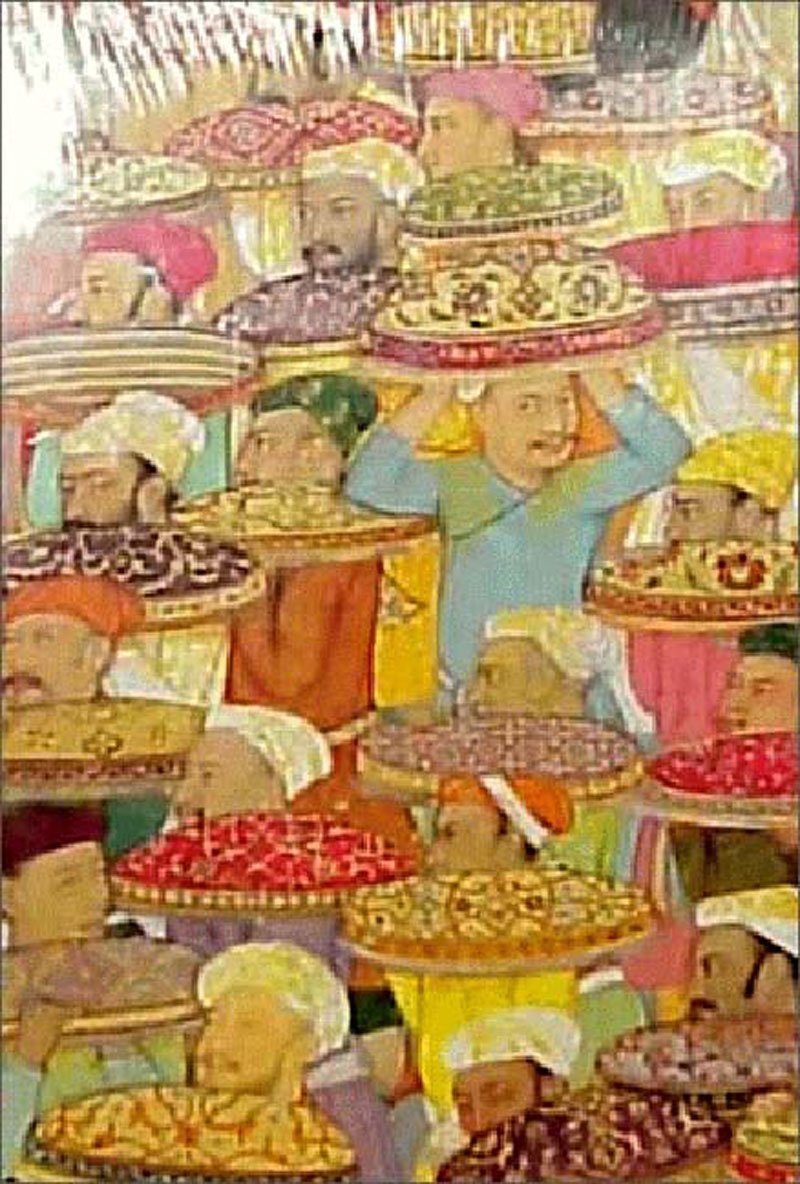
First publication ever of this treasured manuscript from Windsor Castle. The Padshahnama ("King of the World") has long been recognized as one of the greatest works made for the Mughal Emperor, Shah-Jahan, the builder of the Taj Mahal. The volume, which is now in the Royal Library at Windsor Castle, documents the first ten years of the Emperor's rule and contains works by some of the finest imperial artists of the time. Among the events recorded in the paintings are court ceremonies, hunting scenes, fortresses under siege, and the attack on the Portuguese near Calcutta in 1631. During the eighteenth century the manuscript entered the collection of the nawabs of Oudh. The Padshahnama was eventually given by a reigning nawab to the King of England, and it remains today one of the most treasured items in the collections of Her Majesty Queen Elizabeth II. The Padshahnama has seldom been exhibited, and even then only a single opening could be seen at any one time. A recent conservation project, however, means that the manuscript is now unbound, and the Royal Library has made all the pages available for an exhibition that coincides with the celebration in 1997 of the fiftieth anniversary of the Independence of India. This book accompanies the exhibition and illustrates all the paintings and illuminations in full color. The events, personalities, and settings depicted are identified and discussed with the help of enlarged details, comparative photographs, and drawings. Milo Beach, Director of the Arthur M. Sackler Gallery, Smithsonian Institution, provides a history of the volume and its context in Mughal painting. Ebba Koch, a leading authority on Mughal architecture from the University of Vienna, comments on the subject matter and analyzes the different modes of Mughal painting. Wheeler Thackston of the Department of Near Eastern Languages and Civilizations at Harvard University has translated the original text and other documents. "Padshahnama," or "Chronicle of the King of the World," was created to commemorate the first ten years of rule by the Mughal Emperor Shah-Jahan, the same man who commissioned the Taj Mahal. It depicts Mughal court culture in a blend of Persian and Indic artistic styles with a focus on official histories and portrait studies. Usually housed in the Royal Library at Windsor Castle, this 17th-century piece has been loaned for exhibition in the United States. (The exhibit travels to New York, Los Angeles, Indianapolis, and Fort Worth.) Authors Beach (Mughal & Rajput Painting, Cambridge Univ., 1992) and Koch (Mughal Architecture, te Neues, 1995) let the compelling artwork?presented in luxurious, almost full-sized reproductions?propel the exhibition catalog and underpin it with appropriate information as necessary. One fine example is the appendix, which includes biographical information, with names of those pictured in "Padshahnama," historical placement, and listings for comparative portraits. This first scholarly analysis of "Padshahnama" will be welcomed in specialized libraries focusing on art history or India.?Nadine Dalton Speidel, Cuyahoga Cty. P.L., Parma, Ohio Copyright 1997 Reed Business Information, Inc.