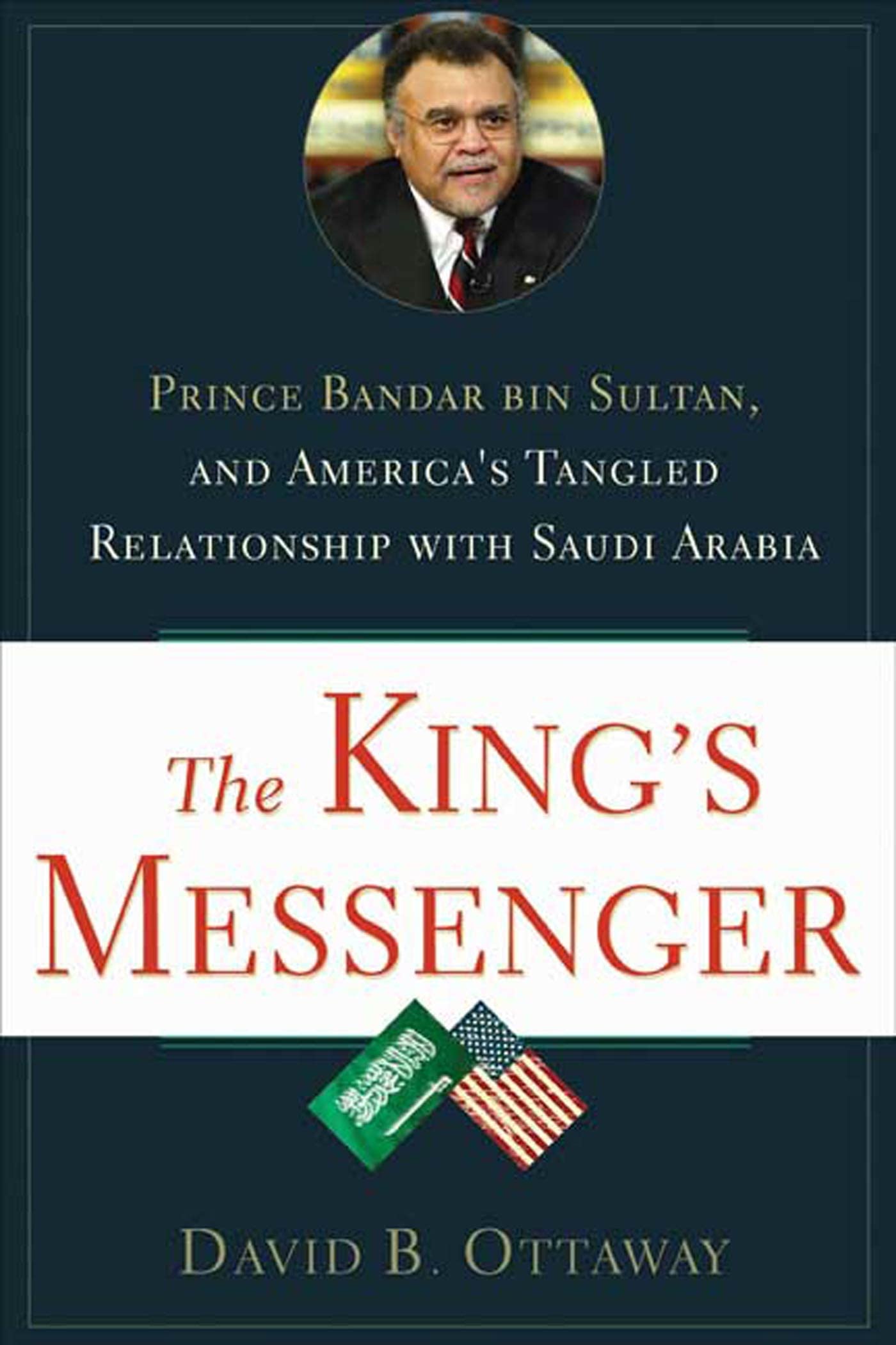
The King's Messenger: Prince Bandar bin Sultan and America's Tangled Relationship With Saudi Arabia
$17.06
by David B Ottaway



The story of the last thirty years in the complex relationship between the United States and Saudi Arabia centers around its principle actor: Prince Bandar, the controversial longtime Saudi ambassador. "Just how oil, arms, and Allah have served over time either to bind or sunder the United States–Saudi Arabia relationship is the focus of this book," writes David Ottaway, who has chronicled the "special relationship" over the course of more than three decades at the Washington Post . No two governments and societies could be more different, and yet we have been bound together since 1945 by vital national security interests, based on a simple quid pro quo: Saudi oil at reasonable prices in return for U.S. protection of the House of Saud from all foreign foes. However, the balance points of the relationship―often tenuous even in peacetime―have been fractured by the attacks of 9/11 and the subsequent U.S. invasion of Iraq: the price of oil has skyrocketed and Saudi Arabia has been powerless to stop its rise; the Iraq war has unleashed the prospect of a Shi'ite-dominated regime allied to Iran on Sunni Saudi Arabia's borders; and militant elements within Saudi Arabia are ever more threatening. Not since the 1979 Islamic revolution in Iran has the House of Saud felt itself in such peril, and the Saudis have not forgotten the inability, or unwillingness, of the United States to save the Shah. Nobody has been more emblematic of the Saudi-U.S. relationship, nobody has been at its center for longer, than Prince Bandar, the first Saudi royal ever to serve as ambassador to Washington. David Ottaway's frequent access to the prince has allowed him unparalleled insight into the complex geopolitics that govern and have governed Saudi Arabia's long dance with the United States, and his book, coming at a crucial juncture, explores what new common ground may be found between the two countries, and what may ultimately pull them apart. Several recent books have narrated the unique relationship between the U.S. and Saudi Arabia (Rachel Bronson’s Thicker Than Oil, 2006, and Robert Vitalis’ America’s Kingdom, 2007, for example), and at least one has narrated the life of Saudi Arabian prince and longtime U.S. ambassador bin Sultan (William Simpson’s The Prince, 2006), but Ottaway’s book is unique in noting that the two narratives are inextricable from each other. The peasant royal fighter pilot with unparalleled access to several U.S. presidents and a tendency to veer off the approved diplomatic script, bin Sultan was the custodian of a delicate yet enduring status quo—U.S. arms and military protection in exchange for cheap and plentiful oil. But, blindsided by 9/11 and powerless to hold down oil prices amid soaring global demand, even the living embodiment of the U.S.-Saudi relationship for nearly three decades could not prevent the unraveling of that relationship. Drawing on several interviews with bin Sultan (including lengthy conversations with an anguished bin Sultan not long after 9/11), Ottaway emphasizes bin Sultan’s centrality yet resists the temptation to mythologize. --Brendan Driscoll David Ottaway worked for the Washington Post from 1971 to 2006, as assistant foreign editor, Africa bureau chief, Cairo bureau chief, national security correspondent, and investigative/special projects reporter. He is the author of several books, including Chained Together: Mandela, De Klerk, and the Struggle to Remake South Africa . He is currently a fellow at the Woodrow Wilson Center, and lives in Washington, D.C. Used Book in Good Condition