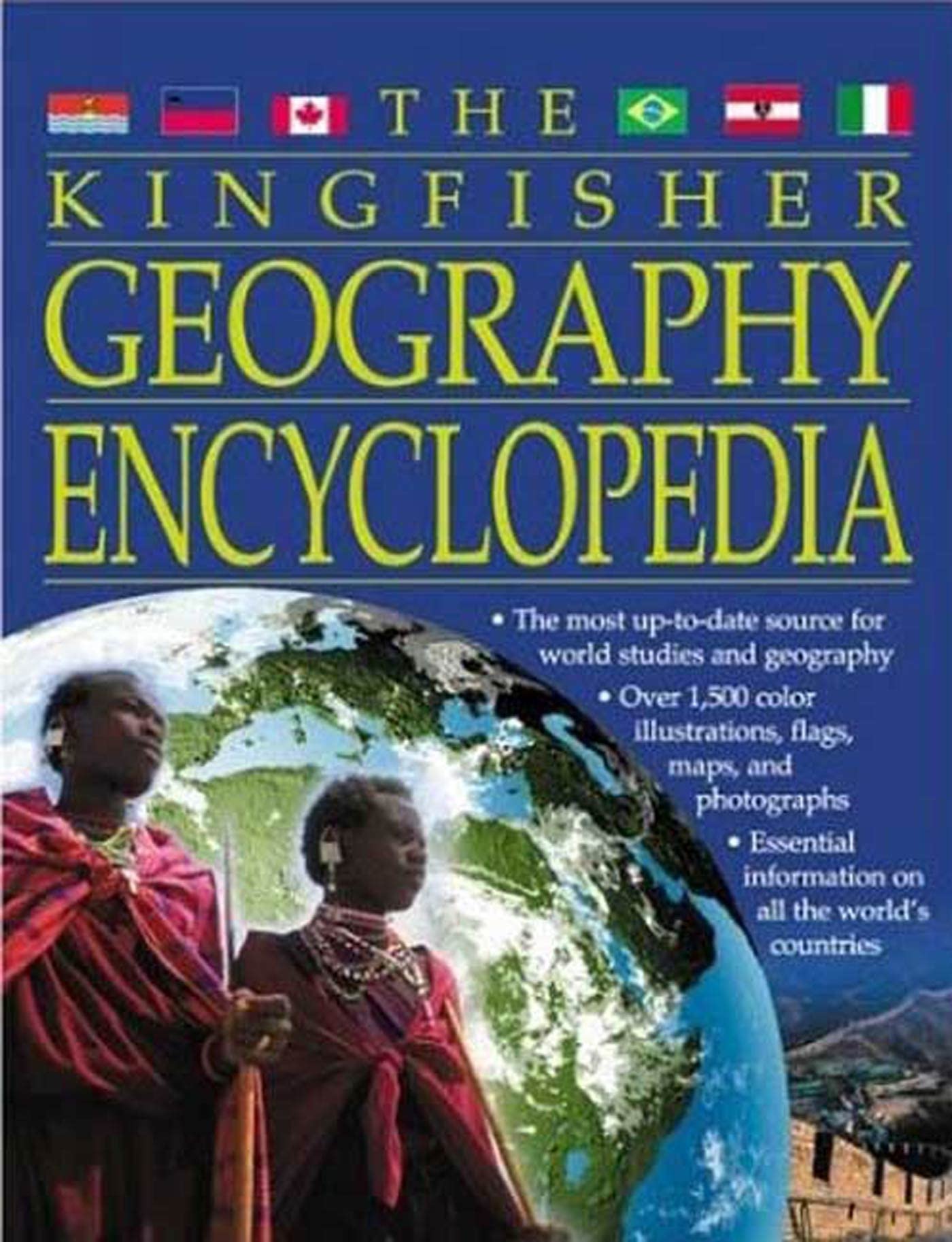



Children will find this comprehensive, and visually exciting encyclopedia gathers the essential geographical, physical, and cultural information they need for school assignments in one convenient and easy-to-use source. Illustrated with more than 1,500 photographs, maps and flags, this stunning volume covers all the world's 192 countries, including dependencies and islands. The authoritative and clearly laid out text, fascinating maps, and up-to-the-minute facts, will help children acquire essential geographical knowledge and expand their understanding of how people live in many different parts of the world. With its country-by-country layout, a glossary, index and a reference section at the back of the book, this new encyclopedia is an exciting reference book for the whole family. Grade 4-8-An attractive overview of each country, continent by continent. The arrangement is logical and the format accessible. An introductory section is devoted to the physical Earth. It covers topics such as its formation, continental drift, earthquakes, volcanoes, landscaping by the elements, weather, population growth, and the environment. A spread about the future discusses the greenhouse effect, deforestation, and desertification. This section concludes with lists of data on the longest rivers, largest islands, highest mountains, and most populated cities and countries. Throughout the volume, striking color photographs and informative captions highlight the uniqueness of each locale. Still, despite the visual appeal, the cursory treatment of most countries renders this offering most suitable for browsing. The majority of the entries are confined to a page or less, including maps, photos, and generous spacing. Each listing includes a small computer-generated country map, a boxed map highlighting regional context, a reproduction of the flag, and a sidebar of fast facts. There is little information about people and how they live. The final ready-reference section employs colorful bar graphs reflecting world biomes, extinction, life expectancy, and literacy, among other topics. While not particularly useful for reports, this title is likely to inspire further research. -Barbara Auerbach, New York City Public Schools Copyright © Reed Business Information, a division of Reed Elsevier Inc. All rights reserved. This book is directed to students in grades four through eight. Its most exciting feature is the superior illustrations, which take up about 50 percent of the page space. Chapter 1, "The Physical Earth," "describes how the planet was formed and then shaped by the forces of nature, by water and ice, by wind and volcanoes." It also explores how people's lives are influenced by climate and geography. Photos, charts, maps, and graphs are used to explain mountains, rivers, atmosphere, and more. Other articles cover the human impact on the earth. In the main body of the encyclopedia, the world is divided by continent and subdivided by country. Helpful subdivisions are provided as needed. For example, the general U.S. section is followed by articles on the Eastern U.S., the Midwest and the Great Lakes, the South, the Western U.S., and Alaska and Hawaii. Articles vary from half a page (Bermuda, Gabon) to five (Germany) or six pages (India). Each entry for a country includes text about its geography, industries and products, people, history and government, and what makes it unique or interesting. Each also has a picture of its flag, a physical map, a map locating it in the region, captioned photographs, and a summary of facts on area, population, capital city and its population, main languages, main religions, currency, main exports, and type of government. The book ends with a ready-reference section in which world maps and charts explore topics such as biomes, winds and ocean currents, time zones, religions, and communications. This appealing book promises to spark the interest of users. Unfortunately, there is no key to the colors used in the physical maps of the countries (one can make a good guess), nor are there any sources or dates for statistics that are used. They are characterized only as "up-to-the-minute." Nevertheless, the book is recommended for school and public libraries needing a convenient, up-to-date geography encyclopedia for children. RBB Copyright © American Library Association. All rights reserved Clive Gifford is an award-winning author of more than fifty books on the subjects of sports and soccer. His previous titles for Kingfisher include The Kingfisher Soccer Encyclopedia, Soccer Skills, Summer Olympics, and Soccer. Used Book in Good Condition