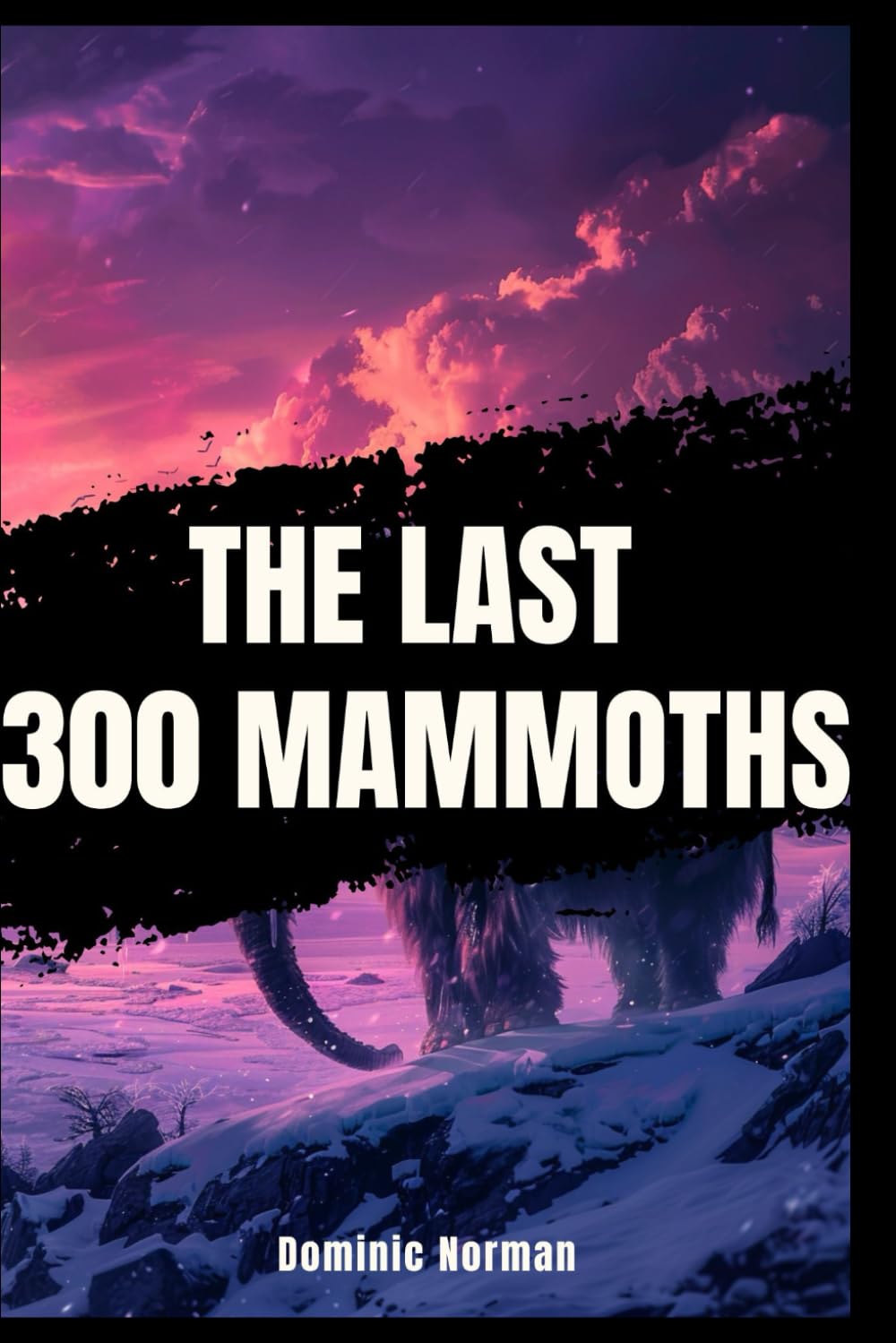
The Last 300 Mammoths: The Sudden Death That Science Can't Explain (Ice Age) (Untold Prehistoric History)
$9.99
by Dominic Norman



What killed Earth's final woolly mammoths in a matter of weeks? For decades, scientists blamed genetic meltdown—inbreeding and mutations that doomed the isolated population on Wrangel Island in the Arctic. But a 2024 genomic breakthrough shattered this theory. Advanced DNA analysis of 21 specimens revealed a shocking truth: these Ice Age survivors maintained genetically stable populations for 6,000 years, successfully purging harmful mutations right until their sudden extinction around 2000 BCE. Something catastrophic struck without warning, wiping out all 300 animals before they could adapt. This narrative history unravels a prehistoric mystery that rewrites our understanding of species extinction. The discovery carries urgent implications for modern conservation biology—proving that healthy island populations can vanish overnight from environmental catastrophes, not slow genetic decline. Discover the untold story in The Last 300 Mammoths: The Sudden Death That Science Can't Explain .