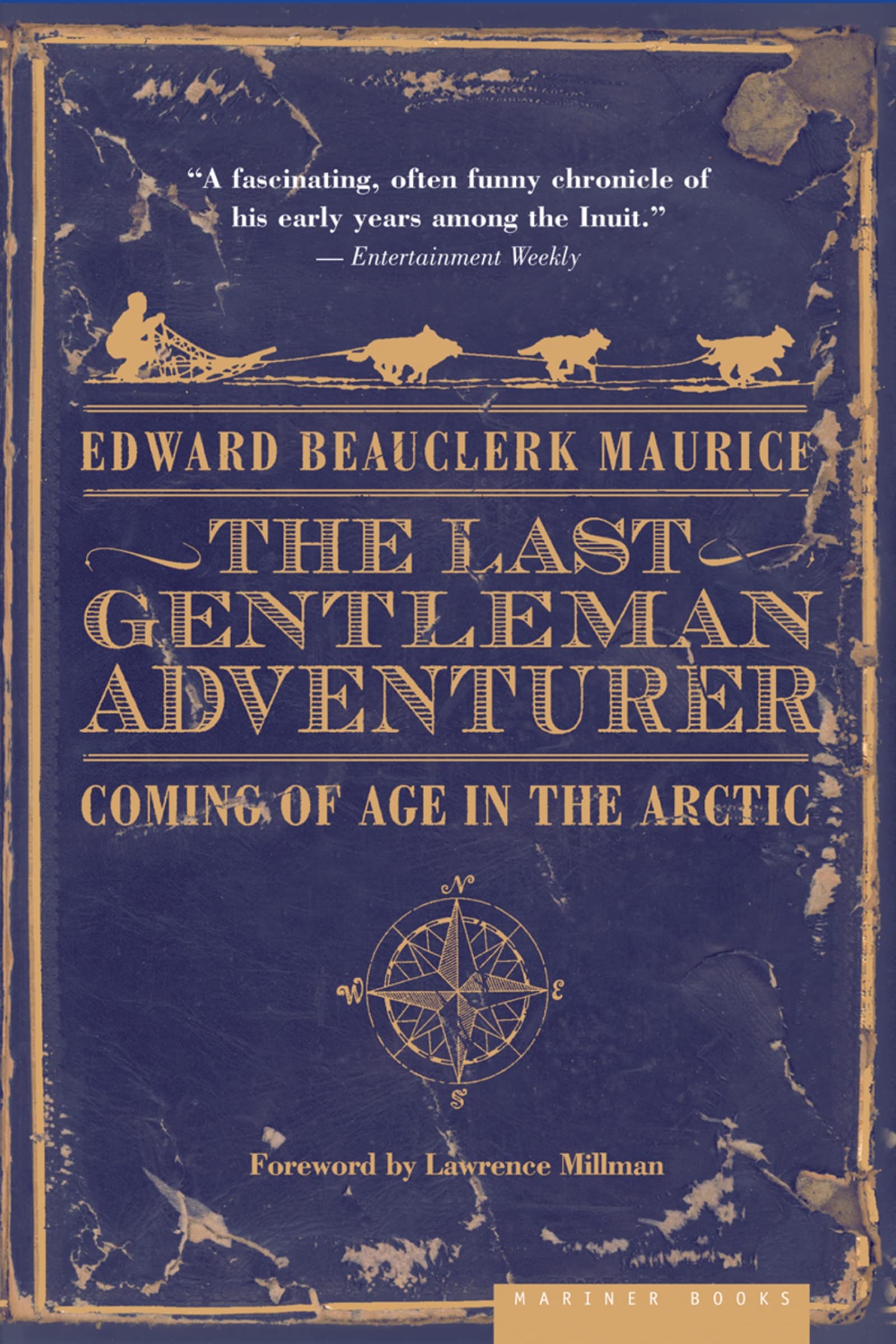
The Last Gentleman Adventurer: Coming of Age in the Arctic – A True Story of Inuit Traditions and Polar Survival
$14.99
by Edward Beauclerk Maurice



At sixteen, Edward Beauclerk Maurice impulsively signed up with the Hudson's Bay Company -- the company of Gentleman Adventurers -- and ended up at an isolated trading post in the Canadian Arctic, where there was no communication with the outside world and only one ship arrived each year. But he was not alone. The Inuit people who traded there taught him how to track polar bears, build igloos, and survive ferocious winter storms. He learned their language and became completely immersed in their culture, earning the name Issumatak, meaning “he who thinks.” In The Last Gentleman Adventurer, Edward Beauclerk Maurice relates his story of coming of age in the Arctic and transports the reader to a time and a way of life now lost forever. "Enthralling." The New York Times "Maurice evokes his Arctic in vivid detail." Boston Globe "An unrivaled portrait of Unuit life." -- National Geographic Adventurer "Effortlessly entertaining." The Washington Post "A fascinating often funny chronicle of his early years among the Inuit." Entertainment Weekly EDWARD BEAUCLERK MAURICE, after serving in the New Zealand navy during World War II, became a bookseller in an English village and rarely traveled again. He died in 2003, as this book was being readied for publication. The Last Gentleman Adventurer Coming of Age in the Arctic By Edward Beauclerk Maurice Mariner Books Copyright © 2006 Edward Beauclerk Maurice All right reserved. ISBN: 9780618773589 Chapter 1 At ten o'clock in the morning of 2 June 1930 about forty young men gathered round a noticeboard set up on Euston station, which bore the message 'Boat Train, Duchess of Bedford Liverpool. Hudson's Bay Company Party'. The other travellers hurrying to and fro across the concourse, impelled to haste by the alarming pantings, snufflings and whistlings coming from the impatient engines, hardly spared us a glance, despite the flavour of distant adventure in that simple notice. For in those days, London was still the centre of a great empire and it was commonplace for parties to be seen gathering at railway stations, or at other places of departure, to begin their long journeys to far-away places. Tea planters for India and Ceylon. Rubber planters for Malaya. Mining engineers for South Africa. Administrators for the Indian and other civil services. Policemen for the African colonies. Farm workers to seek their fortunes in Australia, New Zealand or Canada. Traders for the South Seas. Servicemen for all quarters of the globe and wanderers just seeking sunshine or adventure. We were to be apprenticed to the fur trade 'somewhere in Canada'. In age we were between sixteen and twenty-three. In occupation there were schoolboys, farm labourers, office workers, factory workers, estate workers, forestry people and even two seamen. We had been told of the wonderful opportunities that awaited us, but what our informants had not known was that the worst depression the world would experience for many years was fast developing. Already the feverish post-war boom was collapsing. The sudden loss of confidence and the general insecurity of the world markets was soon to undermine the fur trade. Before some of us had finally reached our new homes, the whole department responsible for our engagement had been disbanded, with its members released to swell the ever growing ranks of the unemployed. Never again would a party such as ours gather in London. An oriental philosopher once wrote that no matter how near or far the destination, every journey must somewhere have a starting point. My journey began in the June of the halcyon summer of 1913, to which so many thousands of women were to look back with aching nostalgia for all the rest of their years. The shadow fell across my mother's life sooner than it did for the others. Six weeks before I was born, in the evening of a long midsummer's day, my father was brought home spread-eagled over a broken gate, dead of a terrible gunshot wound to the head. Controversy, seemingly inseparable from the human state even in such tragic circumstances, broke out at once. The vicar refused my grandmother's request that her son's body should be brought into the parish church to await burial, on the grounds that he might have committed suicide. The coroner would have to give him earthly clearance from this suspicion before the church could grant him asylum. The clergyman had mistakenly supposed his parishioner, my grandmother, to be a meek and pious woman, an error he was never to repeat. He was astonished by the ferocity with which she defended her son's right to rest in the church, and reluctantly gave way. So my father, poised as it were on the very threshold of eternity, was brought for the last time into the cool, dim, silent shadow of the ancient building, perhaps there to find the peace he had been seeking. The following day the coroner decided that death had been due to misadventure, t