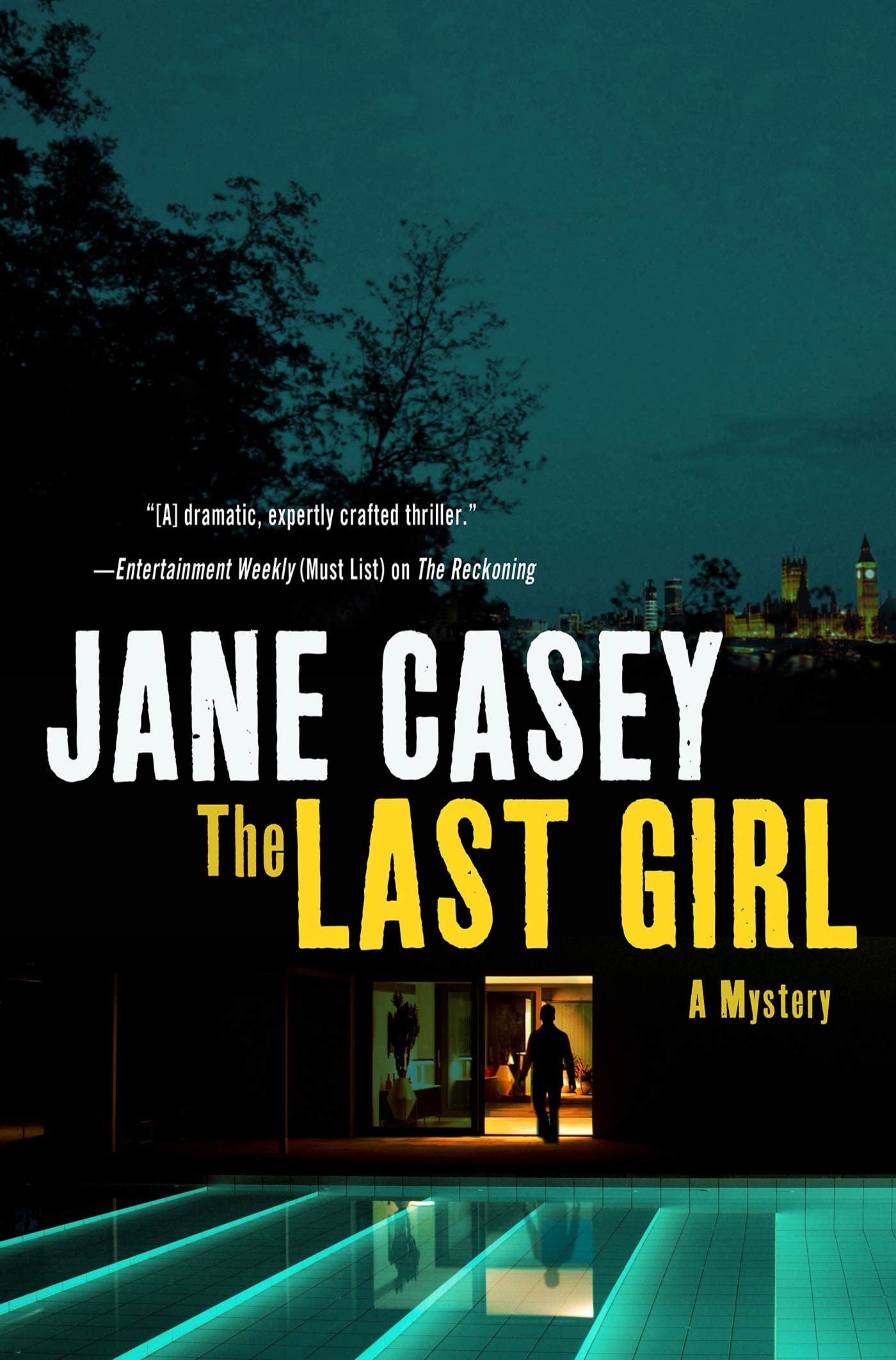



"Maeve Kerrigan [is] a fascinating and plausible character…What she has is persistence, integrity and emotional intelligence, and a very deft way of insinuating herself into a reader's affections."― The Irish Independent (UK) Vast wealth offers London defense attorney Philip Kennford a lot of things: a gorgeous house with a pool in the backyard, connections in the top echelons of society, a wardrobe worthy of Milan runways. But his money doesn't provide a happy marriage, or good relationships with his twin daughters…and it does nothing to protect his family when someone brutally murders his wife and daughter in their own home. When Detective Constable Maeve Kerrigan arrives at the scene, the two survivors―Philip and his second favorite daughter, Lydia―both claim to have seen nothing, but it's clear right away that this is an unhappy family accustomed to keeping secrets. Maeve soon finds herself entangled in a case with a thousand leads that all seem to point nowhere, and it doesn't help that her boss, whom she trusts more than almost anyone, is starting to make decisions that Maeve finds questionable at best. In The Last Girl , Jane Casey once again demonstrates her ability to write vivid, three-dimensional characters and spin a gripping, unpredictable mystery. Womanizing defense lawyer Philip Kennford evokes little sympathy from the London police, what with his lack of emotion over the murders of his wife, Vita, and Laura, his favorite of their 15-year-old twin daughters. The Kennford murders distract the coppers from the deadly gang wars that continue even with one of the gang leaders in prison. DC Maeve Kerrigan and her bluff, misogynistic supervisor, DI Josh Derwent, are unable to make progress on the Kennford case until they track down Kennford’s daughter from his first marriage, supermodel Savannah Wentworth. Meanwhile, as the two cases overlap, and Maeve witnesses compromising behavior by her respected superintendent, her old stalker reappears, making deadly threats against her police-officer boyfriend. Suspense increases until the Kennford case reaches a violent conclusion. The frenetic action seems a bit over the top at times, but the third Maeve Kerrigan mystery remains an engaging procedural with well-drawn characters and a principled protagonist whom readers will want to follow. --Michele Leber “[A] dramatic, expertly crafted thriller.” ― Entertainment Weekly (Must List) on The Reckoning “Casey has succeeded in writing another impossible-to-put-down thriller with surprising plot twists and well-developed, intriguing characters.” ― Library Journal (starred) on The Reckoning “Genuinely suspenseful and extremely well-written . . . The Reckoning will keep readers turning the pages long into the night and pushing the book on friends the next day.” ― RT Book Reviews (4½ stars, Top Pick) on The Reckoning JANE CASEY was born and raised in Dublin. A graduate of Oxford with a master's of philosophy from Trinity College, Dublin, she lives in London, where she works as an editor. The Last Girl is her fourth novel. The Last Girl By Jane Casey St. Martin's Press Copyright © 2012 Jane Casey All rights reserved. ISBN: 978-0-312-62201-5 CHAPTER 1 "The only thing I know about Wimbledon is the tennis." Derwent drummed his fingers on the steering wheel. I stared at the map. "What do you need to know? It's an expensive place to live. Smart. Out of your price range. Not the sort of place we usually fetch up. Still two miles away at a rough estimate, and God knows how long that's going to take." "Lights are changing, Kerrigan. I'm going to go on straight." "No, don't do that." Straight ahead of us was a queue of cars that stretched to infinity, or at least the A3. I turned the map around, desperately searching for the right road. "Left. Turn left." "I'm in the wrong lane." The car surged forward, going straight into the one-way system from hell. "Should have decided sooner." "I don't know why you sound so smug. We're both going to be stuck in the same traffic." "Yeah, but it's your fault. So I can enjoy myself by blaming you." "It's not my fault that you broke your satnav." The ice in my voice did nothing to cool the temperature in the car; I could feel sweat trickling down my back and shifted in my seat. The windows were down but the air was stagnant, hot even though the sun had set hours earlier. August in London, and the weather was at its worst. "Since we're stationary, do you mind putting the air conditioning on?" "Waste of petrol. Someone's got to think of the environment." He stuck his head out of his window and sniffed enthusiastically. "Fresh air is better for you." A hundred exhausts belched fumes in front of us. "This air is not fresh." "Nor are my socks," Derwent admitted, sticking a finger down the side of his shoe and proving his point with a waft of sweaty-foot smell. My nose wrinkled and I turned my face away, not caring that he found it funny. "Why is there so much traffic at th