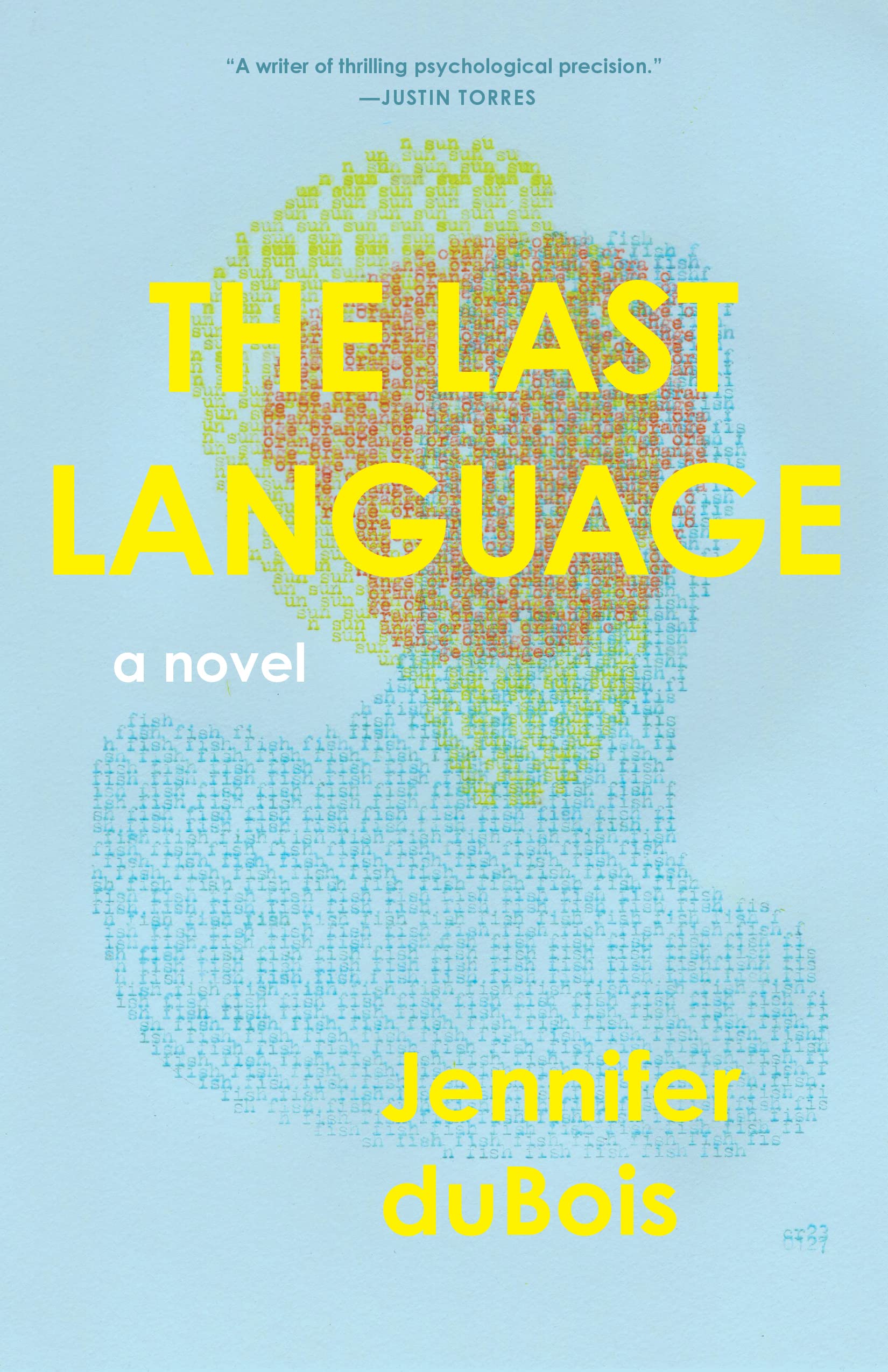



From Jennifer duBois, “one of a handful of living American novelists who can comprehend both the long arc of history and the minute details that animate it” (Karan Mahajan) and “a writer of thrilling psychological precision” (Justin Torres), comes a gripping new novel. In 2001, a few months after the death of her husband, Angela is devastated when she is ejected from her graduate program in linguistics at Harvard University. Soon after, she suffers a miscarriage. Spinning and raw, and with suppressed unresolved trauma, the young widow and her four-year-old child move into her mother’s house. Trained with an understanding of spoken language as the essential foundation of thought, Angela finds underpaid work at the Center, a fledgling organization utilizing an experimental therapy aimed at helping nonspeaking patients with motor impairments. Through the Center, Angela begins to work closely with Sam, a twenty-eight-year-old patient who has been confined to his bedroom for most of his life. Sam quickly takes to the technology—and so does Angela. Her once deeply philosophical interest in language comes vividly to life through her interactions with Sam. Angela becomes intensely drawn to him, and their relationship soon turns intimate. When Sam’s family discovers their relationship, they intervene and bring charges. As Angela tells her story from prison in the form of an unrepentant plea, we are plunged into the inner workings of her mind as she rejects all else in pursuit of a more profound understanding of language and humanity. As the sole narrator and perspective giver, Angela’s understanding pushes and pulls us into ambiguity, and a Nabokovian hall of mirrors emerges as she tumbles deeper and deeper into obsession. Provocative and profound in its exploration of the basis of humanity, this is an extraordinary novel from one of our most acclaimed contemporary writers. Praise for The Last Language “The novel’s narrative conceit may seem simple at first, the confession of a narrator — the implication of a reader — but there is nothing simple about The Last Language. [. . .] What duBois has managed here is an extraordinary, sometimes jarring, always contemplative book that posits that, as Wittgenstein puts it, ‘If language is to be a means of communication there must be agreement not only in definitions but also … in judgments.’” — Lina M. Ferreira Cabeza-Vanegas , Washington Post "duBois expertly unspools Angela’s journey to the dock, as the unreliable narrator’s mental state comes increasingly into question [. . .] A sharp, beguiling tale of madness, this is metafiction done right." — Kirkus Reviews , starred review “A thematic companion to Zoë Heller's Notes on a Scandal and Francine Prose's Blue Angel, author duBois (T he Spectator s, 2019) tackles questions of communication, consent, and humanity head-on. [ . . .] Tautly paced, tackling both grandiose theories of linguistics and the everyday realities of caretaking, The Last Language is hard to put down.” — Booklist, starred review “duBois walks the high wire with Angela’s audacious and unreliable narration, leaving room for readers to wonder how much of Angela’s telling is true and to what degree she’s manipulated Sam. This clever novel lingers long after the final page.” — Publishers Weekly “[Jennifer duBois] deftly applies her own fictional spin to the wheel of culture. [. . .] The Last Language , follows a linguistics expert as she forms a relationship with a nonspeaking patient using technology. A master of words writing about language and what it means for relationships and humanity? Count me in.” —Kathy Blackwell, Texas Monthly “ The Last Language is an utterly compelling puzzle of linguistics, perspective, and some version of love. [. . .] a smart intellectual riddle and a mystery with the highest of stakes. Readers will find it unforgettable.” — Julia Kastner, Shelf Awareness “An absolute master class from Jennifer duBois. I could not put this novel down—I read it all in one day—and was transfixed by her narrator’s voice. This is a difficult read but a fascinating and complex one, raising issues of ethics and consent while the narrowness of Angela’s perspective cleverly parallels what we learn of her communication with Sam. A brilliant book that I will be recommending to all readers who love challenging and complex, voice-driven literary fiction.”— Kimberly Knight, Knight Books, Morristown, AL “I loved every moment of reading this book—the breathtaking, carefully-crafted tension made it so I never wanted to put it down. The narrator, a former PhD candidate, attempts to find meaning in linguistic philosophy while penning her story from behind bars. She recounts the events that led to her incarceration—becoming employed to facilitate written communication for nonverbal people with motor impairments (using early 2000s technology) and falling in love with her client. This book provocatively explores disabled personhood and sexuality alon