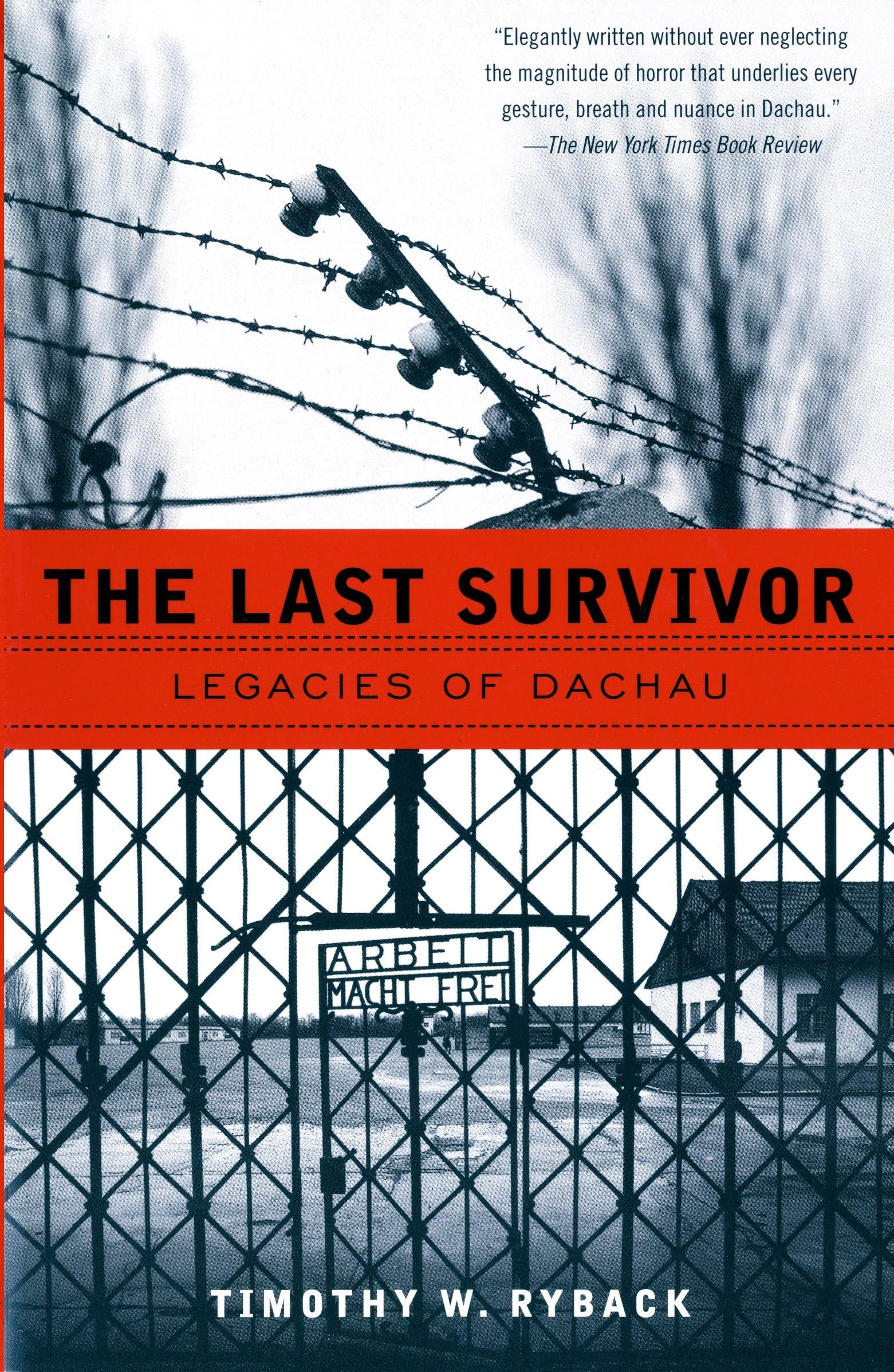



In The Last Survivor , journalist Timothy Ryback explores the surprising--and often disturbing--ways the citizens of Dachau go about their lives in a city the rest of us associate with gas chambers and mass graves. A grandmother recalls the echo of wooden shoes on cobblestone, the clip-clop of inmates marched from boxcars to barracks under the cover of night. A mother-to-be opts to deliver in a neighboring town, so that her child's birth certificate will not be stamped DACHAU. An "SS baby," now middle-aged, wonders about the father he never knew. And should you visit Dachau, you will meet Martin Zaidenstadt, an 87 year-old who accosts tourists with a first-hand account of the camp before its liberation in 1945. Beautifully written, compassionate, wise, The Last Survivor takes us to a place that bears the mark of Cain--and a people unwilling to be defined by the past, yet painfully unable to forget. "Elegantly written without ever neglecting the magnitude of horror that underlies every gesture, breath and nuance in Dachau." -- The New York Times Book Review "A brilliantly written tone poem in which identities and facts slip and slide into the abyss of memory." -- The Baltimore Sun "Ryback's insights come in haunting prose: heading down a long gravel-path at Dachau is 'like walking on crushed brittle bones.'" -- Detroit Free-Press Last Survivor, journalist Timothy Ryback explores the surprising--and often disturbing--ways the citizens of Dachau go about their lives in a city the rest of us associate with gas chambers and mass graves. A grandmother recalls the echo of wooden shoes on cobblestone, the clip-clop of inmates marched from boxcars to barracks under the cover of night. A mother-to-be opts to deliver in a neighboring town, so that her child's birth certificate will not be stamped DACHAU. An "SS baby," now middle-aged, wonders about the father he never knew. And should you visit Dachau, you will meet Martin Zaidenstadt, an 87 year-old who accosts tourists with a first-hand account of the camp before its liberation in 1945. Beautifully written, compassionate, wise, The Last Survivor takes us to a place that bears the mark of Cain--and a people unwilling to be defined by the past, yet painfully unable to forget. In The Last Survivor, journalist Timothy Ryback explores the surprising--and often disturbing--ways the citizens of Dachau go about their lives in a city the rest of us associate with gas chambers and mass graves. A grandmother recalls the echo of wooden shoes on cobblestone, the clip-clop of inmates marched from boxcars to barracks under the cover of night. A mother-to-be opts to deliver in a neighboring town, so that her child's birth certificate will not be stamped DACHAU. An "SS baby," now middle-aged, wonders about the father he never knew. And should you visit Dachau, you will meet Martin Zaidenstadt, an 87 year-old who accosts tourists with a first-hand account of the camp before its liberation in 1945. Beautifully written, compassionate, wise, The Last Survivor takes us to a place that bears the mark of Cain--and a people unwilling to be defined by the past, yet painfully unable to forget. Timothy Ryback lives in Austria. There is a click as the key turns. The desk drawer slides open. A pile of red-and-white HB cigarette packs is knocked aside. A gun is withdrawn. As far as I can tell, it is a standard .380 caliber pistol, not unlike the kind that Heinrich Schmied displays in the window of his sporting-goods shop across the street from Susan's Café in downtown Dachau. According to Schmied, these .380s are not very sophisticated weapons--a seven-shot clip, recoil-operated reload, and rather limited range. An amateur sportsman can hit a target at eight to ten meters. Anything beyond that, says Schmied, is "a matter of luck." But on this fine spring morning, Martin Zaidenstadt would not need much luck. Seated opposite him at his desk, no more than three feet away, I am an easy target. He has just finished telling me about the execution of a fellow inmate, Jerzy Czermanski, at the hands of the SS. It was a beautiful spring day, not unlike this very day, when an SS officer put a pistol to his temple and blew his brains out. Just like this. And he points the gun in my direction. People in Dachau had warned me about Martin Zaidenstadt. They said he was a tortured soul, a deeply troubled man. Some said he was obsessed, others that he was deranged. Nobody told me he was armed. Several years ago, Martin began a daily vigil in front of the camp's brick crematorium building that also houses the gas chamber. Whenever visitors approach the building, he addresses them, usually in German, though sometimes in English or Polish or Russian, and occasionally in Spanish, Yiddish, or Hebrew. I have even heard him offer passing phrases in Chinese. The man veritably speaks in tongues. None with any fluency. He speaks about things we already know--about the hunger, the cold, the fear, the myriad bruta