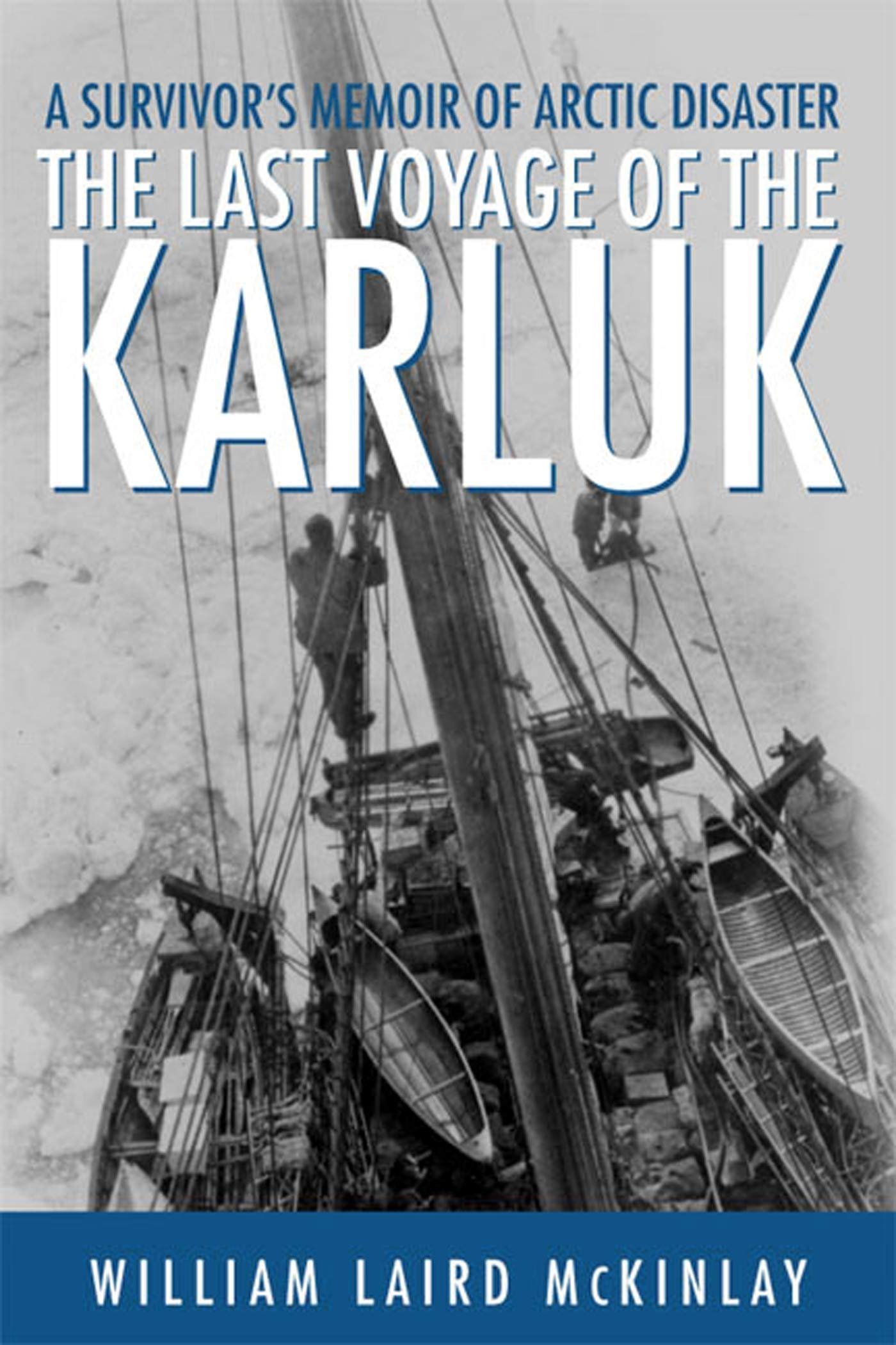
The Last Voyage of the Karluk: A Survivor's Memoir of Arctic Disaster
$9.95
by William Laird McKinlay



An astonishing narrative of disaster and perseverance, The Last Voyage of the Karluk will thrill readers of adventure classics like Into Thin Air and The Climb . In 1913, explorer Vilhjalmur Stefansson hired William McKinlay to join the crew of the Karluk , the leading ship of his new Arctic expedition. Stefansson's mission was to chart the waters north of Alaska; yet the Karluk 's crew was untrained, the ship was ill-suited to the icy conditions, and almost at once the Karluk was crushed-at which point Stefansson abandoned his crew to continue his journey on another ship. This is the only firsthand account of what followed: a nightmare struggle in which half the crew perished, one was mysteriously shot, and the rest were near death by the time of their rescue twelve months later. Written some sixty years after the fact, and drawing extensively on his own daily log, McKinlay's narrative of this doomed expedition is rendered with remarkable clarity of recollection, and with a combination of horror and a level of self-possession that, to modern eyes, may seem incredible. Like most of his companions, McKinlay was inexperienced, without a day's training in the skills essential to survival in the Arctic. Yet he and many of his fellow crewmen, with the help of an Eskimo family accustomed to such conditions, survived a year under the harshest of conditions, enduring 80-mile-per-hour gales and temperatures well below zero with only the barest of provisions and almost no hope of contact with civilization. Nearly a century later, this remains one of the most compelling survival stories ever written-an extraordinary testament to man's overpowering will to live. On April 23, 1913, 24-year-old William McKinlay, a teacher of mathematics and science in Scotland, was finishing dinner when a telegram arrived. Legendary Canadian explorer Vilhjalmur Stefansson, it explained, was planning a four-year Arctic expedition between the northernmost shores of Canada and the North Pole. It was to be "a vast scientific project," McKinlay recalls, "involving studying Eskimos, geological surveys, sounding of uncharted Arctic waters, and a look-out for new islands to be discovered for Britain." McKinlay would be the team's magnetician and meteorologist--if he joined. He never thought twice--never mind that the crew was a motley assemblage of scientists and sailors, many of whom had never seen a polar bear outside a zoo. There was no survival training for the uninitiated. This was the heyday of the Arctic expedition--and "scientists were in great demand to bring back information about ... the poles." In July, the 250-ton Karluk departed Alaska. By August, the ship was doomed, trapped and drifting in a solid pack of ice. Stefannson abandoned ship (continuing his explorations for five full years before returning), and the Karluk drifted for months before it was crushed by the ice and sank. Twenty-five people escaped onto the ice, isolated for a year before rescue arrived. By then, 11 people had perished--some in trying to reach land, others by suicide, malnutrition, or disease. McKinlay's first-hand account of the Karluk debacle is Shackleton's Endurance story in reverse: what happens when an untrained, ill-matched crew meets disaster and barely rises to the challenge. Leaderless and despondent, the stranded resorted to treachery, lying, cheating, and pure folly. Karluk is a story both unbelievable and familiar, and it is convincingly told: how ambition and poor planning lead to spectacular disasters from which only sheer will or luck can offer salvation. --Svenja Soldovieri "In 1913, explorer Vilhjalmur Stefansson hired William McKinlay to join the crew of the Karluk, the leading ship of his new Arctic expedition. Stefansson's mission was to chart the waters north of Alaska; yet the Karluk's crew was untrained, the ship was ill-suited to the icy conditions, and almost at once the Karluk was crushed - at which point Stefansson abandoned his crew to continue his journey on another ship. This is the only firsthand account of what followed: a nightmare struggle in which half the crew perished, one was mysteriously shot, and the rest were near death by the time of their rescue twelve months later."--BOOK JACKET. "Written some sixty years after the fact, and drawing extensively on his own daily log, McKinlay's narrative of this doomed expedition is rendered with remarkable clarity of recollection, and with a combination of horror and a level of self-possession that, to modern eyes, may seem incredible. Like most of his companions, McKinlay was inexperienced, without a day's training in the skills essential to survival in the Arctic. Yet he and many of his fellow crewman, with the help of an Eskimo family accustomed to such conditions, survived a year under the harshest of conditions, enduring 80-mile-per-hour gales and temperatures well below zero with only the barest of provisions and almost no hope of contact with civi