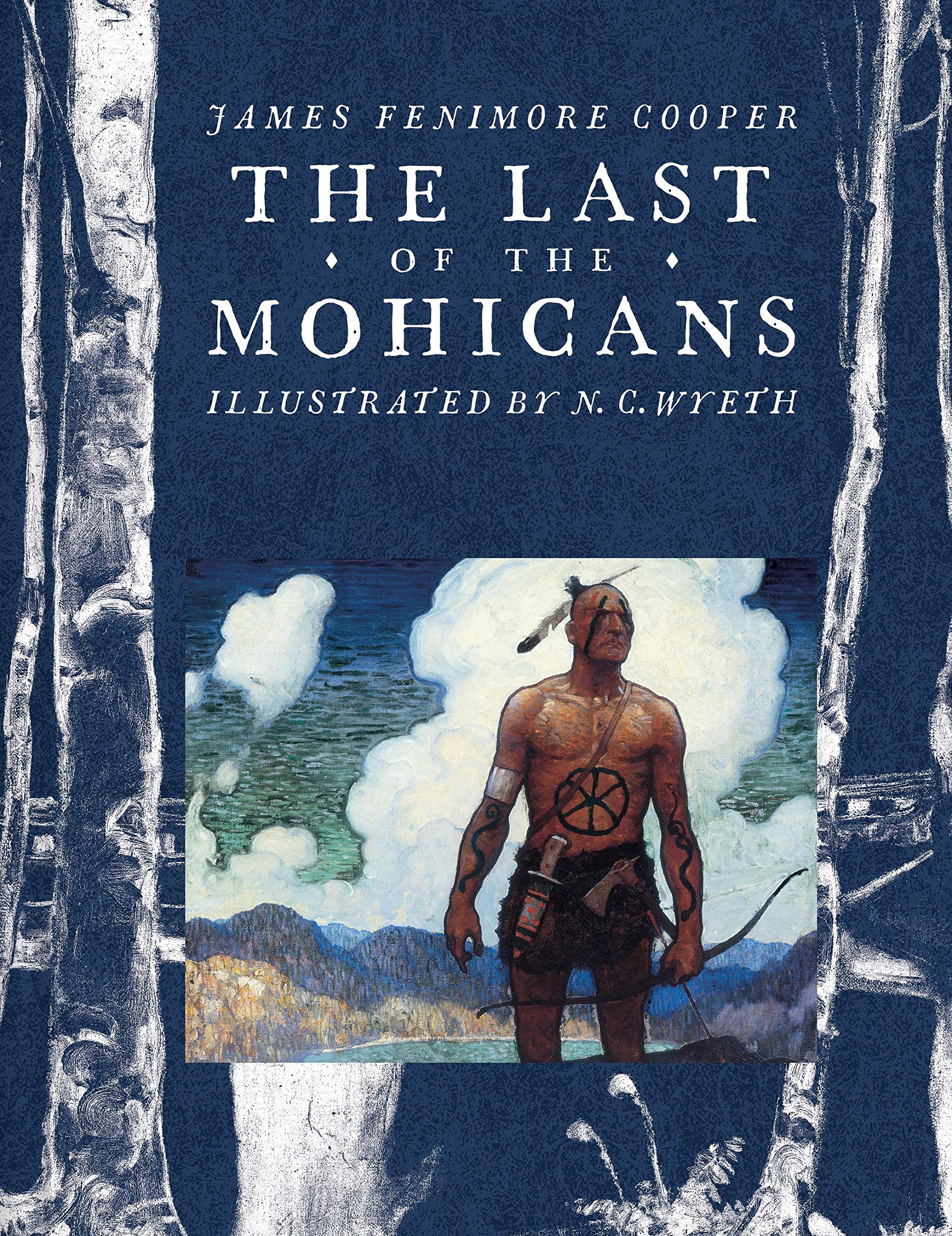



A gorgeously crafted edition of a great American classic—James Fenimore Cooper’s epic tale of frontier life during the French and Indian War, complete with lush tip-in illustrations. Chingachgook and Uncas are the last living members of the great Mohican tribe. Hawkeye, a colonial scout, is their companion and loyal friend. In the midst of the French and Indian War, these three will risk everything to lead the two daughters of a British colonel to safety through the battle-torn northern wilderness. When the girls are captured by the vicious Huron tribe, Chingachgook, Uncas, and Hawkeye determine to do whatever they can to save them—no matter the cost. This keepsake edition of James Fenimore Cooper’s acclaimed novel showcases magnificent illustrations by N.C. Wyeth. James Fenimore Cooper (1789–1851) was a prolific and popular nineteenth century American writer who wrote historical fiction of frontier and Native American life. He is best remembered for the Leatherstocking Tales, one of which was The Last of the Mohicans. N.C. Wyeth (1882–1945) began his artistic career as a young adult. Born in Needham, Massachusetts, Wyeth traveled the American West extensively and drew what he saw. His prolific career includes three thousand works and more than one hundred book illustrations, including those for a majority of the Scribner Illustrated Classics series. Chapter I I “Mine ear is open, and my heart prepared: The worst is worldly loss thou canst unfold: Say, is my kingdom lost?” Richard II 1 IT WAS A FEATURE peculiar to the colonial wars of North America, that the toils and dangers of the wilderness were to be encountered before the adverse hosts could meet. A wide and apparently an impervious boundary of forests severed the possessions of the hostile provinces of France and England. The hardy colonist, and the trained European who fought at his side, frequently expended months in struggling against the rapids of the streams, or in effecting the rugged passes of the mountains, in quest of an opportunity to exhibit their courage in a more martial conflict. But, emulating the patience and self-denial of the practised native warriors, they learned to overcome every difficulty; and it would seem that, in time, there was no recess of the woods so dark, nor any secret place so lovely, that it might claim exemption from the inroads of those who had pledged their blood to satiate their vengeance, or to uphold the cold and selfish policy of the distant monarchs of Europe. Perhaps no district throughout the wide extent of the intermediate frontiers can furnish a livelier picture of the cruelty and fierceness of the savage warfare of those periods than the country which lies between the head waters of the Hudson and the adjacent lakes. The facilities which nature had there offered to the march of the combatants were too obvious to be neglected. The lengthened sheet of the Champlain stretched from the frontiers of Canada, deep within the borders of the neighboring province of New York, forming a natural passage across half the distance that the French were compelled to master in order to strike their enemies. Near its southern termination, it received the contributions of another lake, whose waters were so limpid as to have been exclusively selected by the Jesuit missionaries to perform the typical purification of baptism, and to obtain for it the title of lake “du Saint Sacrement.” The less zealous English thought they conferred a sufficient honor on its unsullied fountains, when they bestowed the name of their reigning prince, the second of the house of Hanover. The two united to rob the untutored possessors of its wooded scenery of their native right to perpetuate its original appellation of “Horican.” Winding its way among countless islands, and imbedded in mountains, the “holy lake” extended a dozen leagues still farther to the south. With the high plain that there interposed itself to the further passage of the water, commenced a portage of as many miles, which conducted the adventurer to the banks of the Hudson, at a point where, with the usual obstructions of the rapids, or rifts, as they were then termed in the language of the country, the river became navigable to the tide. While, in the pursuit of their daring plans of annoyance, the restless enterprise of the French even attempted the distant and difficult gorges of the Allegheny, it may easily be imagined that their proverbial acuteness would not overlook the natural advantages of the district we have just described. It became, emphatically, the bloody arena, in which most of the battles for the mastery of the colonies were contested. Forts were erected at the different points that commanded the facilities of the route, and were taken and retaken, razed and rebuilt, as victory alighted on the hostile banners. While the husbandman2 shrank back from the dangerous passes, within the safer boundaries of the more ancient settlements, armie