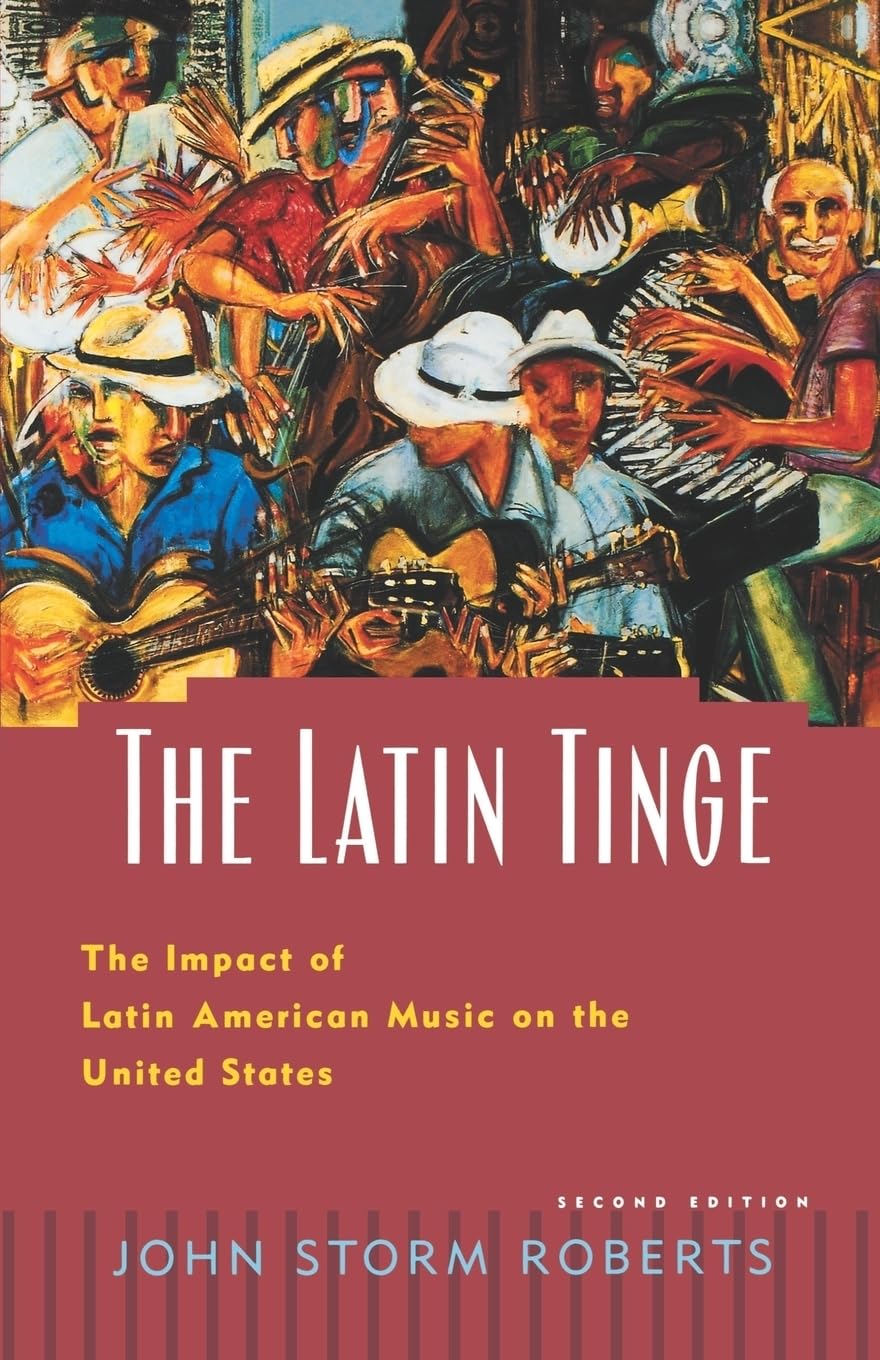
The Latin Tinge: The Impact of Latin American Music on the United States
$27.99
by John Storm Roberts



The Tejano superstar Selena and the tango revival both in the dance clubs and on Broadway are only the most obvious symptoms of how central Latin music is to American musical life. Latino rap has brought a musical revolution, while Latin and Brazilian jazz are ever more significant on the jazz scene. With the first edition of The Latin Tinge , John Storm Roberts offered revolutionary insight into the enormous importance of Latin influences in U.S. popular music of all kinds. Now, in this revised second edition, Roberts updates the history of Latin American influences on the American music scene over the last twenty years. From the merengue wave to the great traditions of salsa and norteña music to the fusion styles of Cubop and Latin rock, Roberts provides a comprehensive review. With an update on the jazz scene and the careers of legendary musicians as well as newer bands on the circuit, the second edition of The Latin Tinge sheds new light on a rich and complex subject: the crucial contribution that Latin rhythms are making to our uniquely American idiom. When it comes to 20th-century American pop music, "virtually all of the major popular forms--Tin Pan Alley, stage, and film music, jazz, rhythm and blues, country music, and rock--have been affected throughout their development by the idioms of Brazil, Cuba, or Mexico." So writes eminent musicologist John Storm Roberts of the often-overlooked role that Latin American rhythms, musical forms, and musicians have played in shaping American culture. The Latin Tinge shows how musical trends from Spain and Africa evolved into the Cuban son , bomba y plena in Puerto Rico, Argentinean tango, and the samba in Brazil. Roberts highlights pioneering Latin American performers who popularized Afro-Hispanic music in the United States: Cuba's Pérez Prado and Mario Bauzá, for example, swung New York dancers to the beat of the rumba, mambo, and Latin jazz in the '30s and '40s. Brazilian composer Antonio Carlos Jobim combined his native country's samba percussion with jazz structures and European harmonies and launched the bossa nova craze of the mid '60s; Mexican American superstars Carlos Santana and the late songstress Selena blended Afro-Cuban, rock, blues, Tejano, and Tex-Mex folk styles into an upbeat American hybrid. Roberts also details the Puerto Rican contribution to the making of salsa, the pivotal role of Puerto Rican Americans in creating rap, and the fast-growing popularity of merengue from the Dominican Republic. Even an American standard like the theme to I Love Lucy , Roberts reminds us, was shaped by the Latin influence. --Eugene Holley Praise for the previous edition : "Roberts cares passionately about Latin music and he is able to describe what he hears in it clearly enough to enable the non-Latin listener to hear it too."--Robert Palmer, New York Times Book Review "Roberts treats his subject with singular affection and respect only a true fan and student can give."-- Nuestro Magazine "Demonstratess a non-purist, open ear that is rare and welcome...a solid, up-to-date and balanced examination."-- Kirkus Reviews "A provocative study, secure in its data...Roberts virtually has this subject cornered."-- Black Perspectives in Music John Storm Roberts has been writing about the U.S.-Latin music scene since the early 1970s and among other international credits covered salsa and allied sounds for the Village Voice .